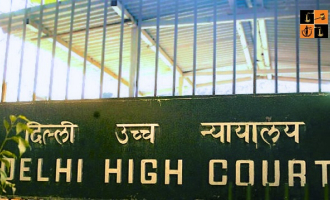
The Delhi High Court has ruled unlike in an application filed under Section 11 of the Arbitration and Conciliation Act, 1996 where the court is merely required to examine the existence of an Arbitration Agreement between the parties; however, in an application filed under Section 8 of the act, not only the Court would consider the existence of the arbitration agreement between the parties but also whether the subject matter of the dispute is capable of adjudication by a public forum or relates to specific or special remedies because than mater cannot be referred to the arbitration and civil suit has to proceed.
The judgment was delivered by Justice Mukta Gupta on 21st July 2020. In the present case, six suits were filed before the Delhi High Court against Asian Hotels (North) Limited (Defendant).
Facts of the Case
In the present case, the Plaintiffs were licensees of the defendant in respect of the shops in Hyatt Hotel, New Delhi. The defendant served the notice of revocation of the license to Plaintiffs and hence the present suit was filed by them.
The license agreement between the parties also contained an arbitration clause.
Contentions of the Plaintiffs
Mr. Abhishek Manu Singhvi appeared for the plaintiffs and contended that “license agreement” in favor of the plaintiffs was in the nature of creating a right of ownership or in the alternative less than ownership but more than a lease i.e. it was an irrevocable license. It was contended that plaintiffs are owner and licensee on the permanent and perpetual basis of the shops.
The counsel on the objection that the present suit is not maintainable in view of the arbitration clause in the agreement argued that in the present plaint, plaintiffs pray for decrees of the declaration which are decision in rem and not in personam, and the same cannot be adjudicated by the arbitrators and only by the Court.
Also, the counsel contended that the arbitration clause is unenforceable as it provided for an even number of arbitrators. As, after the amendment in Section 10(1) of the Arbitration and Conciliation Act 2015 there cannot be even a number of arbitrators and hence, the arbitration clause was invalid.
Contentions of the Defendant
Mr. Mukul Rohtagi appeared for the defendant and contended that the present suit is hit by the arbitration clause in the license agreement. Also, that once the application is filed under Section 11 of the Arbitration and Conciliation Act, 1996 it is for the Court to decide whether a three-member or one member tribunal is to be constituted. It was contended that clause relating to arbitration in the license agreement is widely worded and any dispute and differences between the company and licensee with regard to any matter to be referred to arbitration, whose decision shall be final and binding on parties.
According to him, even in the best-case scenario the case of the plaintiffs being that the owners or in the alternative irrevocable licenses in perpetuity, all these issues can be determined by the arbitrator.
Analysis of the Case
The existence of an arbitration clause was not denied by the plaintiffs and their claim was that the subject matter of the suit cannot be decided in arbitration and the plaintiff's right to file a suit cannot be circumscribed by the mandate of Section 8 and 11 of the Act.
It was contended by the plaintiffs that since the license agreement creates an irrevocable license and the plaintiff has the perpetual right to use the shop, the Easements Act will give way to the special agreement between the parties.
It was also contended that even though an agreement to sell for a contractual license does not create an interest in the land, however, the same is specifically enforceable and the right to use the premises with successive renewals is perpetual and are exercisable against the world at large and hence cannot be decided by an arbitral tribunal being a private fora.
The decision of the Court
The Court on the plea of the defendant that in view of the amendment to Section 8 of the Act, on an application under Section 8, the Court cannot go into the issue whether the dispute between the parties is arbitrable or not held that “though the issue whether a dispute is arbitrable or not can be gone into in an application under Section 11 of the Act, however, in an application under Section 8 of the Act the Court is required to go into the issue whether the dispute between the parties is an arbitrable dispute or not and if the dispute falls in “excepted matters” or relates to specific or special remedies, then there can be no reference to the arbitration and the civil suit has to proceed.”
The Delhi High Court ruled that the Court is required to go into the issue whether the plaintiffs are mere licensees or they have right in their favor or interest in the land only if the parties cannot be referred to the arbitration.
The Delhi High Court ultimately held that in the present case, the rights of the plaintiffs are at best governed by the Transfer of Property Act or the Specific Relief Act, or that of an irrevocable licensee under the Easements Act can still be decided in arbitration.
Hence, the present suit was held to be not maintainable and parties were allowed to avail the remedy of arbitration.
Read Judgment @Latestlaws.com