Justice Ranjan Gogoi, the 46th Chief Justice of India has earned millions of admirers throughout his tenure. With verdict on the Ram Janmbhoomi title dispute, Justice Gogoi has registered his name in the history books of the country, for being the person responsible for solving India’s longest-standing legal dispute, that too with a decision that is open handedly accepted by most.
The main credit goes to none other than the Hon’ble Chief Justice of India Ranjan Gogoi who said “enough is enough” and bravely decided to pass the judgement on this long-drawn contentious issue that has been drawing communal heat over the centuries, right before his retirement on 17th November 2019. A 5-Judge bench led by CJI Ranjan Gogoi has ruled that Ram Mandir will be constructed at the disputed site and ordered that 5-acre of alternative land at a prominent place be given to the Muslim party. The day of Ayodhya Verdict has been a day of immense joy for Hindus all over the world and at the same time, having win-win situation, in which Muslims truly respect the decision.
A Strict, No-nonsense Person
Numerous judgements during his tenure as the CJI have shown that he is a strict, no-nonsense person, wise in his viewpoints and reasoning. He has handled several high stake cases with sheer dedication and confidence.
Mr. Ranjan Gogoi’s hometown is Dibrugarh, Assam. After completing his schooling from Don Bosco School, Dibrugarh, he went to Delhi for higher studies, where he studied at St. Stephen’s College and later did LLB from the Delhi University.
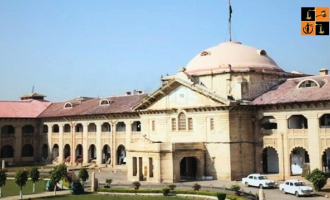
Gogoi started practicing as an Advocate in the Gauhati High Court. In 2001, he was made a judge in the same court. On 9th September 2010, he was transferred to the Punjab and Haryana High Court. He became the High Court’s Chief Justice on 12th February 2011. On 23rd April 2012, he was elevated as a Judge of the Supreme Court of India. He has been serving as the Chief Justice of India since 3rd October 2018. He is the first person from north-east to hold the chair of Chief Justice of India.
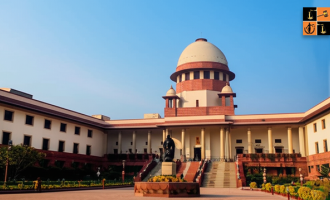
Under CJI Gogoi, Supreme Court sat for a 40-day long marathon hearing of the dispute on a daily basis. Unlike his predecessors, who generally played softball on the contentious dispute, Chief Justice Gogoi played hardball and decided to settle the case for once and all.
On 18th of October, the last day of the hearings, Chief Justice Gogoi made it clear that the arguments will be wrapped up by 5 pm. Senior Advocate Rajeev Dhawan appearing for the Sunni Waqf Board indulged in substandard theatrics inside the courtroom, such as tearing up of evidence presented to him. On this, Gogoi called upon him to "shred the evidence further", in a sarcastic tone. He warned him saying, “Decorum has been spoiled, we will walk out”.
He has always stood by the Nation
In cases of national interest, Chief Justice Gogoi has always stood by the nation. While many frivolous petitions were filed before him on the Rafale deal, NRC and Article 370 issues, he maintained composure and gave the government time to explain their position.
In the Rafale scam, he dismissed all the petitions, putting an end to the fabricated stories of the opposition in the run-up to the 2019 elections giving a clean chit to the Modi government. Before he retires he is expected to decide upon the merit of review petitions which were filed against the dismissal of the previous petitions.
NRC "a base document for the future"
At the launch of a book titled ‘Post-Colonial Assam’, CJI Gogoi said that the NRC was not just a document of the moment. “19 lakh or 40 lakh is not the point. But it is a base document for the future. A document on which we can refer to determine future claims. The intrinsic value of the NRC, in my view, is mutual peaceful co-existence. Progressive societies are meant to be inclusive.” He slammed the media’s biased coverage on this issue.
'Will visit J&K myself if required': CJI Ranjan Gogoi
Similarly, Justice Gogoi maintained his calm after the abrogation of Article 370, a period during which the liberals and ‘human rights’ activists were going gaga. He maintained a subtle pressure on the government for it to remain on its toes.
"If required, I will go & personally check, I will speak to the Chief Justice today," said CJI Ranjan Gogoi, while replying to a Senior Advocate, who claimed that there are extreme difficulties in accessing the J&K High Court under the alleged lockdown situation in the erstwhile state.
CJI Gogoi is due to hear the petitions on Article 370 on 14th November. It must also be mentioned that the Supreme Court was being requested to conduct immediate hearings on Article 370, however, Justice Gogoi refused to entertain such pleas, stating that the Court had no time as the focus was on settling the Ayodhya dispute. This, in itself, proves how dedicated he has been to find a final solution to the contentious dispute which was historically settled on 9th November 2019.
‘Set up Exclusive POCSO Courts in districts within 60 days’
Being thoughtful and considerate, in his first Suo Moto Writ Petition, Chief Justice Ranjan Gogoi raised the pertinent issue of alarming increase in cases of Child Rapes in the country. The bench led by Justice Gogoi directed the Central government to set up exclusive POCSO courts in every district that has over 100 pending cases under the Protection of Children from Sexual Offences (POCSO) Act. He also said that a panel consisting of an appropriate number of support persons should be appointed and the Chief Secretaries of States ought to ensure that the existing Forensic Science Laboratories of the States should function efficiently.
'Nothing can be more important than filling up of Judicial Vacancies'
Chief Justice Gogoi, soon after taking oath of highest office of Judiciary in India, took cognisance of over 5,000 vacant posts of judicial officers in lower courts and sought information from all the High Courts, States and Union Territories (UTs). He called Law Secretaries of 29 States and 7 UTs and the Registrar Generals (RGs) of 24 High Courts to impress upon them that nothing can be more important than filling up huge vacancies of judicial officers in trial courts across the Country.
CJI Gogoi had said it is totally unacceptable that out of 22,036 posts of Higher Judicial Service and Lower Judicial Service officers in the country, 5,133 posts are vacant. He took up the issue regularly in his Court and ensured that special time bound recruitment drives are carried out by all High Courts and States.
Chief Justice Gogoi is going to retire on 17th November 2019. Undoubtedly, he has been one of the most successful, determined, proactive and courageous Chief Justice this country has ever witnessed.
It is indeed a matter of pride and gratitude for all the Indians to have a such a man as the Chief Justice of India, who will always be a source of inspiration. He demonstrated what honesty, courage and decisiveness is and the importance of ensuring justice and raising voice against injustice even if it meant sending shock waves across the nation.