The International Trademark Association (INTA) recently filed two amicus briefs before the Grand Board of Appeal of the EUIPO in three parallel cases. These three cases were brought by the Estate of the Late Sonia Brownell Orwell. The cases include two legal issues to be answered:
- Whether (famous) names and titles can be registered as trademarks for books, films, and certain services;
- Whether such marks should be considered as descriptive of the content/subject matter of the goods/services claimed and therefore not able to function as trademarks.
However, the first case deals with the registration of GEORGE ORWELL (case R 2248/2019-5). Meanwhile, the remaining two cases revolve around the trademark applications for the titles of two famous books authors by George Orwell i.e., ANIMAL FARM and 1984 (cases R 1719/2019-5 and R 1922/2019-5).
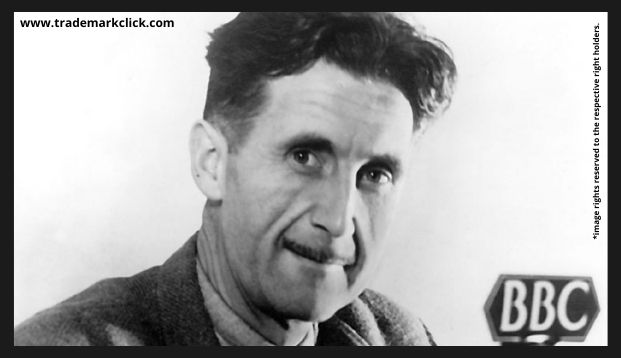
Eric Arthur Blair (25 June 1903 – 21 January 1950) is known globally by his pen name George Orwell. He was a package of multiple talents; he was an English novelist, essayist, and journalist, and also a critic. His work involved a variety of things and is characterized by lucid prose, biting social criticism, opposition to totalitarianism, and outspoken support of democratic socialism. Orwell also produced as a write literary criticism and poetry, fiction and polemical journalism; and he is best known for his allegorical novella Animal Farm (1945) and another dystopian novel Nineteen Eighty-Four (1949).
His non-fiction works include The Road to Wigan Pier (1937) where he documented his own experience of working-class life in the north of England and Homage to Catalonia (1938) which is an account of his experiences soldiering for the Republican faction of the Spanish Civil War (1936–1939). His non-fiction works are as critically respected as his fabulous essays on politics and literature, language, and culture. The Times also ranked George Orwell in the year 2008 second among "The 50 greatest British writers since the year 1945". It is undoubtedly a great achievement in anyone's life.
INTA made arguments before the court while keeping in mind the applicable laws and all the EUIPO guidelines which state that names along with titles can in-principle function as trademarks.
INTA argued that the names of world-famous authors and even the titles of famous literary and artistic works should not be excluded in any manner from trademark protection per se, or subject them to special treatment that is more severe than those applied to other categories of trademarks. It further added that a case-by-case assessment should be carried out while taking into account all the possible circumstances of the case and that public perception may vary from time to time.
The association further argued: “An author’s name or book title do not necessarily describe any kind of goods or services – the average consumer will not understand the name or title as being a generic term for books or any kind of book, unless (in exceptional circumstances when) the title is purely descriptive of the subject matter of the book. Famous titles are not descriptive of any goods or services because of their fame per se (as this would make all famous marks ineligible for registration after they have acquired reputation).”
The case is still pending in court but everyone is desperately waiting for the court’s conclusion. The ruling of the court will provide a clear idea for authors and families of famous late authors to protect their work under trademark laws as well. It will be undoubtedly having a great impact on many people at large.
Tags :