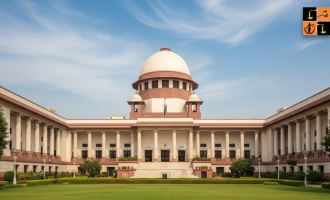
A division bench of the Supreme Court pointed out differences between 'furlough' and 'parole'. The Court held that,
"1. Furlough and parole envisage a short-term temporary release from custody;
2. While parole is granted for the prisoner to meet a specific exigency, furlough may be granted after a stipulated number of years have been served without any reason;
3. The grant of furlough is to break the monotony of imprisonment and to enable the convict to maintain continuity with family life and integration with society;
4. Although furlough can be claimed without a reason, the prisoner does not have an absolute legal right to claim furlough; and
5. The grant of furlough must be balanced against the public interest and can be refused to certain categories of prisoners."
Brief Facts
An FIR was registered against the respondent, charges were framed. At the conclusion of the trial, the Sessions Court by a judgment convicted the respondent. The respondent filed an application for furlough through the Surat Lajpore Central Jail. The application was rejected by the Director-General of Police, Jail and Reformative Administration. The respondent moved the High Court under Section 482 Cr.P.C. for setting aside this order. The respondent relied on the proviso to Rule 3(2) of Prisons (Bombay Furlough and Parole) Rules 19596 and urged that a prisoner sentenced to life imprisonment may be released on furlough every year instead of every two years after he completes seven years of imprisonment.
High Court allowed the respondent to be released on furlough leave with a police escort for a period of fourteen days from the date of his release on the execution of a personal bond of Rs. 1,00,000/- before the Jail Authority and other conditions that the authority may deem fit. At the request of the Additional Public Prosecutor, the Single Judge of the High Court stayed the impugned order for a period of three weeks. By an order, the implementation of the impugned order stayed until 13 August 2021. A Special Leave Petition was filed by the State of Gujarat against this order. On 12 August 2021, a bench of Justice DY Chandrachud and Justice MR Shah stayed the implementation of the order of the High Court.
Reasoning and Decision of the Court
The Court made a reference to the following three landmark decisions of this issue of law: (i) State of Maharashtra v. Suresh Pandurang Darvakar; (ii) State of Haryana v. Mohinder Singh; and (iii) Asfaq v. State of Rajasthan.
The following differences were highlighted in these three decisions:
“Furlough” and “parole” are two distinct terms now being used in the Jail Manuals or laws relating to the temporary release of prisoners. These two terms have acquired different meanings in the statute with varied results. It would be thus seen that when a prisoner is on parole his period of release does not count towards the total period of the sentence while when he is on furlough he is eligible to have the period of release counted towards the total period of his sentence undergone by him.
There is a subtle distinction between parole and furlough. A parole can be defined as conditional release of prisoners i.e. an early release of a prisoner, conditional on good behavior, and regular reporting to the authorities for a set period of time. It can also be defined as a form of conditional pardon by which the convict is released before the expiration of his term. Thus, parole is granted for good behavior on the condition that the parolee regularly reports to a supervising officer for a specified period. Such a release of the prisoner on parole can also be temporarily on some basic grounds. In that eventuality, it is to be treated as mere suspension of the sentence for time being, keeping the quantum of the sentence intact. Release on parole is designed to afford some relief to the prisoners in certain specified exigencies. Furlough, on the other hand, is a brief release from prison. It is conditional and is given in case of long-term imprisonment. The period of sentence spent on furlough by the prisoners need not be undergone by him as is done in the case of parole. Furlough is granted as a good conduct remission.
After noting the purpose of parole on the one hand and furlough on the other, the Court indicated the need for a balance to be maintained between two competing interests while granting parole or furlough- that of reforming the convict on one hand and the public purpose and interests of society on the other.
- Summary of the principle laid down in Asfaq (supra)
- Both parole and furlough are conditional releases.
- Parole can be granted in case of short-term imprisonment whereas in furlough it is granted in case of long-term imprisonment.
- Duration of parole extends to one month whereas in the case of furlough it extends to fourteen days maximum.
- Parole is granted by Divisional Commissioner and furlough is granted by the Deputy Inspector General of Prisons.
- For parole, a specific reason is required, whereas furlough is meant for breaking the monotony of imprisonment.
- The term of imprisonment is not included in the computation of the term of parole, whereas it is vice versa in furlough.
- Parole can be granted a number of times whereas there is a limitation in the case of furlough.
- Since furlough is not granted for any particular reason, it can be denied in the interest of society.
Observations on facts of the present matter
The Court held that parole and furlough are distinct in nature and that although furlough can be claimed without a reason, the prisoner does not have an absolute legal right to claim furlough. Interpreting the Bombay Furlough and Parole Rules, made pursuant to Section 59 of the Prisons Act 1894, the Court noticed that the same does not confer a legal right on a prisoner to be released on furlough.
The grant of furlough is regulated by Rule 3 and Rule 4. While Rule 3 provides the eligibility criteria for grant of furlough for prisoners serving different lengths of imprisonment, Rule 4 imposes limitations. The use of the expression “may be released” in Rule 3 indicates the absence of an absolute right. This is further emphasized in Rule 17 which states that said Rules do not confer a legal right on a prisoner to claim release on furlough. Thus the grant of release on furlough is a discretionary remedy circumscribed by Rules 3 and 4 extracted above.
The Court allowed the appeal and set aside the impugned judgment and order of the High Court.
Case Details
Case Name: STATE OF GUJARAT AND ANOTHER V. NARAYAN @ NARAYAN SAI @ MOTA BHAGWAN ASARAM @ ASUMAL HARPALANI
Date of Decision: OCTOBER 20, 2021
Bench: DR. D Y CHANDRACHUD, B V NAGARATHNA JJ.
Read Order@LatestLaws.com