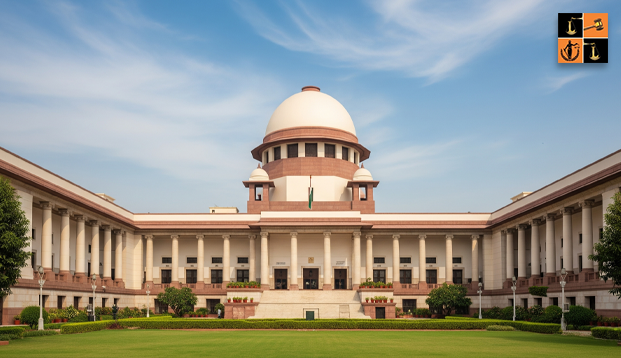
Recently, the Supreme Court clarified that advancing the rights of persons with disabilities cannot be confined to statutory adherence alone, but must form an integral part of Corporate Social Responsibility. Emphasising the convergence of constitutional guarantees and corporate obligations, the Court noted that “True equality at the workplace can be achieved only with the right impetus given to disability rights as a facet of Corporate Social Responsibility.”
Brief facts:
The case arose from a public sector recruitment process in which the appellant applied for a management position under the reserved category for persons with visual disabilities. Despite clearing the selection stages, her candidature was rejected at the medical examination stage on the grounds of multiple disabilities. She challenged this decision before the High Court, where a Single Judge set aside the medical unfitness finding and granted her limited relief, which was later overturned by the appellate bench on the ground that the recruitment panel had expired. The Appellant thereafter approached the Supreme Court, which directed an independent medical evaluation by a specialised board to assess her eligibility under the disability law. The assessment ultimately confirmed that her disability exceeded the prescribed statutory benchmark.
Contentions of the Appellant:
The Appellant contended that the denial of employment was arbitrary, discriminatory, and contrary to the spirit and letter of the RPwD Act. The Counsel argued that the appellant satisfied the benchmark disability requirement and that Coal India Limited, as a public sector undertaking, was under a statutory obligation to provide reasonable accommodation and to modify its recruitment framework to account for multiple disabilities. Reliance was placed on constitutional guarantees of equality, dignity, and the right to livelihood, along with judicial precedents recognising reasonable accommodation as a substantive right.
Contentions of the Respondent:
On the other hand, the Respondents argued that the appellant did not initially meet the benchmark disability criteria and that the recruitment panel had expired by the time judicial intervention was sought. The Counsel further contended that courts could not direct appointments dehors the recruitment process or beyond its notified timeline, and that the relief granted by the Single Judge was legally untenable once the panel ceased to exist.
Observation of the Court:
The Court held that “Reasonable accommodation is a fundamental right. It is a gateway right for persons with disabilities to enjoy all the other rights enshrined in the Constitution and the law. Without the gateway right of reasonable accommodation, a person with disability is forced to navigate in a world which excludes them by design.”
The Bench observed that “A person - to be considered as a person with disability - does not have to qualify any benchmark. The principle that the rights and entitlements cannot be constricted by adopting a benchmark as a condition precedent has been upheld by this Court.”
The Court reaffirmed that employment and livelihood lie at the heart of human dignity and stated that “Life means something more than mere animal existence and the inhibition against the deprivation of life extends to all those limits and faculties by which life is enjoyed.”
Significantly, the Court observed that “Thus, it is abundantly clear that rights of persons with disabilities have to be viewed from the prism of Corporate Social Responsibility in order to protect and further such rights.”
The Bench concluded that “True equality at the workplace can be achieved only with the right impetus given to disability rights as a facet of Corporate Social Responsibility.”
The decision of the Court:
In light of the foregoing discussion, the Court set aside the judgment of the Division Bench of the Calcutta High Court, allowed the appeal and directed Coal India Limited to create a supernumerary post for the appellant, with suitable posting and workplace accommodation consistent with universal design principles.
Case Title: Sujata Bora v. Coal India Limited & Ors.
Case No.: Civil Appeal No. 120 of 2026
Coram: Hon’ble Mr. Justice J.B. Pardiwala, Hon’ble Mr. Justice K.V. Viswanathan
Advocate for the Petitioner: Advs. Amol Nirmal Kumar Suryawanshi, Prashant Sri Kant Kenjale, Srishty Pandey, Damini Viswakarma, and B. Dhananjay,
Advocate for the Respondent: AOR Vivek Narayan Sharma, Advs. Mahima Bhardwaj Kalucha, Akash Singh, Adhiraj Wadhera, Dinesh Sharma, and Rajeev Kumar Jha.
Read Judgment@ Latestlaws.com