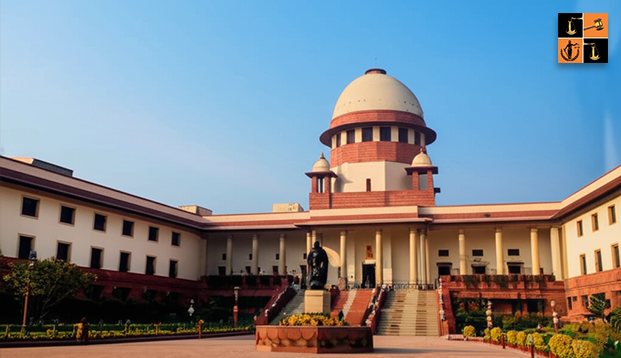
Recently, the Supreme Court held that disciplinary proceedings initiated during service can validly continue even after an employee’s retirement, provided the governing service rules expressly permit such continuation. Emphasising the legal fiction embedded in service regulations, the Court observed that an employee is deemed to remain in service for the limited purpose of concluding such proceedings, ensuring that misconduct does not escape scrutiny merely due to superannuation.
Brief facts:
The case arose from disciplinary proceedings initiated against the Appellant, the very day of his superannuation, alleging irregularities in loan disbursement, particularly failure to ensure end-use of sanctioned funds. The inquiry culminated in a finding that one of the charges stood partly proved, leading to the imposition of a penalty of permanent reduction by three stages in the time scale of pay. The departmental appeal was rejected. The Appellant challenged the action before the Punjab and Haryana High Court, where a Single Judge set aside the punishment, holding that post-retirement penalties could only be imposed under Pension Regulations. However, the Division Bench reversed this finding, upholding the penalty by relying on Regulation 20(3)(iii) of the Punjab and Sind Bank Officers’ Service Regulations, 1982. Aggrieved, the Appellant approached the Apex Court.
Contentions of the Appellant:
The Appellant argued that upon superannuation, the employer-employee relationship ceases, thereby extinguishing the jurisdiction to impose penalties under Service Regulations. The Counsel contended that only pension-related consequences, such as withholding or reduction of pension, could be imposed post-retirement under the Pension Regulations. Reliance was placed on precedents to assert that substantive penalties, like a reduction in pay, cannot survive retirement. The Appellant further challenged the disciplinary findings as unsustainable and non-speaking, asserting that the High Court failed to address these issues.
Contentions of the Respondent:
The Respondent countered that Regulation 20(3)(iii) explicitly permits continuation of disciplinary proceedings even after retirement, provided they were initiated while the employee was in service. The Counsel argued that such proceedings must logically culminate in enforceable penalties, otherwise, the regulatory framework would be rendered ineffective. The Bank also submitted that the misconduct, failure to ensure end-use of loan funds, was duly established and that the penalty imposed was proportionate, particularly as it only marginally affected pensionary benefits.
Observation of the Court:
The Court reaffirmed that the continuation of disciplinary proceedings hinges on the existence of an enabling provision in the applicable service rules. Interpreting Regulation 20(3)(iii), the Court emphasised that it creates a legal fiction whereby “the disciplinary proceedings will continue as if he was in service until the proceedings are concluded and final order is passed.”
The Court clarified that this deeming provision is not merely procedural but substantive in effect, ensuring that proceedings initiated prior to retirement do not become infructuous. It rejected the Appellant’s argument that penalties under Service Regulations cannot be imposed post-retirement, observing that such an interpretation would defeat the very purpose of permitting continuation of proceedings.
The Bench held that where the ultimate penalty is dismissal, it may result in forfeiture of pensionary benefits, leaving no practical difficulty in implementation. More significantly, the Court addressed penalties like reduction in pay, holding that such punishment can be operationalised post-retirement by recalibrating pensionary benefits, since pension is computed based on the last drawn pay. The Bench observed that “it would not be difficult to implement such a punishment as pension can be computed accordingly.”
The Court upheld the disciplinary findings, noting that the Appellant had failed to ensure end-use of loan disbursements, a critical duty of a bank officer handling public funds. It emphasised that banking officials occupy positions of trust and any lapse, even without direct financial loss, constitutes misconduct. The Court found no perversity in the inquiry report and declined to entertain challenges not pressed before the High Court.
The Bench ultimately synthesised the legal position, observing that “if the extant service Rules/Regulations permit continuance of the disciplinary proceedings… those can be continued and brought to its logical conclusion even after… superannuation,” thereby settling the scope of post-retirement disciplinary jurisdiction.
The decision of the Court:
In light of the foregoing discussion, the Court dismissed the appeal, affirming the validity of the disciplinary proceedings and the penalty imposed. The Court held that where service rules expressly permit, disciplinary proceedings initiated prior to retirement can validly continue and culminate in enforceable penalties, including those impacting pensionary benefits.
Case Title: Virinder Pal Singh vs. Punjab And Sind Bank & Ors.
Case No.: Civil Appeal No. 3571 Of 2026
Coram: Hon'ble Pamidighantam Sri Narasimha, Hon'ble Manoj Mis
Advocate for the Petitioner: Udita Singh
Advocate for the Respondent: Rajesh Kumar Gautam
Read Judgment @Latestlaws.com