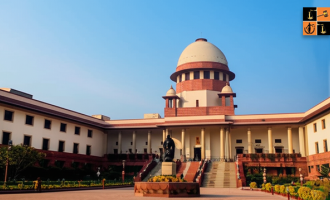
Recently, the Supreme Court held that the confirmation of an auction sale does not completely shield the process from judicial scrutiny when credible concerns arise regarding the adequacy of valuation or fixation of the reserve price. The Court examined a challenge raised by a successful auction purchaser against the Madras High Court’s decision directing reconsideration of the valuation of the auctioned properties by the Debt Recovery Tribunal (DRT). Emphasising the balance between finality of judicial sales and fairness in recovery proceedings, the Court observed that the purpose of such proceedings is “not merely to complete the sale but to realise the maximum value of the secured asset.”
Brief Facts:
The case stemmed from recovery proceedings initiated by a bank against a borrower company and its guarantors after default in repayment of dues secured by an equitable mortgage over certain immovable properties. Acting under the Recovery of Debts Due to Banks and Financial Institutions Act, 1993, the Debt Recovery Tribunal (DRT) issued a recovery certificate, following which the mortgaged properties were attached and sold through a public auction conducted under the procedure prescribed in the Second Schedule to the Income Tax Act, 1961. The appellant emerged as the successful bidder, and the sale was confirmed in his favour.
The guarantors subsequently challenged the recovery proceedings and the auction before the appellate forum and later the High Court, disputing the validity of the mortgage and the adequacy of the valuation adopted for fixing the reserve price. While upholding the recovery proceedings and the auction sale, the High Court remitted the matter to the DRT for reconsideration of the valuation of the properties, which prompted the auction purchaser to approach the Supreme Court.
Contentions of the Appellant:
The Appellant submitted that the High Court erred in directing reconsideration of the property valuation after the auction had been completed and the sale confirmed. It was argued that the auction was conducted strictly in accordance with the Recovery of Debts Due to Banks and Financial Institutions Act, 1993 and the Second Schedule to the Income Tax Act, 1961, on the basis of a valid valuation report and through a competitive bidding process.
The Appellant further contended that the entire sale consideration had been paid and the sale certificate duly issued and registered, thereby transferring title in his favour. Relying on settled precedents, it was argued that the rights of a bona fide third-party auction purchaser deserve protection and that reopening a confirmed court sale after several years would undermine certainty in judicial auctions.
Contentions of the Respondent:
The Respondents contended that the auction proceedings were legally unsustainable as the appellant had failed to comply with the mandatory auction conditions regarding the timely deposit of the bid amount, rendering the sale void. It was further submitted that the recovery proceedings initiated under the Recovery of Debts Due to Banks and Financial Institutions Act, 1993, stood vitiated as the underlying recovery certificate was subsequently withdrawn.
The Respondents also argued that the appellant had suppressed material facts and had earlier sought a refund of the sale consideration, thereby abandoning any claim over the property. In such circumstances, it was contended that in the absence of a valid recovery certificate and strict compliance with the statutory procedure governing auction sales under the Second Schedule to the Income Tax Act, 1961, the appellant could not assert any enforceable rights over the auctioned properties.
Observation of the Court:
The Bench acknowledged the well-settled principle that the rights of a bona fide auction purchaser ordinarily deserve protection to maintain certainty and credibility in judicial sales. However, the Court clarified that such protection cannot operate as an absolute bar against scrutiny of the underlying process, particularly where questions are raised about valuation or the fairness of reserve price fixation.
The Court further reinforced this principle by referring to its earlier decision in Rajiv Kumar Jindal v. BCI Staff Welfare Association, wherein it emphasised that the primary purpose of an auction is to secure the most remunerative price through a transparent process of competitive bidding. The Court observed that public auctions are intended to maximise the realisable value of the asset while ensuring fairness and preventing the possibility of underbidding or unfair dealings in the sale of a debtor’s property.
The Bench articulated the governing principle in emphatic terms, “While there can be no quarrel with the settled proposition that the rights of a bona fide auction purchaser deserve due protection and that confirmed court sales should not ordinarily be interfered with, it is equally well established that such protection is not absolute.”
The Court further observed that the finality attached to confirmed sales must coexist with the requirement that recovery proceedings be conducted in a manner that secures the best possible value of the secured asset. Therefore, when credible doubts arise regarding valuation or the reserve price, courts retain supervisory jurisdiction to examine whether the process was fair and consistent with statutory objectives.
The Court clarified that such a limited remand does not invalidate the auction or disturb the recovery already effected, but merely enables the Tribunal to examine whether the valuation and reserve price were properly determined.
The decision of the Court:
In light of the foregoing discussion, the Apex Court dismissed the appeal and upheld the direction remitting the matter to the Debt Recovery Tribunal for reconsideration of the valuation of the auctioned properties.
Case Title: Om Sakthi Sekar Vs. V. Sukumar & Ors.
Case No.: Civil Appeal No. 3362 oF 2026
Coram: Hon’ble Mr. Justice J.B. Pardiwala, Hon’ble Mr. Justice R. Mahadevan
Advocate for the Petitioner: Sr. Adv. Nachiketa Joshi, Adv. Sai Shashank, Adv. Monu Kumar, AOR Ayush Anand,
Advocate for the Respondent: Sr. Adv. V.Chitambaresh, AOR Chand Qureshi, AOR Sajal Jain, Adv. Ch Leela Sarveswar, Adv. Mohit Yadav, Adv. Sonal Gupta, Adv. A.syedmusthaba, Adv. J.vijayakumari, Adv. Punit Agarwwal,
Read Judgment @Latestlaws.com