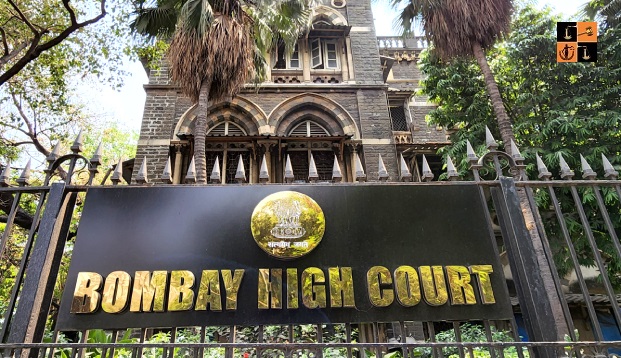
Recently, the Bombay High Court addressed a recurring question in workplace harassment cases, whether an employer must conduct a second round of inquiry after the Internal Complaints Committee (ICC) records its findings. Answering in the negative, the Court held that disciplinary action can be directly based on the ICC report under the POSH Act, making it clear that the law does not envisage a “double inquiry” and that insisting on duplicative proceedings would defeat its very purpose.
Brief Facts:
The case stemmed from allegations of sexual harassment made against a professor at IIT Bombay, leading to proceedings before the Internal Complaints Committee under the Sexual Harassment of Women at Workplace (Prevention, Prohibition and Redressal) Act, 2013. Following a detailed inquiry, covering witness statements, cross-examinations, and documentary material, the ICC submitted its report holding the charges proved and recommended disciplinary action. Acting on this report, the Disciplinary Authority initiated further steps, including issuance of a show-cause notice, and ultimately imposed the penalty of compulsory retirement. Challenging this action, the petitioner approached the High Court contending that, in the absence of a formal charge-sheet and a separate inquiry under service rules such as the CCS (CCA) Rules, the penalty was unsustainable.
Contentions of the Petitioner:
The Petitioner argued that Section 13(3)(i) of the POSH Act mandates that disciplinary action must be taken in accordance with applicable service rules, which necessarily require a formal departmental inquiry initiated through a charge-sheet. The Counsel contended that in the absence of a prescribed procedure under the IIT statutes, the CCS (CCA) Rules would apply, making a second-stage inquiry mandatory before imposing any major penalty. Reliance was placed on judicial precedents to argue that the ICC process cannot substitute a formal disciplinary inquiry.
Contentions of the Respondents:
The Respondents countered that the ICC report itself constitutes an inquiry report under the POSH framework, and the subsequent action taken by the Disciplinary Authority was fully compliant with statutory requirements. The Counsel submitted that the POSH Act, along with the institutional policy framed under the IIT Act, provides a complete mechanism for inquiry and action, thereby excluding the need to invoke general service rules. The Respondents also emphasised that the petitioner had participated fully in the proceedings and suffered no prejudice.
Observation of the Court:
The Court while examining the interplay between the POSH Act, its Rules, and general service jurisprudence held that the ICC functions as a specialised fact-finding body whose report is treated as the inquiry report for disciplinary purposes. The Court noted that the statutory scheme under Section 13(3)(i) of the POSH Act allows action to be taken in such manner as may be prescribed, and in the present case, the institutional policy provided a complete procedural framework, leaving no scope to import the CCS (CCA) Rules.
The Bench emphasised that the petitioner had been given a full opportunity at every stage, including participation in the ICC proceedings, receipt of the report, and submission of responses to the show cause notice. It observed that “there cannot be a double inquiry for the same issue/subject matter,” adding that the findings of the ICC followed by disciplinary consideration, constitute a “full fledged inquiry.”
The Court further invoked the principle that “procedure is the handmaiden of justice,” cautioning against hyper-technical approaches that would defeat substantive justice. The Court laid down that the POSH Act operates as a complete code in such matters, and its prescribed procedure, culminating in the ICC report, can validly form the basis for disciplinary action without duplication of proceedings.
The decision of the Court:
In light of the foregoing discussion, the Court dismissed the writ petition and upheld the penalty imposed on the petitioner, holding that no separate departmental inquiry or charge-sheet was required once a valid ICC inquiry had been conducted in accordance with the POSH Act and applicable institutional rules.
Case Title: Arun A. Iyer Vs. The Board of Governors and Ors.
Case No.: Writ Petition No. 3224 of 2024
Coram: Hon’ble Mr. Justice Advait M. Sethna, Hon’ble Mr. Justice R.I. Chagla
Advocate for the Petitioner: Adv. Ramesh Ramamurthy, Adv. Saikumar Ramamurthy, Adv. Aalim N. Pinjari
Advocate for the Respondent: Adv. Arsh Misra, Adv. Surbhi Soni,
Read Judgment @Latestlaws.com