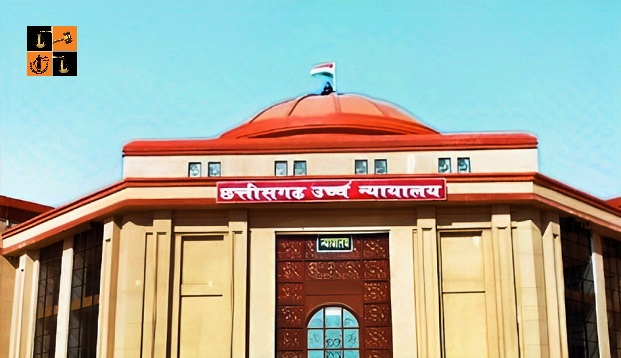
Recently, the Chhattisgarh High Court held that a preventive arrest under the Bharatiya Nagarik Suraksha Sanhita, 2023 (BNSS) cannot be sustained in the absence of a registered cognizable offence and strict compliance with constitutional safeguards, declaring the detention of a law student illegal and awarding compensation for violation of fundamental rights. In a strong reaffirmation of personal liberty, the Court underscored that preventive powers “cannot be used punitively” and must operate strictly within constitutional limits.
Brief Facts:
The case arose from the arrest of Akash Kumar Sahu, a law student and licensed hotel owner in Bhilai, District Durg. The petitioner had earlier secured interim protection from the High Court restraining unwarranted police interference in his hotel operations. On 08.09.2025, police officials visited the premises in connection with a missing person inquiry. According to the record, the situation escalated into a confrontation, following which the petitioner was taken into custody.
Notably, no FIR for any cognizable offence was registered against him. Instead, the police invoked Section 170 of the BNSS and initiated preventive proceedings under Sections 126 and 135 through a written report. He was produced before the Sub-Divisional Magistrate and remanded to judicial custody, only to be released on bail the next day. Alleging unlawful arrest, custodial humiliation, and mechanical remand, the petitioner approached the High Court seeking quashing of the proceedings and compensation for breach of Articles 21 and 22(1) of the Constitution.
Contentions:
The counsel for the petitioner contended that the arrest was wholly illegal, as no FIR had been registered and the alleged incident disclosed, at best, a minor altercation. It was argued that Section 35 of the BNSS (analogous to Section 41 CrPC) confers discretionary power and mandates issuance of notice under Section 35(3) where arrest is not necessary. Reliance was placed on Arnesh Kumar v. State of Bihar, Joginder Kumar v. State of U.P., and Mihir Rajesh Shah v. State of Maharashtra to submit that communication of grounds of arrest in writing is mandatory. The petitioner highlighted that the arrest memo itself recorded that he was unaware of the reasons for his detention, demonstrating non-compliance with statutory and constitutional safeguards. It was further submitted that the Magistrate failed to independently assess the necessity of remand under Section 187(2) BNSS.
The State, on the other hand, defended the action as a lawful preventive measure taken during investigation of a missing person complaint. It was submitted that the petitioner’s conduct created apprehension of breach of peace, justifying recourse to Section 170 BNSS. The State maintained that procedural formalities were followed, the family was informed, and the petitioner was produced before the Magistrate within the prescribed time. Allegations of custodial misconduct were denied.
Observations of the Court:
The Court noted that certain foundational facts were undisputed, no FIR had been registered and the arrest was purely preventive in nature. Even accepting the State’s version, the Court found that the allegations did not disclose circumstances warranting custodial detention. Interpreting Section 35 BNSS, the Court observed that the provision confers discretion, not compulsion, and mandates issuance of notice when arrest is not strictly necessary. The failure to comply with Section 35(3) rendered the arrest unlawful.
Crucially, the Court relied on Mihir Rajesh Shah (2025) to reiterate that communication of the grounds of arrest in writing within the stipulated timeframe is mandatory, holding that non-compliance strikes at the root of Article 22(1). The endorsement in the arrest memo that the petitioner was unaware of the reasons for his arrest fortified this conclusion. The Court further found that the Magistrate had “mechanically exercised” powers under Section 187(2) BNSS without verifying the existence of a cognizable offence or the necessity for custody.
Referring to D.K. Basu and Mehmood Nayyar Azam, the Court emphasized that unlawful detention and custodial humiliation constitute a direct assault on Article 21, and compensation is an appropriate public law remedy where personal liberty is infringed.
The decision of the Court:
Holding that the arrest and remand violated Articles 21 and 22(1) of the Constitution, the High Court quashed the order dated 08.09.2025, the criminal case, and the written report initiating preventive proceedings. The Court directed the State to pay Rs.1,00,000 as compensation, with 9% interest in case of delay, while granting liberty to recover the amount from erring officials after due inquiry.
The ratio of the decision firmly establishes that preventive provisions under the BNSS cannot substitute for criminal process, and any arrest made without adherence to statutory safeguards and constitutional mandates is liable to be struck down with consequential public law compensation.
Case Title: Akash Kumar Sahu Vs. State of Chhattisgarh & Ors.
Case No.: Public Interest Litigation (PIL) No. - 1118 Of 2025
Coram: Chief Justice Ramesh Sinha, Ravindra Kumar Agarwal
Advocate for Petitioner: Adv. Dhiraj Kumar Wankhede
Advocate for Respondent: Advs. Vivek Sharma (A.G), Praveen Das (Add. A.G)
Read Judgment @Latestlaws.com