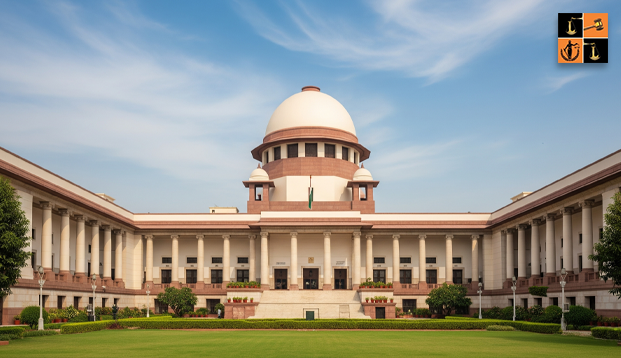
Recently, the Supreme Court made it clear that a Successful Resolution Applicant (SRA) cannot keep one foot inside and one foot outside an approved insolvency resolution plan. The Court rejected an attempt to question the terms of a Committee of Creditors (CoC) approved plan after approval, upheld the forfeiture of the Appellant's Earnest Money Deposit, and sustained the liquidation of the corporate debtor. Emphasising that the Insolvency and Bankruptcy Code, 2016, is designed to ensure certainty and speed, the Court cautioned that permitting such manoeuvres would undermine the very architecture of the insolvency regime.
Brief facts:
The case arose from the Corporate Insolvency Resolution Process (CIRP) of a corporate debtor, where the Appellant's resolution plan was approved by the CoC with an overwhelming majority. However, a dispute subsequently emerged when the Appellant objected to certain stipulations contained in the Letter of Intent (LoI) issued by the Resolution Professional, claiming that the LoI imposed conditions beyond the approved resolution plan. On that basis, the appellant refused to accept the LoI and failed to furnish the required performance guarantee.
As a consequence, the Resolution Professional forfeited the appellant's ₹1 crore Earnest Money Deposit (EMD) in accordance with the terms of the resolution process. Since the approved plan was not implemented and the insolvency process could not progress further, the CoC resolved to liquidate the corporate debtor under Section 33(2) of the Insolvency and Bankruptcy Code, 2016. The Appellant's challenge to the forfeiture of the EMD and the liquidation decision was rejected by both the National Company Law Tribunal (NCLT) and the National Company Law Appellate Tribunal (NCLAT), leading to the present appeal before the Apex Court under Section 62 of the IBC.
Contentions of the Appellant:
The Appellant contended that the LoI issued by the Resolution Professional were contrary to both the approved resolution plan and the Insolvency and Bankruptcy Code because they imposed conditions not contemplated by the plan. The Counsel argued that making the LoI subject to the outcome of pending proceedings involving prospective resolution applicants rendered it conditional and therefore unacceptable. The Appellant further challenged the clause placing the burden of potential liabilities arising from employee and worker litigation on the successful resolution applicant. Additionally, the Counsel submitted that the CoC had originally granted forty-five days for furnishing the performance guarantee, but this period was subsequently reduced to seven days, allegedly in violation of the CoC's own decision. On these grounds, the appellant argued that the forfeiture of the EMD and the subsequent liquidation process were unsustainable.
Contentions of the Respondent:
The Respondents supported the findings of both the NCLT and NCLAT, arguing that the Appellant was fully aware of the pending litigation involving prospective resolution applicants and had participated in multiple CoC meetings where these issues were discussed. The Counsel contended that the appellant had never objected to these conditions when seeking approval of the plan and had, in fact, accepted the associated risks during the CoC deliberations. According to the Respondents, the allegation that the LoI was conditional was merely an afterthought devised to avoid implementing the approved plan. The Counsel further submitted that the forfeiture of the EMD was strictly in accordance with the Request for Resolution Plan (RFRP) and that liquidation became inevitable after the appellant failed to fulfil its obligations as a successful resolution applicant.
Observation of the Court:
The Division Bench of Justice K. V. Viswanathan and Justice Vipul M. Pancholi observed, “It was a clear subterfuge. Knowing fully well that one cannot withdraw directly from the plan approved by the CoC, an attempt was made in an indirect manner by harping on about certain stipulations as conditionalities to shift the blame on the CoC for the appellant’s unwillingness to take the plan forward. This clever ploy has rightly been scotched by the fora below. If such artifices are allowed to succeed, the entire architecture of the IBC would crumble and the laudable objects sought to be achieved by the said Code would become a far cry.”
The Court held that the Appellant could not treat the Letter of Intent (LoI) as a conditional document merely because it referred to pending proceedings involving prospective resolution applicants or allocated certain risks to the successful resolution applicant. The Bench found that these aspects had been discussed in several Committee of Creditors (CoC) meetings in which the Appellant actively participated. Since the appellant was fully aware of these issues before approval of the resolution plan and had even sought issuance of the LoI, the Court agreed with the findings of the NCLT and NCLAT that the objection regarding the alleged conditional nature of the LoI was an afterthought raised only after the plan had been approved.
The Bench further observed that the Appellant had expressly accepted the obligations and risks associated with the resolution process and could not subsequently challenge them. Relying on the principles of acquiescence, estoppel, and the doctrine against approbation and reprobation, the Court emphasised that a party cannot accept the benefits of a transaction while later disowning its burdens. The Court found that the Appellant had remained silent when objections could have been raised, participated in the decision-making process, and accepted the relevant terms during CoC deliberations. Consequently, he was precluded from taking a contrary position once implementation of the plan became due.
The Court also reaffirmed the binding nature of a CoC-approved resolution plan and the paramount importance of the CoC's commercial wisdom under the Insolvency and Bankruptcy Code. Referring to Ebix Singapore Private Limited vs. Committee of Creditors of Educomp Solutions Limited and Anr, the Bench reiterated that once a resolution plan is approved, the successful resolution applicant is expected to implement it in a time-bound manner and cannot seek further negotiations. The Court therefore upheld the forfeiture of the ₹1 crore Earnest Money Deposit (EMD), holding that the Appellant had failed to comply with the terms of the resolution process, and further sustained the CoC's decision to liquidate the corporate debtor under Section 33(2) of the IBC, finding no reason to interfere with a commercial decision approved by an overwhelming majority of creditors.
The decision of the Court:
The Apex Court dismissed the appeals and upheld the concurrent decisions of the NCLT and NCLAT. The Court sustained the forfeiture of the Appellant's Earnest Money Deposit, affirmed the liquidation of the corporate debtor, and directed the liquidator to proceed with the remaining liquidation process in accordance with the Insolvency and Bankruptcy Code.
Case Title: Sanjay Dave Vs. Andhra Bank Ltd. & Ors.
Case No.: Civil Appeal Nos.12264-12266 of 2024
Citation: 2026 Latest Caselaw 451 SC
Coram: Hon’ble Justice K. V. Viswanathan, Hon’ble Justice Vipul M. Pancholi
Advocate for the Petitioner: AOR Purti Gupta, Adv. Purti Gupta, Adv. Henna George, Adv. Sunidhi Sah, Adv. Khushi Sharma, Adv. Pooja
Advocate for the Respondent: Sr. Adv. Gaurav Agarwal, AOR Surya Prakash, AOR Shagun Matta, Adv. Arun Kumar Shukla, Adv. Naman Shukla, Adv. Yasharth Shukla, Adv. Anjali Sharma, Adv. Mandeep Singh Vinaik, Adv. Deepak Bashta