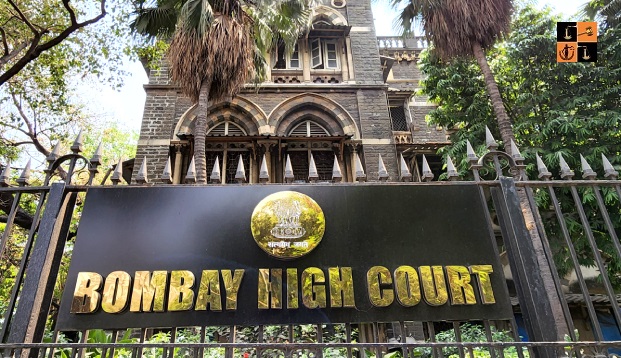
Recently, the Bombay High Court partly allowed a claimants’ appeal while dismissing an insurance company’s challenge and significantly enhanced compensation in a motor accident death case involving a 23 year old BHMS student. The Court revised the income assessment and recalculated dependency compensation, ultimately increasing the award to Rs.46.06 lakh with 7% interest. Significantly, the Court observed that “academic excellence is different from professional earning capacity,” rejecting a rigid link between marks and future income.
Brief Facts:
The case arose from a fatal road accident dated 07.11.2014 in which a 23 year old BHMS student, riding a motorcycle, was hit by a truck allegedly driven negligently in Sangli district. The Motor Accident Claims Tribunal (MACT), Sangli, had initially awarded Rs.21.93 lakh to the deceased’s mother under Section 166 of the Motor Vehicles Act, 1988, fixing the notional income at Rs.20,000 per month with applicable multiplier and deductions. Both the Insurance Company and the claimants challenged the award, one seeking reduction on grounds of lower earning potential and non-dependence, and the other seeking enhancement, contending that the deceased, a medical aspirant, had far greater future earning prospects as a homeopathy practitioner.
Contentions:
The appellant insurance company argued that the Tribunal had excessively assessed the deceased’s income at Rs.20,000 per month despite his alleged below-average academic performance in BHMS studies. It was submitted that a lower income benchmark of ₹10,000 per month would be more appropriate, with reliance placed on the Supreme Court decision in Meena Pawaia vs. Ashraf Ali. The insurer also contended that none of the claimants could be treated as dependents, asserting that the mother was a pensioner and the brother was independently employed, thereby questioning the very basis of dependency compensation.
The claimants sought enhancement, contending that the deceased was a promising medical student in his third year of BHMS who had a strong likelihood of establishing a professional practice as a homeopathy doctor. It was argued that the Tribunal erred in undervaluing his earning capacity by linking it to academic marks. Reliance was placed on MSRTC vs. Govind and other precedents to submit that courts have recently adopted a realistic income assessment approach, even in cases involving students, and that the deceased’s potential earnings should be assessed between Rs.30,000 to Rs,35,000 per month with appropriate future prospects.
Observations of the Court:
The Court undertook a detailed reassessment of the principle governing estimation of future income in motor accident compensation, emphasizing that income determination cannot be mechanically tied to academic performance alone. It held that while the deceased was a BHMS student with less than 50% marks, such academic record could not be treated as determinative of his professional earning capacity. The Court stressed that “academic excellence is different and ability to earn as a professional is different,” and further observed that both high and average academic performers may succeed differently in professional life depending on circumstances.
Relying on Supreme Court jurisprudence including Chandra vs. Mukesh Kumar Yadav, the Court reiterated that reasonable guesswork based on probability is permissible in absence of strict documentary proof. It further relied on Prabhavathi vs. BMTC to underline that motor accident claims operate on the principle of preponderance of probability, not strict evidentiary standards. The Court concluded that the Tribunal’s restrictive approach was unjustified, as it ignored the deceased’s status as a medical professional-in-training who had a realistic potential to establish practice.
Accordingly, it held that income should be reassessed at Rs.30,000 per month with 40% future prospects, along with conventional heads of compensation.
Observations of the Court:
The Court dismissed the appeal filed by the Insurance Company and partly allowed the appeal filed by the claimants, enhancing the compensation payable to Rs.46.06 lakh with 7% interest per annum. It reaffirmed that in motor accident claims involving students or non-earning individuals, courts must adopt a realistic and probability-based approach while assessing future income, and cannot rigidly correlate academic performance with earning potential.
Case Title: National Insurance Compant Ltd Vs. Sou. Malan Anil Holkar and Ors.
Case No.: First Appeal No. 924 of 2022
Coram: Hon’ble Mr. Justice M. M. Sathaye
Advocate for the Appellants: Adv. Akshay Kulkarni, Adv. Avesh Ghadge, Adv. Aditya Ghadge
Advocate for the Respondent: Adv. Akshay Kulkarni, Adv. Avesh Ghadge, Adv. Aditya Ghadge, Adv. Vishwjeet A. Desai, Adv. Amey V. Mahajan, Adv. Ashok Desai
Read Judgment @Latestlaws.com