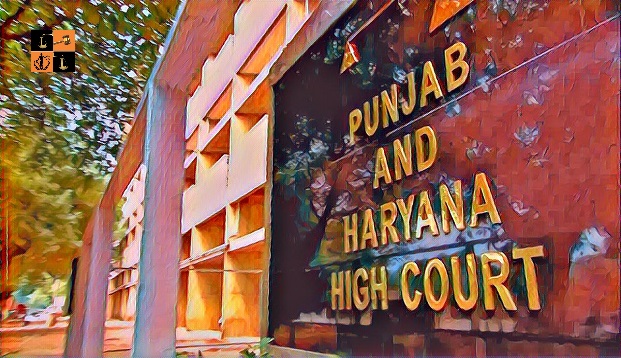
Recently, the Punjab and Haryana High Court examined whether landowners whose land was acquired under the National Highways Act, 1956, are entitled to enhanced statutory interest under the 2013 Land Acquisition Act on the increased compensation amount awarded by the Arbitrator. The petition raised an important question regarding parity in compensation and interest benefits available to similarly situated landowners under different acquisition laws.
Brief Facts :
The Petitioners’ agricultural land measuring 284.98 marlas situated in Village Tibber, District Gurdaspur, was acquired for the Delhi-Amritsar-Katra National Highway project under notifications issued under Sections 3-A and 3-D of the National Highways Act, 1956. Initially, the Competent Authority for Land Acquisition (CALA) passed an award assessing compensation at Rs.5,363 per marla. Dissatisfied with the amount awarded, the petitioners invoked arbitration under Section 3-G(5) of the 1956 Act. Subsequently, the Arbitrator enhanced the market value to Rs.15,00,000 per acre along with 100% solatium and additional interest @12% from the date of notification till the award date. However, instead of granting statutory interest under Section 72 of the 2013 Act, the Arbitrator granted interest @9% from the date of filing of the application till actual deposit. Aggrieved by denial of higher statutory interest from the date of possession, the petitioners approached the High Court
Contentions of the Petitioners :
The counsel for the Petitioners contended that the Arbitrator wrongly granted interest @9% only from the date of filing of the application instead of awarding statutory interest under Section 72 of the 2013 Act, which provides for 9% interest for the first year from possession and 15% thereafter on the enhanced compensation amount. They further argued that similarly situated landowners from the same village had already been granted such benefits in earlier arbitral awards, which were accepted by the respondents. Relying on Union of India v. Tarsem Singh, the petitioners submitted that denial of solatium and enhanced interest under the 2013 Act would amount to discrimination and violate Article 14 of the Constitution.
Contentions of the Respondents :
The respondents opposed the writ petition primarily on the ground of maintainability. They argued that the petitioners had an alternative statutory remedy under Section 34 of the Arbitration and Conciliation Act, 1996 to challenge the arbitral award and therefore the writ petition was not maintainable.
Observation of the Court :
The High Court observed that the Arbitrator wrongly restricted the grant of interest to 9% from the date of filing of the application till actual deposit, despite the statutory mandate under Section 72 of the 2013 Act. The Court held that once enhanced compensation had been awarded, the petitioners were also entitled to the statutory benefits attached to such compensation, including higher interest from the date of possession.
While examining the scheme of the 2013 Act and the National Highways Act, the Court emphasized that landowners cannot be treated differently merely because their lands were acquired under different enactments. Referring to Tarsem Singh, the Court noted that “It is not possible to discriminate between landowners covered by the 2013 Act and landowners covered by the National Highways Act, when it comes to compensation to be paid for lands acquired under either of the enactments.”
The Court further observed that the concept of “just compensation” extends beyond the principal amount and necessarily includes solatium and interest for delayed payment. In this regard, the Court reproduced the following observations that “The just compensation would not only include the compensation which has been determined, but also solatium and interest payable thereof on the delay in making payment of compensation.” and “The land loser having lost the benefit of usage of the land being required to be paid the compensation at the earliest, the delay in payment of compensation also causes injury and damage to the land loser, which is required to be compensated by payment of interest.”
The Court also stressed that discriminatory payment of compensation or interest would offend Article 14 of the Constitution and observed that “A citizen cannot be provided discriminatory compensation/solatium or interest under different enactments.” Further reiterating the applicability of the beneficial regime under the 2013 Act, the Court observed that “The Act of 2013 has been made applicable uniformly to all acquisitions insofar as compensation is concerned.”
Decision of the Court :
Allowing the writ petition, the High Court directed the Respondents to pay statutory interest on the enhanced compensation in terms of Section 72 of the 2013 Act, i.e., interest @9% for the first year from the date of possession and @15% per annum thereafter till actual payment
Case Title: Kuldeep Singh and Another v. Union of India and Others
Case No.: CWP No. 38070 of 2025 (O&M)
Coram: Hon’ble Mr. Justice Harkesh Manuja
Advocate for the Petitioners: Mr. Manoj Pundir, Advocate with Mr. Dilpreet, Advocate
Advocate for the Respondents: Ms. Komal Bishnoi, Advocate for Mr. Rishi Kaushal, Advocate for respondents-NHAI; Mr. Karunesh Kaushal, Asstt. A.G., Punjab
Read Judgment @Latestlaws.com