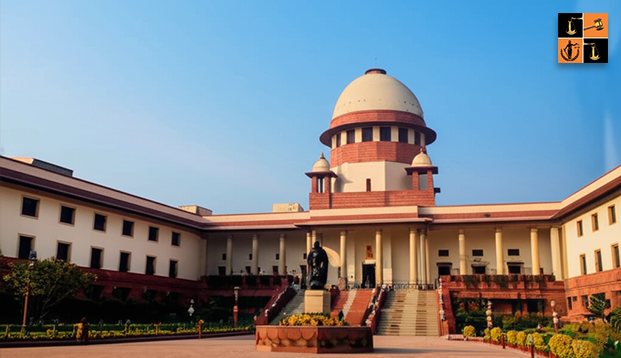
Recently, the Supreme Court upheld a Will executed in favour of a man’s sister despite the exclusion of his wife and children, holding that mere deprivation of natural heirs cannot by itself make a Will suspicious. The Court declined to interfere with the concurrent findings of the Trial Court, First Appellate Court and the Karnataka High Court, all of which had accepted the genuineness of the Will. Emphasising the scope of testamentary freedom, the Bench observed that “the whole idea behind the execution of a Will is to interfere with the normal line of succession.”
Brief Facts:
The case stemmed from a dispute over agricultural and ancestral properties in Karnataka after a testator executed a Will in favour of his sister while excluding his wife and children, stating that they had already been sufficiently provided for during his lifetime. Following his death, mutation entries were made in favour of the wife before the revenue authorities. Years later, the sister instituted a civil suit seeking a declaration of ownership, possession, mesne profits and injunction on the basis of the Will. The wife and children challenged the Will as fabricated and alleged forgery of signatures. The Trial Court upheld the validity of the Will, and the findings were subsequently affirmed by the First Appellate Court as well as the Karnataka High Court, leading to the appeal before the Supreme Court.
Contentions of the Appellant:
The Appellants argued that the Will was surrounded by suspicious circumstances as the wife and children had been completely excluded from inheritance without adequate justification. The Counsel contended that the Will surfaced nearly seven years after execution and six years after mutation entries had already been effected in favour of the appellants. The Appellants further questioned why the testator would execute a Will only in respect of agricultural lands while leaving out other assets. The Counsel also argued that the First Appellate Court had failed to comply with the mandatory requirements under Order XLI Rule 31 of the CPC while framing points for determination. The Appellants additionally relied upon affidavits allegedly filed by attesting witnesses denying execution of the Will.
Contentions of the Respondent:
On the other hand, the Respondents submitted that once the execution of the Will had been duly proved through the testimony of an attesting witness, the burden shifted to the appellants to establish forgery or fabrication, which they failed to do. The Counsel argued that neither the wife nor the children entered the witness box to deny the execution of the Will or prove allegations of fraud. The Respondents further pointed out that the plaintiff had already moved an application before the Tehsildar in February 1984, asserting rights under the Will, and therefore, there was no unexplained delay. The Counsel also emphasised that the Will itself clearly recorded the reason for excluding the wife and children, namely that the testator had already provided sufficiently for them during his lifetime.
Observation of the Court:
The Division Bench of Justice Ujjal Bhuyan and Justice Vijay Bishnoi observed, “It is trite to state that when the validity of a Will is to be determined, the overall terms of a Will, the intention of the testator and the surrounding circumstances have also to be seen. Mere exclusion of the natural heirs from the property of the testator, by itself, cannot be construed as a suspicious circumstance so as to invalidate a Will outrightly. A testator is legally entitled to dispose of his property according to his own wishes, and unless the exclusion is accompanied by suspicious circumstances affecting the genuineness or due execution of a Will, such exclusion alone does not render a Will invalid.”
The Court observed that mere exclusion of natural heirs from inheritance cannot, by itself, render a Will suspicious or invalid. Emphasising the concept of testamentary freedom, the Bench held that the very purpose of a Will is to alter the ordinary line of succession according to the wishes of the testator. The Court noted that the Will itself contained a clear explanation that the wife and children had already been provided enough and more during the lifetime of the deceased. It therefore held that exclusion of legal heirs can become suspicious only when accompanied by circumstances casting doubt on the genuineness or due execution of the Will.
The Bench further observed that the Will stood duly proved through the testimony of one of the attesting witnesses, who confirmed that the testator had executed the document in his presence and that the signatures were affixed in the presence of each other. The Court found that despite alleging forgery and fabrication, the appellants failed to produce any convincing evidence in support of their claims and even chose not to step into the witness box themselves. The Court also reiterated that non-registration of a Will does not affect its validity, since there is no legal requirement mandating registration of testamentary documents, and clarified that mutation entries in revenue records do not confer title over property.
The Court also rejected the challenge based on alleged non-compliance with Order XLI Rule 31 of the CPC by the First Appellate Court. Stressing that procedural rules cannot override substantial justice, the Bench held that substantial compliance with the provision is sufficient if the appellate court has properly examined the evidence and recorded reasoned findings. The Court clarified that exclusion of legal heirs, absence of registration, or delayed production of a Will cannot by themselves invalidate a testamentary disposition unless supported by genuine suspicious circumstances affecting its authenticity or execution.
The decision of the Court:
The Apex Court dismissed the appeal filed by the wife and children of the deceased.
Case Title: Parvathi Nairthi (Dead) and Ors. Vs. Laxmi Nairthy (Dead) Through Lrs. and Ors.
Citation: 2026 Latest Caselaw 411 SC
Case No.: SLP (CIVIL) NO. 12822 of 2013)
Coram: Hon’ble Mr. Justice Ujjal Bhuyan, Hon’ble Mr. Justice Vijay Bishnoi
Advocate for the Petitioner: AOR Bina Gupta
Advocate for the Respondent: Sr. Adv. Vinay Navare, AOR Madhusmita Bora, Adv. Pawan Kishore Singh, Adv. Dipankar Singh, Adv. Pavithra V.