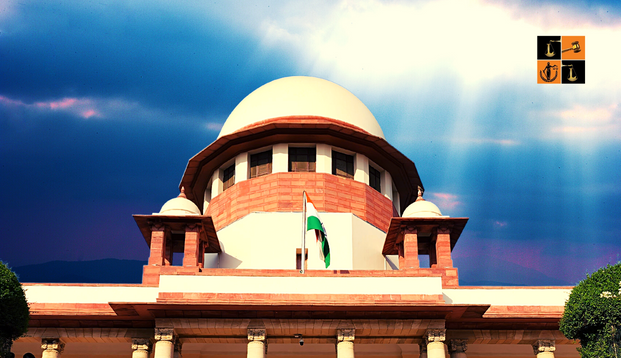
Recently, the Supreme Court held that when a privately owned vehicle is requisitioned by the State for public purposes, liability for accidents during such period rests with the requisitioning authority and not the insurer. Upholding the High Court’s ruling, the Court clarified the legal position on shifting control and responsibility in such cases, observing that once the State assumes command, it must also bear the consequences of its use.
Brief Facts:
The case arose from a fatal road accident involving a bus and a motorcycle, resulting in the death of the motorcyclist. The bus, owned by a private school, had been requisitioned by State authorities for Gram Panchayat election duties under statutory powers. A claim petition filed by the deceased’s legal representatives before the Motor Accident Claims Tribunal led to an award of compensation, initially fastening liability on the insurer.
However, on appeal, the High Court shifted the liability to the State authority that had requisitioned the vehicle and enhanced the compensation amount. Aggrieved by this shift, the State authority approached the Supreme Court, questioning whether liability could be imposed on it despite the existence of a valid insurance policy covering the vehicle.
Contentions:
The counsel for the appellant-State authority contended that the High Court erred in transferring liability from the insurer, arguing that the vehicle remained insured at the time of the accident. It was submitted that fastening liability on public authorities for vehicles requisitioned for official duties would create an adverse precedent, particularly when such authorities neither own the vehicle nor have an insurable interest in it. The appellant maintained that the insurer, having issued a valid policy, ought to bear the compensation liability.
On the other hand, the respondents, including the claimants and supported by legal precedents, argued that once a vehicle is requisitioned under statutory authority, effective control shifts to the State. Relying on judgments such as National Insurance Co. Ltd. v. Deepa Devi and Purnya Kala Devi v. State of Assam, it was contended that liability must follow control and possession, not mere ownership. Therefore, the State authority, which directed and deployed the vehicle for public purposes, was rightly held responsible.
Observations of the Court:
The Apex Court undertook a detailed examination of the concept of “requisition” and its legal implications, emphasising that such an act involves compulsory takeover of a vehicle under statutory authority, stripping the owner of effective control. Drawing from precedent, the Court reiterated that during requisition, “save and except for legal ownership, for all intent and purport, the registered owner of the vehicle loses entire control thereover.”
The Court highlighted that liability must align with control, observing that the State determines how, when, and for what purpose the vehicle is used. It further clarified that insurance contracts are premised on ordinary, voluntary use of the vehicle and cannot be extended to cover risks arising from compelled public deployment.
In a key observation, the Court stated that “when the State steps in, assumes control, and deploys the vehicle for its own purposes, it assumes with that control the corresponding responsibility.” Rejecting the argument that such liability would discourage public authorities, the Court held that statutory power to requisition carries with it accountability for consequences. It also distinguished cases involving contractual arrangements from those involving statutory requisition, stressing that the latter fundamentally alters the legal relationship and risk allocation.
The decision of the Court:
The Court dismissed the appeal, affirming that liability for the accident lies with the requisitioning State authority and not the insurer. The Court upheld the High Court’s decision and clarified the ratio that in cases of statutory requisition, where control and possession of a vehicle vest with the State, liability must follow such control, thereby excluding the insurer from responsibility for risks arising outside the scope of the original insurance contract.
Case Title: District Magistrate and District Election Officer and Collector, Gwalior, M.P. Vs. National Insurance Company Limited & Ors.
Case No.: @ Special Leave Petition (Civil) No.22910 of 2025
Coram: Hon'ble Mr. Justice Sanjay Karol, Hon'ble Mr. Justice Prashant Kumar Mishra
Advocate for the Petitioner: AOR Shashank Singh, Adv. Siddharth Sharma, Adv. Ankit Singh, Adv. Milind Modi
Advocate for the Respondent: Adv. Manjeet Chawla
Read Judgment @Latestlaws.com