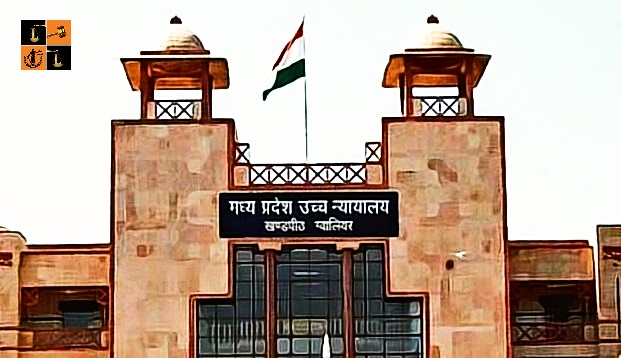
Recently, the Madhya Pradesh High Court delivered a significant ruling upholding the suspension of eight excise licenses held by Som Distilleries Pvt. Ltd. and Som Distilleries and Breweries Pvt. Ltd., categorically rejecting the distillery group's attempt to escape regulatory consequences by sheltering behind license renewals and suspended criminal sentences. Justice Vivek Agarwal anchored the decision in a foundational constitutional reality, observing that "liquor business is not a fundamental right and secondly, when the test of proportionality is applied, then on that touchstone also, decision of the authority being within the framework of the Excise Act and the Rules framed thereunder, cannot be faulted with."
Brief Facts:
The dispute traces its origins to a show-cause notice issued in February 2024 by the Madhya Pradesh Excise Department, triggered by criminal convictions arising from the illegal transportation of foreign liquor using forged permits, a fraud that resulted in direct loss of excise revenue to the State. The individuals convicted in connection with this operation included the driver, cleaner, and other persons associated with the licensed entities. Acting on those convictions, the Excise Commissioner passed an order on February 4, 2026, suspending eight licenses collectively held by the two Som Distilleries entities. The petitioners challenged this suspension before the High Court, pointing to a procedural wrinkle: the licenses to which the original show-cause notice was directed had already expired on March 31, 2024, and had since been renewed for subsequent years. The central question before the court was whether prior statutory violations could lawfully shadow a renewed license, or whether renewal wiped the slate clean.
Contentions of the Petitioner:
For the Petitioners, counsel mounted a multi-pronged assault on the suspension order. The primary argument was that the show-cause notice, having been issued against licenses that lapsed on March 31, 2024, became infructuous upon their expiry and could not be resurrected to penalize renewals granted for later years, effectively treating each renewal as a fresh and independent grant insulated from prior misconduct. It was further contended that since criminal appeals had been filed against the underlying convictions and the sentences had been suspended by the appellate court, the very factual foundation of the show-cause notice had lost its legal efficacy.
On procedural grounds, the petitioners alleged a violation of natural justice, arguing that a composite show-cause notice issued against two legally distinct corporate entities was improper, and that no adequate opportunity of hearing was granted. Crucially, the petitioners also sought to sever corporate liability from individual culpability, submitting that the criminal acts of employees, the driver and cleaner of the truck, could not be vicariously attributed to the companies themselves, and that the statutory provisions invoked by the Excise Commissioner were incorrectly applied to the facts.
Contentions of the Petitioner:
For the State, counsel presented a structurally coherent counter-position grounded in the character of excise licensing as a conditional, annually renewable privilege rather than a vested right. It was argued that each renewal was not a fresh grant but a continuation subject to ongoing statutory compliance, meaning past violations carried forward their legal consequences regardless of whether the specific license period had changed. On the criminal proceedings, the State drew a critical distinction that would ultimately prove decisive, the appellate court had suspended the sentence, not the conviction itself.
The findings of guilt, the State argued, remained intact and fully operative, providing a valid and subsisting basis for excise action. The State further defended the procedural propriety of the show-cause notice, asserting that it complied in full with the requirements of Section 31(1-A) of the Madhya Pradesh Excise Act.
Observations of the Court:
Justice Vivek Agarwal's analysis proceeded with methodical precision, dismantling each of the petitioners' arguments in turn. On the threshold question of whether renewal immunized the licensees from past misconduct, the court was unequivocal, excise licenses are not fresh grants upon renewal but continuations of a conditional privilege, with compliance forming an integral and ongoing precondition. Prior violations therefore retained full legal relevance and did not evaporate merely because a new license period had commenced. This reasoning foreclosed the petitioners' most foundational argument at the outset.
The court then turned to the distinction between a suspended sentence and a stayed conviction, a point of considerable legal significance. The bench noted with clarity that no material had been produced before it to demonstrate that the convictions themselves had been stayed by any Appellate Court. A suspension of sentence, the court held, affects only the enforcement of punishment; it leaves the underlying finding of guilt wholly undisturbed and legally operative. The excise authorities were therefore entitled to act on those convictions without awaiting the outcome of the appeals.
On the question of vicarious liability, the court invoked Sections 31(1)(c) and 44 of the Madhya Pradesh Excise Act to hold that acts committed by employees, agents, and others acting on behalf of a licensee are directly attributable to the license holder. The bench articulated this principle with precision, "the expression 'anyone acting on his behalf with his express or implied permission', will include the driver and cleaner of the truck in which material was transported. Therefore, their conviction under Section 34(2) of the Madhya Pradesh Excise Act, will bind the licencee in terms of the language of Clause (c) of Sub-section (1) of Section 31 of the Excise Act." This interpretation left no room for the petitioners to distance the corporate entities from the criminal acts of their operational personnel.
Addressing natural justice, the court found the procedural challenge similarly unpersuasive. The show-cause notice, it held, had recorded reasons, furnished the necessary particulars, and afforded the petitioners a genuine opportunity to respond, fully satisfying the requirements of Section 31(1-A). More damaging to the petitioners' case was the court's pointed observation that in their replies to the show-cause notice, the companies had failed to deny the core allegation of transporting liquor using forged permits. That silence, the court noted, weighed heavily against them. Finally, applying the doctrine of proportionality, the bench assessed the gravity of the conduct, systematic use of forged permits causing loss of excise revenue, against the severity of the State's response, concluding that suspension was a measured and defensible exercise of regulatory authority, "in terms of the fraud perpetuated in using forged permits to transport foreign liquor, the impugned acts of the respondents, when tested on the touchstone of doctrine of proportionality, cannot be faulted with."
The decision of the Court:
The Court dismissed the writ petition in its entirety, affirming the Excise Commissioner's order suspending the eight licenses. The ratio decidendi of the ruling rests on three interlocking legal propositions: first, that the liquor trade is a heavily regulated privilege and not a fundamental right, leaving license holders with substantially limited grounds to resist state action second, that excise license renewals carry forward the compliance obligations and penal consequences of prior periods, insulating regulatory authorities from procedural escape routes built around license expiry, and third, that a suspension of sentence by an appellate court does not negate the conviction itself, which remains a valid and enforceable basis for excise action until expressly stayed.
Case Title: Som Distilleries Pvt. Ltd. and Ors. Vs. The State of Madhya Pradesh and Ors.
Case No.: Writ Petition No. 4915 of 2026
Coram: Hon'ble MR. Justice Vivek Agarwal
Advocate for the Petitioner: Sr. Adv. Naman Nagrath, Adv. Rahul Diwakar,
Advocate for the Respondent: AAG Harpreet Singh Ruprah, Government Adv. Manas Mani Verma
Read Judgment @Latestlaws.com