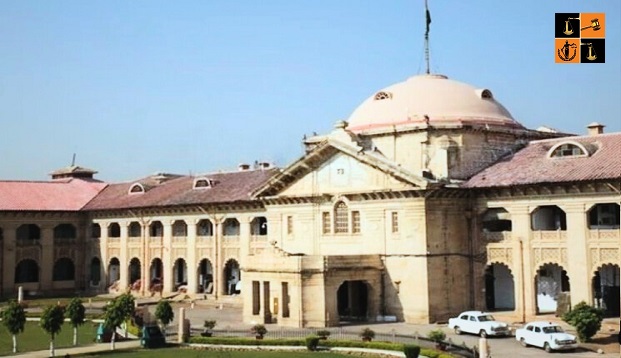
Recently, the Allahabad High Court dealt with a tragic dowry death matter involving a young woman who suffered severe burn injuries within a short period of her marriage and later died during treatment. The case revolved around allegations of persistent dowry harassment, cruelty by the matrimonial family and the evidentiary value of a dying declaration recorded before the victim succumbed to her injuries.
Brief Facts :
The case arose from a criminal appeal challenging the conviction of the appellants under Sections 304-B and 498-A of the Indian Penal Code, 1860 and Section 4 of the Dowry Prohibition Act, 1961 in connection with the death of a married woman who allegedly faced repeated harassment and cruelty over demands for a motorcycle and a fan as dowry. According to the prosecution, the deceased frequently informed her parental family that she was being abused and beaten by her husband and in-laws over the unmet dowry demand. On 13 May 2012, the complainant received information that the deceased had suffered burn injuries and was admitted to Civil Hospital, Lucknow. The prosecution relied upon a dying declaration recorded by the SDM, wherein the deceased allegedly stated that kerosene oil had been poured upon her and she had been set ablaze over dowry demands. She later died due to septicemia caused by approximately 90% burn injuries.
Contentions of the Appellants :
The counsel for the ppellants argued that the FIR was lodged after an unexplained delay and that the prosecution story was fabricated. They questioned the reliability of the dying declaration by contending that the deceased had sustained 90% burn injuries, was under severe pain and medication, and was allegedly unconscious during the relevant period. The defence further claimed that the deceased had set herself on fire and that the accused persons had attempted to save her. Reliance was also placed on the defence evidence to challenge the prosecution case.
Contentions of the State :
The State contended that the prosecution had successfully established the ingredients of Sections 304-B and 498-A IPC and that the deceased was continuously subjected to dowry-related harassment soon before her death. The prosecution strongly relied upon the dying declaration recorded by the Executive Magistrate and argued that it was voluntarily made in a conscious state and stood corroborated by medical evidence and testimonies of the family members. While dealing with the law relating to dying declarations and dowry death, the Court referred to decisions including Laxman v. State of Maharashtra, Kushal Rao v. State of Bombay, Rajinder Singh v. State of Punjab and Surinder Singh v. State of Haryana.
Observations of the Court :
The Court observed that the prosecution had successfully established that the deceased was subjected to cruelty and harassment in connection with dowry demands soon before her death and that her death occurred otherwise than under normal circumstances within seven years of marriage.
While discussing the evidentiary value of dying declarations, the Court made detailed observations and held that “There cannot be an absolute rule of law that the dying declaration cannot form the sole basis of conviction unless it is corroborated. The requirement of corroboration is merely a rule of prudence, not a mandatory legal rule.”
The Court further observed that “If a dying declaration has been recorded in a proper manner by a competent authority and the court is satisfied of its truthfulness, it is a ‘substantive piece of evidence’ sufficient to sustain a conviction on its own and cannot be regarded as a weak piece of evidence.”
On the argument that the deceased had sustained 90% burns and therefore could not have made a reliable statement, the Court rejected the contention and reiterated that “The absence of a doctor’s certificate is not by itself a ground to discard a dying declaration if the circumstances otherwise indicate the victim was fit.”
The Bench also emphasised the legal position regarding “soon before death” under Section 304-B IPC and observed that “What is necessary is that the demand for dowry should not be stale, but should be the continuing cause linked with the death of the married woman under Section 304-B IPC.”
The Court further noted that the testimonies of the prosecution witnesses remained consistent and materially unshaken during cross-examination and that the dying declaration stood corroborated by medical evidence as well as surrounding circumstances.
Decision of the Court :
The High Court upheld the conviction of the Appellants under Sections 304-B and 498-A IPC and Section 4 of the Dowry Prohibition Act, 1961, holding that the prosecution had proved the charges beyond reasonable doubt. The Court found the dying declaration trustworthy, voluntary and reliable and concluded that the deceased had been continuously harassed over dowry demands soon before her death.
Case Title: Smt. Ram Rati & 2 Others v. State of U.P.
Case No.: Criminal Appeal No. 2275 of 2019
Coram: Hon’ble Mr. Justice Rajesh Singh Chauhan and Hon’ble Mr. Justice Indrajeet Shukla
Advocate for the Appellant: Nand Lal Sharma, Dilip Kumar Singh, Jyoti Rajpoot, K.K. Sharma, Kaustubh Singh, Manoj Kumar Yadav, Prem Shankar, Rajendra Prasad, Rakesh Kumar
Advocate for the Respondent: Govt. Advocate
Read Judgment @Latestlaws.com