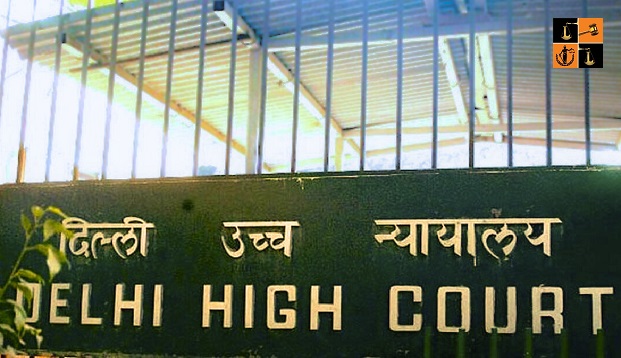
On Monday, in a closely watched trademark dispute involving a Hindi learning and testing platform, the Delhi High Court was called upon to examine the true limits of the Registrar’s power to revisit an accepted mark and to determine whether “SoEasy” crossed the threshold from descriptive expression into registrable distinctiveness. At the heart of the matter lay two pivotal questions, “the scope of Section 19 and the precise standard for assessing distinctiveness under trademark law.” Read on to see how the Court approached these issues and what it means for trademark jurisprudence.
Brief Facts:
The case stemmed from the appellant’s attempt to secure registration of the mark “SoEasy” for instructional and teaching material in Class 16, which was initially accepted for publication but later withdrawn by the Registrar. The appellant had filed the application on a proposed-to-be-used basis and, after contesting the first examination report, obtained acceptance subject to the condition that the mark be used as a whole. The mark was thereafter published in the Trade Marks Journal, but the Registrar invoked Section 19 of the Trade Marks Act, 1999, to issue a notice proposing withdrawal of acceptance on the ground that the expression lacked distinctiveness. The Appellant disputed the maintainability of the notice, asserting that it amounted to an impermissible review. A hearing was conducted, after which the Registrar issued a fresh examination report and ultimately refused registration of the mark. Challenging this refusal, the Appellant approached the High Court through the present appeal.
Contentions of the Appellant:
The counsel for the Appellant contended that the Registrar’s discretion under Section 19 must rest on just grounds and cannot be exercised arbitrarily. It was argued that, once the mark was accepted and published without opposition, the appellant acquired a right to registration that could not be defeated by an expansive reading of Section 19 of the Trade Marks Act, 1999. The Appellant maintained that the Section 9 of the Trade Marks Act, 1999 objection had already been addressed, and the acceptance had attained finality, leaving no basis to reopen the issue on identical grounds. It was further submitted that Section 19 permits only withdrawal of acceptance, not refusal of the application, and that the notice invoked Section 19(a) alone, limiting the scope of adjudication. Emphasising the character of “SoEasy,” the Appellant described the mark as an arbitrary and invented combination of ordinary words, inherently distinctive, non-descriptive, and suggestive as it requires imagination to associate it with the goods. On these premises, the Appellant sought that the refusal order be set aside.
Contentions of the Respondent:
The counsel for the Respondent submitted that the notice was validly issued under Section 19 of the Trade Marks Act, 1999 in its entirety, irrespective of whether a specific sub-clause was cited. It was argued that Section 19 of the Trade Marks Act, 1999 authorises the Registrar to withdraw acceptance if satisfied that a mark ought not to be registered, and that such withdrawal may be made after granting an opportunity of hearing, which was duly afforded in the present matter. Relying on Section 23, the Respondent contended that registration remains subject to Section 19 even in cases where no opposition is filed. The Respondent maintained that the mark “SoEasy” is laudatory, conveys that a task can be accomplished effortlessly, and comprises generic dictionary words that are neither coined nor invented. On this basis, it was submitted that the mark lacks distinctiveness and falls within the prohibition under Section 9(1). The Respondent therefore prayed that the appeal be dismissed.
Observation of the Court:
The Court addressed the two issues, whether the Registrar’s refusal was in accordance with Section 19 of the Trade Marks Act, 1999, and whether the finding of non-distinctiveness was justified. The Bench reproduced the Registrar’s refusal order, which stated that the mark had been “erroneously accepted” and that it was “devoid of distinctiveness and hence not capable of distinguishing the goods and services of the applicant from those of others,” ultimately concluding that “objections raised under Section 9(1)(a) and 9(1)(b) are maintained, and accordingly, the application is refused.”
The Court considered Section 19 of the Trade Marks Act, 1999, noting that it authorises the Registrar to withdraw acceptance if an application “has been accepted in error” or if “the trade mark should not be registered,” and that such withdrawal may occur only “after hearing the applicant if he so desires.” Addressing the appellant’s assertion that acceptance had attained finality in the absence of opposition, the Court referred to Section 23(1), which expressly provides that registration “is subject to the provisions of Section 19,” thereby confirming that the Registrar may revisit acceptance prior to registration. The Court held that “even if a Trade Mark has been accepted and advertised and, thereafter, no objection has been filed against the same, Section 19 of the Act empowers the Registrar to withdraw the acceptance given to the said Mark before its registration,” and concluded that “there is no vested right of the Appellant to demand the Registration Certificate on the basis of absence of any opposition.”
The Court noted that the notice itself stated that “Notice under the provisions of Section 19 of Trade Marks Act, 1999 is, hereby, issued to you” and therefore held that “the Notice was under Section 19 of the Act entirely and not restricted to Section 19(a) of the Act alone.” The Bench further held that Section 19 “does not impose any bar on the Registrar to revisit and examine the acceptance even though the same grounds have been adjudicated upon previously while granting acceptance,” explaining that the intent of the provision is “to maintain the purity of the Register of Trade Marks and weed out any error that might have crept in while giving acceptance.”
The Court Observed that, “suggests that the learning, teaching and testing of Hindi language would be made easy and uncomplicated or would require minimal effort, on the Appellant’s platform and, therefore, it is suggestive in nature as it would require the consumers’ imagination, thought and perception to reach a conclusion regarding the nature of the Appellant’s product on offer. In other words, the consumers would require a mental leap to draw a connection between the Appellant’s Mark and the product sold or services provided under the said Mark as the words ‘So’ and ‘Easy’ juxtaposed together to formulate the Appellant’s Mark would not immediately be reminiscent of the Appellant’s product or service without consumers’ additional imagination, thought and perception regarding the same.”
On this basis, the Court held that the mark is not descriptive of “qualities, ingredients or characteristics” of the goods and reiterated that “suggestive Trade Marks are liable to be protected under the Act, while descriptive Trade Marks are not entitled to protection.”
The decision of the Court:
In light of the foregoing discussion, the Court set aside the refusal order and allowed the appeal, holding that the appellant’s mark is entitled to protection. The Bench directed the Registrar to proceed with the application for registration of “SoEasy” in accordance with the Act and the applicable Rules.
Case Title: Ashim Kumar Ghosh Vs. The Registrar of Trade Marks
Case No: C.A.(COMM.IPD-TM) 48/2025
Coram: Hon'ble Mr. Justice Tejas Karia
Advocate for Appellant: Advs. Sudarshan Kumar Bansal, and Shivendra Pratap Singh
Advocate for Respondent: Advs. Piyush Beriwal, Vedansh Anand, Ms. Ruchita Srivastava, and Jyotsana Vyas
Read Judgment @Latestlaws.com