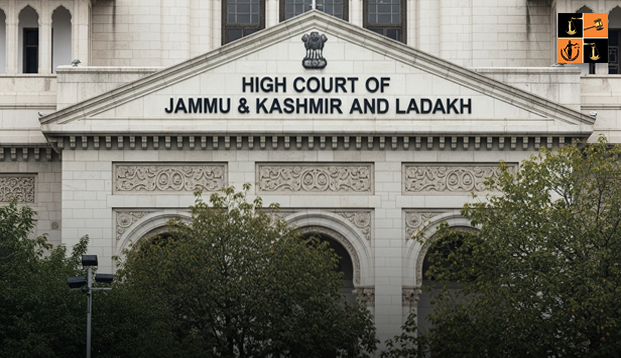
Recently, the Jammu and Kashmir High Court found itself examining a conflict brewing within the region’s construction supply sector, after multiple dealers questioned whether the administration had overstepped its regulatory powers. What began as routine enforcement drives against brick-carrying vehicles soon unfolded into a deeper legal debate on how far the Brick Kiln (Regulation) framework can stretch and whether brick dealers importing material from outside the Union Territory fall within its licensing net.
Brief Facts:
The case arose from a series of orders issued by District Magistrates directing seizure of vehicles transporting bricks imported from outside the Union Territory and imposing penalties under the Jammu & Kashmir Brick Kiln (Regulation) Act, 2010 and the Rules of 2017. The dealers involved were not brick manufacturers but traders who procured finished bricks from other States and sold them locally. They argued that the authorities acted without jurisdiction and expanded the law beyond its intended scope.
Contentions of the Petitioner:
The counsel for the Petitioners argued that the Brick Kiln Act and Rules were meant only for brick manufacturers, not traders. Since they merely import and sell finished bricks, they claimed no licence is required under the statute. The counsel submitted that Rule 3 of the Brick Kilns (Regulation) Rules, 2017 was misinterpreted to cover dealers when the Act itself does not impose any licensing requirement on them. The Petitioner further contended that Form A and B relate only to brick kiln operations, proving that the licensing scheme is kiln-specific. The counsel argued that seizing vehicles and penalising them lacked legal basis and violated their right to trade. Their GST registration, they said, already regulates their business, and imposing an additional licence amounts to double regulation and an unreasonable restriction under Article 19(1)(g) of the Constitution.
Contentions of the Respondents:
The counsel for the Respondents submitted that the petitioners fall within the definition of “dealer” under Section 2(e), and Rule 3 expressly covers manufacture, sale, and storage thereby requiring dealers to hold a licence. The counsel argued that the Deputy Commissioners are the designated Licensing Authorities under the Act and validly exercised their powers of inspection and seizure under Section 12 of the Act. The Respondent also asserted that the petitioners bypassed the statutory appeal mechanism and directly approached the Court, making the petition premature. The licensing requirement, they maintained, is a reasonable regulatory measure applicable uniformly to all persons dealing in bricks, irrespective of origin
Observation of the Court:
The Court observed that the statutory scheme of the Brick Kiln Act and the 2017 Rules was never meant to confine regulation only to manufacturers, but to the entire chain of brick trade, including dealers, since excluding them would defeat the very purpose of the legislation. Referring to the interpretative principles in Ishwar Singh Bindra v. State of U.P. and J. Jayalalitha v. Union of India, it reiterated that conjunctions like “and” and “or” may be construed interchangeably to give full effect to legislative intent. It was in this backdrop that the Court noted that Rule 3 expressly covers manufacture, sale and storage, and therefore “every person engaged in the manufacture, sale, storage, or transportation of bricks is required to obtain a valid licence under Rule.”
The Court further observed that the Deputy Commissioners acted strictly within their statutory authority as they are the notified Licensing Authorities under Section 5 read with Rule 4. Their enforcement measures inspections, stopping vehicles, and seizure of bricks were thus legally grounded, and the Court held that “Such actions are expressly sanctioned under Section 12 of the Act and are regulatory in nature, aimed at preventing unlawful operations and ensuring adherence to the statutory framework. This Court finds that the action of the Deputy Commissioners, being in consonance with Section 12 of the Act and supported by statutory authority, cannot be termed arbitrary or illegal.”
The Court also observed that GST registration has no bearing on the requirement of a licence under the Brick Kiln Act, clarifying that taxation and regulation operate in separate spheres. It stated that “A registration under the GST Act merely enables the State to levy and collect tax on a transaction and it cannot, by any stretch of interpretation, legalize an otherwise unlicensed or prohibited activity.”
Additionally, the Court remarked that the petitioners had bypassed the statutory remedy of appeal under Section 20, reiterating the principle restated by the Supreme Court in South Indian Bank Ltd. v. Naveen Mathew Philip that writ jurisdiction should not be invoked when an efficacious statutory mechanism exists. Thus, “The petitioners have neither applied for a licence nor availed any statutory remedy. Instead, they have directly invoked the extraordinary jurisdiction of this Court. The writ petition is thus premature.”
Lastly, the Court observed that the licensing requirement is a reasonable regulatory measure protected under Article 19(6), as it neither prohibits trade nor imposes disproportionate barriers, noting that “the licensing framework neither prohibits the carrying on of trade nor imposes unreasonable restrictions thereon, rather it merely regulates the same. The conditions prescribed under the Rules are regulatory nature, intended to ensure that brick kilns operate in conformity with environmental safeguards, public health considerations, and land use norms. Such regulatory restrictions are squarely covered under clause (6)of Article 19 of the Constitution of India.”
The decision of the Court:
The Court held that both manufacturers and dealers fall under the licensing mandate of the Brick Kiln Act and Rules, and the Deputy Commissioners’ enforcement actions were within statutory authority. It rejected the argument that GST registration substitutes the requirement of a licence and found no infringement of Article 19(1)(g). Noting that the petitioners bypassed the statutory appeal mechanism, the Court dismissed the writ petition as premature.
Case Title: Kehar Singh Ors vs Union Territory of J&K & Ors, 2025
Case No.: WP(C) No. 2790/2025
Coram: Hon’ble Mr Justice Wasim Sadiq Nargal
Counsel for the Petitioner: Sr.Adv. Vikram Sharma, Adv. Sachin Dev Singh, Adv. Sanpreet Singh
Counsel for the Respondent: Sr. AAG Monika Kohli, GA Adarsh Bhagat, Dy.AG Dewakar Sharma,
Read Judgement @LatestLaws.com