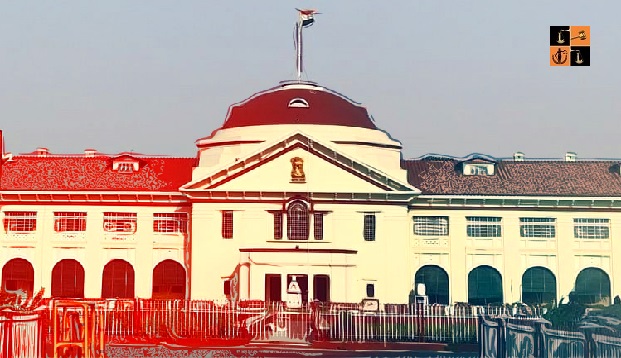
Recently, the Patna High Court held that a disciplinary authority cannot impose a major penalty and a minor penalty simultaneously through a single composite order. While partly interfering with the punishment imposed on a Deputy Superintendent of Police, the Court firmly observed that such an amalgamation of penalties is “impermissible and unsustainable” in service jurisprudence.
Brief Facts:
The case arose from disciplinary proceedings against a senior police officer who, while conducting a supplementary investigation into allegations of illegal mining and overloading, had frozen several bank accounts containing substantial sums. It was alleged that instead of pursuing confiscation of the suspected proceeds, the officer issued a no-objection enabling the de-freezing of the accounts, resulting in the release of a large amount of money. Following a preliminary inquiry, departmental action was initiated under the applicable service rules, culminating in an inquiry report holding the officer guilty of misconduct. Acting on the findings, the disciplinary authority imposed major penalties, including withholding of increments with cumulative effect and a bar on promotion, which were subsequently affirmed on review, leading the officer to approach the High Court in writ proceedings.
Contentions of the Petitioner:
The Petitioner contended that the impugned punishment order was legally unsustainable, as withholding of five increments with cumulative effect constitutes a major penalty, while prohibition on promotion for five years is categorised as a minor penalty under Rule 14 of the Bihar CCA Rules, 2005. Relying on the Supreme Court’s decision in Union of India & Anr. v. S.C. Parashar, the Counsel argued that a disciplinary authority cannot combine major and minor punishments in a single order. The Petitioner further submitted that the order reflected non-application of mind, lacked reasons, and that issuance of multiple charge memos had caused serious prejudice to the Petitioner.
Contentions of the Respondent:
On the other hand, the State defended the disciplinary action, asserting that only one final charge memo had been issued and that the earlier document was merely a draft. The Respondents maintained that the inquiry was conducted in accordance with law, the Bihar Public Service Commission had concurred with the proposed punishment, and the disciplinary authority was justified in imposing penalties considering the seriousness of the misconduct.
Observation of the Court:
The Court found the impugned punishment order legally untenable, holding that the disciplinary authority had impermissibly combined two distinct categories of penalties into a single composite order. Relying on the Supreme Court’s ruling in Union of India & Anr. v. S.C. Parashar, the Court reiterated that “the disciplinary authority… acted illegally and without jurisdiction in imposing both minor and major penalties by the same order”, and that “such a course of action could not have been taken in law.”
The Court observed that “in the present case also, the disciplinary authority vide impugned order has imposed both major and minor penalties together, which is impressible and unsustainable in view of the afore-quoted judgment.”
The Court further noted that “though the Commission has mentioned about the major and minor punishment but has not given any reason for concurring with the proposed punishment which is an amalgamation of both major and minor punishment.”
The Bench concluded that the punishment order could not be sustained in its entirety, recording that “this Court has no option but to hold that the impugned order of punishment is not sustainable.”
The decision of the Court:
In light of the foregoing discussion, the Court modified the punishment order, sustaining the major penalty of withholding of five increments with cumulative effect in view of the gravity of charges, while quashing the minor penalty of prohibition on promotion for five years. The Court reaffirmed the principle that major and minor penalties belong to distinct statutory compartments and cannot be imposed together through a single disciplinary order, rendering such an order legally unsustainable.
Case Title: Manoj Kumar Sudhanshu v. State of Bihar and Others
Case No.: Civil Writ Jurisdiction Case No. 4443 of 2023
Coram: Hon'ble Mr. Justice Sandeep Kumar
Advocate for the Petitioner: Sr. Adv. Y.V. Giri, Advs. Rohit Kumar, Manish Kumar, Priti Kumari
Advocate for the Respondent: AAG-3 P.K. Verma, Adv. Suman Kumar Jha
Read Judgment@ Latestlaws.com