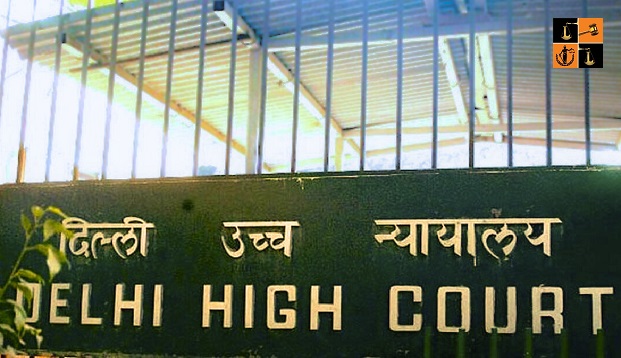
On Monday, the Delhi High Court heard a significant patent dispute involving a drug composition aimed at preventing or treating neurodegenerative diseases. The case centers on whether the formulation, combining rifampicin and resveratrol, can be patented as a composition or falls under the prohibited category of therapeutic methods. Lawyers for both sides debated the scope of claims, dosage implications, and interpretation of established patent law precedents.
Brief Facts:
The case arises from the refusal of a patent application relating to a drug composition proposed for the prevention or treatment of neurodegenerative diseases. The application disclosed a pharmaceutical formulation combining rifampicin and resveratrol, including their acceptable derivatives and relative proportions. The invention claimed that this combination reduced adverse side effects associated with long-term rifampicin use and could therefore be administered safely over extended periods. After the First Examination Report was issued, the applicant responded and later amended the claims. A hearing was conducted, followed by further written submissions along with revised claims that removed references to any specific mode of administration or dosage regimen. Despite these amendments, the Controller rejected the application, holding that the claims were barred under Section 3(i) of the Patents Act, 1970, because they allegedly related to a method of treatment rather than a patentable composition.
Contentions of the Appellant:
The counsel for the Appellant argues that the claims relate only to a drug composition, not a treatment method. The final amended claims removed all references to dosage or mode of administration, so Section 3(i) of the Patents Act, 1970 cannot apply. The counsel contend the Controller wrongly relied on earlier claims and misread the preamble as limiting the invention. According to the Appellant, the specification clearly supports a composition patent, and established case law confirms that product claims are patentable even if intended for therapeutic use.
Contentions of the Respondents:
The counsel for the Respondent maintains that, despite amended wording, the invention’s effect depends on a dosage regimen, making it inherently a method of treatment. The counsel argue that the specification and examples show administration over time as essential, bringing the claims within Section 3(i) of the Patents Act, 1970. Therefore, the Controller was correct in treating the claims as implicitly directed to treatment rather than a standalone composition.
Observation of the Court:
The Court first notes that the invention, as finally claimed, is directed to a drug composition, not a therapeutic method. It highlights that the specification itself describes the invention as a formulation, quoting: “The present invention relates to a medicine which is useful for the prevention or treatment of a neurodegenerative disease and has reduced side effects.” This establishes that the subject matter is a composition within the meaning of Section 10(4)(c)of the Patents Act, 1970 .
The Court then observes that the Controller relied on earlier claims, not the amended claims filed after the hearing. This is evident from the verbatim finding in the impugned order “It can be seen from the originally filed claims that the combination is a dosage regimen given to a patient in need of treatment of neurodegenerative disease like dementia for a period of one month or longer”. The Court holds that this approach is erroneous because the final claims removed all references to the administration route, dosage regimen, or treatment steps.
Relying on Bayer Pharma, the Court reiterates that the scope of the invention must be determined from the claims, not from its application or purpose. It quotes the principle affirmed in Bayer: “working examples are essential for demonstrating the feasibility and workability of an invention, they do not define the patent’s scope. The scope is determined by the claims, which must be interpreted in light of the description and any examples provided”. The Controller, however, did not explain how the amended claim language could still amount to a method of treatment.
The Court also refers to the ruling in Societe Des Produits Nestlé SA, which held that composition claims, even those intended for prophylactic use, do not fall under Section 3(i). It further cites the University of Miami, where it was held that the expression “for the treatment of” in a claim does not make it a method-of-treatment claim. The Court finds that these precedents squarely apply, and the Controller failed to follow them.
Finally, the Court concludes that the refusal under Section 3(i) lacks a legal foundation because the Controller neither examined the amended claims nor demonstrated how their boundaries extend into a prohibited treatment method. The Court holds that the order reflects a misunderstanding of Section 3(i), Section 10(4) (c) of the Patents Act, 1970, and settled jurisprudence, thereby warranting a remand for fresh consideration.
The decision of the Court:
The Court set aside the impugned order and remanded the patent application back to the Respondent for fresh consideration of all objections, including the amended claims, while clarifying that the merits have not been examined and a fresh hearing must be granted within six months.
Case Title: Medilabo Rfp Inc. v. The Controller of Patents
Case No.: C.A.(Comm.Ipd-Pat) 16/2024
Coram: Hon’ble Mr Justice Tejas Karia
Counsel for the Appellant: Adv. Debashish Banerjee, Adv. Vaishali Joshi & Adv. Ankush Verma
Counsel for the Respondent: GCGSC Nishant Gautam, Adv. Prithviraj Dey,
Read Judgement @LatestLaws.com