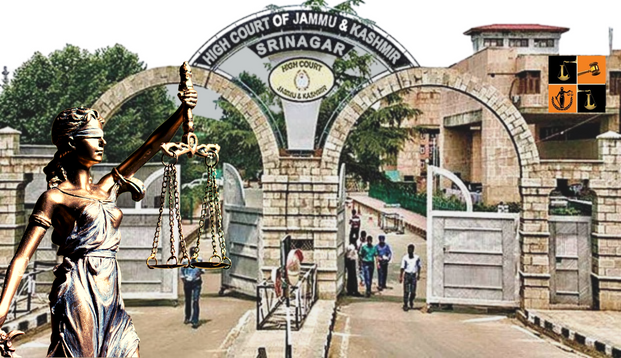
Recently, the Jammu and Kashmir High Court took up a case where a Force officer faced allegations of sexual misconduct linked to promises of marriage. The controversy sparked both criminal and departmental proceedings under the BSF Rules, 1969, with the officer suspended. He challenged the actions, claiming personal matters were being treated as misconduct. The Court had to navigate the tension between personal rights and maintaining service discipline.
Brief Facts:
The case arose from an FIR alleging that an officer of the Force had sexual relations with a woman colleague after assuring her that he would marry her. Their meetings took place at hotels in Delhi over several months, and she claimed that these relations were induced solely by repeated promises of marriage. When she later discovered his involvement with another woman and his plans to marry elsewhere, she lodged the complaint. A chargesheet was filed, and the criminal trial began. On receiving her departmental complaint, the Force initiated proceedings under Rule 173of the BSF Rules, 1969, and placed the officer under suspension under Rule 40A of the BSF Rules, reviewing and extending it periodically. He challenged both the suspension and the departmental inquiry through multiple writ petitions, which were eventually heard together.
Contentions of the Petitioner:
The counsel for the Petitioner contended that the suspension was prolonged, punitive, and violative of Article 21 of the Constitution, and that the allegations arose from a private relationship that did not amount to misconduct. He argued that he had contacted the complainant only because she had invited proposals for marriage and that family objections preventing the marriage could not be treated as deception. The counsel submitted that the departmental inquiry could not proceed alongside the criminal trial as both rested on identical facts, and continuation of the inquiry would prejudice his defence. The Petitioner also maintained that the complaint was false and motivated by resentment after he married someone else.
Contentions of the Respondents:
The counsel for the Respondents argued that the allegations were grave, involved misconduct towards another member of the Force, and directly affected discipline. The counsel maintained that simultaneous criminal and departmental proceedings were legally permissible, especially since the issues were straightforward and the petitioner had already disclosed his defence in various proceedings. The Respondent asserted that the suspension was lawfully reviewed and extended, and that the delay in completing the inquiry was caused by the Petitioner obtaining a stay order, which he could not now use to challenge the validity of the suspension.
Observation of the Court:
The Court carefully examined the relationship between the criminal proceedings and the departmental enquiry and concluded that both could lawfully continue side by side because the allegations in this case did not raise any complex factual or legal issues requiring one to wait for the other. The Court emphasised that although the criminal charge was undoubtedly serious, it was straightforward in nature concerning the allegation of sexual relations secured on a false promise of marriage and therefore did not fall within the narrow category of cases where departmental proceedings must be halted. The Court explained that the purpose of a criminal trial is to determine guilt for an offence against the law, whereas the purpose of a disciplinary enquiry is to uphold discipline, integrity, and decorum within the service. Since the allegation involved misconduct towards another member of the Force, it fell squarely within the domain of service regulation and could not be considered merely a personal or private dispute.
To reinforce this principle, the Court relied heavily on the Supreme Court’s decision in State of Rajasthan v. B.K. Meena, which lays down that simultaneous proceedings are the rule and not the exception, and that a stay of departmental action is justified only when the criminal case is not only grave but also so complex that advancing the disciplinary action would prejudice the defence. Here, the Court found no such complexity. It also observed that any claim of prejudice had been eliminated because the petitioner had already disclosed his defence in several forums, his bail application, his representations, and the writ petitions he filed. The Court noted that when a person voluntarily places his defence on record, he cannot later argue that participation in departmental proceedings would compel premature disclosure.
The Court also took note of the timeline of events and found that the petitioner himself was responsible for the stoppage of the departmental enquiry because he obtained a stay order just weeks after it had begun. Since it was his own petition that brought the enquiry to a halt, the Court held that he could not now rely on that self-created delay to challenge his continued suspension or to accuse the authorities of prolonging the matter. The Court therefore found no illegality in the suspension orders, which had been periodically reviewed as required by the rules.
The Court clarified that “departmental proceedings and the proceedings in a criminal case can proceed simultaneously and there is no legal or statutory bar for proceeding with both these proceedings simultaneously.” Referring to the Supreme Court framework, it reiterated that a stay on disciplinary action is warranted only in cases “of grave nature involving complicated questions of fact and law.”
Applying this test, the Court stated that the allegation here “does not involve decision of a complicated question of fact or law.” On the question of prejudice, the Court observed that “the defence of the petitioner in the criminal case would get seriously prejudiced. It has been contended that right to marry is a private and personal matter of an employee and, as such, the employer has no concern with this aspect. Thus, any complaint filed a private person with regard to personal matter of an employee cannot form a basis for initiating departmental proceedings against him.” Addressing the argument regarding delay, the judgment made it clear that “the petitioner cannot take advantage of his own actions by claiming that the respondents have perpetuated his agony by not completing the departmental proceedings.”
The decision of the Court:
The Court dismissed all the petitions, holding that there was no bar on continuing the departmental enquiry alongside the criminal trial since the allegations were simple and did not involve any complex factual or legal issues. It upheld the validity of the suspension, noting that the delay in the enquiry was caused by the petitioner himself after obtaining a stay order. The Court further held that no prejudice would be caused to the petitioner as he had already disclosed his defence in multiple proceedings. All interim orders were vacated, and the contempt petition was also disposed of accordingly.
Case Title: Akhand Prakash Shahi v. Union of India & Another
Case No.: W.P.(C) No. 1876 of 2025
Coram: Hon’ble Mr Justice Sanjay Dhar
Counsel for the Petitioner: Adv.S. A. Qadri
Counsel for the Respondent: Adv. Sehar Mufti Ahad, CGC Vikas Malik
Read Judgement @LatestLaws.com