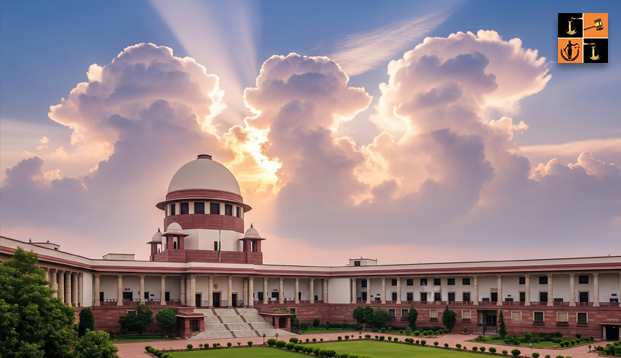
Recently, the Supreme Court held that temporary employees cannot be denied consideration for regularisation solely on the ground that their initial appointments were not made against sanctioned posts, particularly when the State itself had continuously utilised their services for decades and regularised thousands of similarly placed workers. The Court set aside the Gauhati High Court Division Bench decision and granted relief to long-serving Muster Roll and Work Charged employees in Assam. Emphasising constitutional fairness and equality, the Court observed that “once the State confers a benefit upon a particular class, it cannot arbitrarily deny the same benefit to others who are identically situated.”
Brief facts:
The case stemmed from a long-standing dispute concerning the regularisation of Muster Roll and Work Charged employees engaged by various departments of the Government of Assam for regular governmental functions over several decades. The State had introduced multiple policy decisions and Office Memorandums for the regularisation of workers engaged prior to the prescribed cut-off date and had accordingly created over 30,000 posts, pursuant to which thousands of similarly placed workers were absorbed into regular service. However, several employees were left out allegedly due to clerical errors, administrative lapses, and omission from departmental records despite rendering continuous service for years.
Aggrieved by their exclusion, the workers challenged a subsequent Office Memorandum through which the State declined further regularisation by relying upon the Constitution Bench decision in Secretary, State of Karnataka vs. Umadevi. While the Single Judge directed consideration of the eligible workers for regularisation, the Division Bench reversed the decision, holding that the employees were not initially appointed against sanctioned posts. The matter thereafter reached the Apex Court to determine whether similarly situated workers could be denied regularisation solely on technical grounds despite the State having already extended identical benefits to thousands of others under its own policy framework.
Contentions of the Appellant:
The Appellants argued that the denial of regularisation was arbitrary and violative of Article 14 of the Constitution since thousands of similarly situated workers had already been regularised under the State’s policy decision. The Counsel submitted that the Appellants had been engaged prior to the cut-off date and had rendered continuous service for decades, but were excluded due to clerical and administrative lapses attributable to the State. The Appellants further contended that Secretary, State of Karnataka vs. Umadevi did not impose an absolute bar on regularisation and relied upon State of Karnataka and Ors. v. M.L. Kesari and Ors., Jaggo v. Union of India, Shripal v. Nagar Nigam, and Dharam Singh v. State of Uttar Pradesh to argue that the State could not deny benefits after continuously extracting regular work from employees for years.
Contentions of the Respondent:
On the other hand, the State of Assam opposed the appeals by arguing that the Appellants were never appointed against sanctioned posts nor selected through any recognised recruitment process. The Respondent contended that the Constitution Bench decision in Secretary, State of Karnataka vs. Umadevi clearly prohibited regularisation of employees appointed dehors the constitutional scheme of public employment. The State argued that the exception recognised in Secretary, State of Karnataka vs. Umadevi applied only to irregular appointments made against sanctioned vacant posts and could not be extended to appointments that were illegal in nature, such as those of the Appellants. The Counsel further submitted that Article 14 of the Constitution cannot be invoked to perpetuate illegality merely because certain similarly situated workers had earlier been granted regularisation. The State also contended that courts cannot direct the creation of posts or compel the implementation of executive policies involving financial and administrative implications.
Observation of the Court:
The Division Bench of Justice Vikram Nath and Justice Sandeep Mehta observed, “Once the State confers a benefit upon a particular class, it cannot arbitrarily deny the same benefit to others who are identically situated. Applying the principle in the present case, the State, having regularized nearly 30,000 workers under its own policy decision, could not refuse to regularize the remaining eligible workers who stood on the same footing. To do so amounts to treating equals unequally, which is impermissible under Article 14 of the Constitution.”
The Court observed that the Appellants had been continuously engaged as Work Charged and Muster Roll workers much prior to April 1, 1993 and were identically placed with nearly 30,000 employees whose services had already been regularised pursuant to the Assam Cabinet decision dated July 22, 2005. The Bench noted that the exclusion of the Appellants from the regularisation exercise was not attributable to any fault on their part, but occurred because of inadvertent mistakes, clerical errors and administrative discrepancies committed by the State machinery itself. The Court therefore held that employees who stood on the same footing in terms of date of engagement, nature of duties, and length of service could not be denied the same benefit merely because of administrative lapses. Emphasising the constitutional mandate of equality under Article 14 of the Constitution, the Bench held that similarly situated workers cannot be selectively excluded once the State has already chosen to regularise a defined class of employees.
The Bench held that the Gauhati High Court Division Bench had incorrectly applied the principles laid down in Secretary, State of Karnataka vs. Umadevi and State of Karnataka and Ors. v. M.L. Kesari and Ors. The Court clarified that the Appellants were not seeking the creation of a fresh right to regularisation, but were claiming parity under the State’s own Cabinet policy, which had already been implemented in favour of thousands of similarly situated workers. The Bench emphasised that the dispute essentially concerned discriminatory treatment and unequal application of an existing policy framework. Stressing that Article 14 of the Constitution prohibits arbitrary State action, the Court observed that once the State extends a benefit to a particular class of employees, the remaining eligible workers standing on the same footing cannot be denied identical treatment without any rational basis.
The Court further observed that the State of Assam had repeatedly assured the High Court through affidavits and statements made by senior officials that the cases of left-out workers were under active consideration and that an appropriate regularisation policy would be framed. However, after obtaining time and indulgence from the Court on those assurances, the State subsequently issued the 2012 Office Memorandum refusing further regularisation by citing Secretary, State of Karnataka vs. Umadevi. Criticising this conduct, the Bench held that the State could not approbate and reprobate by taking contradictory stands after consciously implementing the policy in favour of nearly 30,000 workers. The Court stressed that a welfare State functioning as a model employer is under a higher constitutional obligation to act fairly, consistently and transparently towards employees who have served the administration for decades.
The Bench also emphasised that long and continuous utilisation of workers in departments performing regular governmental functions cannot be ignored while considering claims for regularisation. The Court noted that the State had consistently engaged Muster Roll workers for decades as part of an established administrative practice and had itself acknowledged the magnitude of the issue by framing policies for regularisation. Referring to constitutional principles of fairness and non-arbitrariness, the Court held that the State cannot exploit technical objections regarding sanctioned posts after extracting regular work from employees over long periods of time. The Bench therefore concluded that denial of regularisation in such circumstances would defeat the principles of equality and fair treatment embedded under Article 14 of the Constitution.
The decision of the Court:
The Court allowed the appeals, set aside the judgment of the High Court Division Bench, and restored the directions issued by the Single Judge for the regularisation of eligible Work Charged and Muster Roll workers engaged prior to April 1, 1993. The Court held that regularisation cannot be denied solely because the initial appointments were not against sanctioned posts when the State itself had continuously utilised the employee’s services for decades and extended identical benefits to thousands of similarly situated workers under an existing policy decision.
Case Title: Sukhendu Bhattacharjee and Ors. Vs. The State of Assam and Ors.
Case No.: Civil Appeal No(S). 4514 of 2025
Citation: 2026 Latest Caselaw 412 SC
Coram: Hon’ble Mr. Justice Vikram Nath, Hon’ble Mr. Justice Sandeep Mehta
Advocate for the Petitioner: Sr. Adv. Manish Goswami, Sr. Adv. B K Sharma, Sr. Adv. Anitha Shenoy, AOR Rameshwar Prasad Goyal, AOR Somiran Sharma, AOR Mrs. Vipin Gupta, AOR Gautam Talukdar, AOR Siddhartha Jha, AOR Srishti Agnihotri, Adv. Gaurav Shukla, Adv. Brahmjeet Singh, Adv. Somiran Sharma, Adv. Kabir Hazarika, Adv. Rishabh Patel, Adv. Nihal Singh Shekhawat, Adv. Krishna Kumar, Adv. Nandani Gupta, Adv. Neha Tandon, Adv. Sadhana Madhavan, Adv. Kavana Rao, Adv. D. P. Singh, Adv. Anchal Kanthed
Advocate for the Respondent: Sr. Adv. Jaideep Gupta, Sr. Adv. B.k Sharma, Sr. A.A.G. Chinmoy Sharma, Sr. A.A.G. Chinmoy Pradip Sharma, AOR Diksha Rai, AOR Ankit Roy, AOR Bharadwaj S., AOR Brijesh Kumar Tamber, AOR Kaushik Choudhury, AOR Manish Raghav, Adv. Nimisha Menon, Adv. Purvat Wali, Adv. Sagun Srivastva, Adv. Irfan Hasieb, Adv. Vijay Deora, Adv. Aditya Agarwal, Adv. Riddhi Bose, Adv. Rishi Agarwal, Adv. Racheeta Chawla, Adv. Sampriti Baksi, Adv. Irfan Hasieb & Ors.