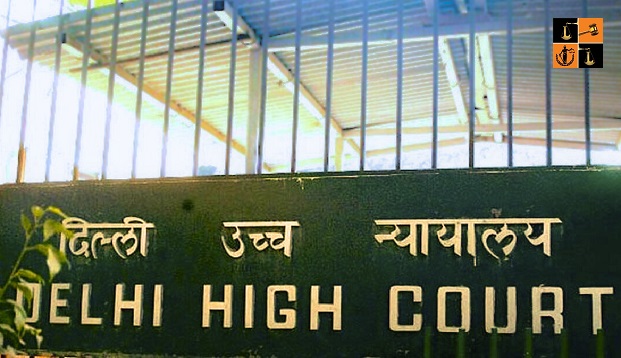
Recently, the Delhi High Court set aside a Labour Court award directing reinstatement with full back wages, holding that the workman failed to prove a direct employer–employee relationship with a government corporation. The ruling arose from a writ petition challenging the Labour Court’s award under the Industrial Disputes Act, 1947. The Court emphasized that the beneficial purpose of labour laws cannot override the essential requirement of proof, especially in matters of public employment.
Brief Facts:
The dispute traces back to a claim raised by the respondent-workman, who asserted that he had been directly employed by the petitioner-management, a government corporation, since around the year 2000–2001 and that his termination amounted to illegal retrenchment under Section 2(oo) of the Industrial Disputes Act, 1947, without compliance with Section 25F. The Labour Court accepted this claim, concluding that the contractual arrangement between the management and its contractor, M/s Pratap Enterprises, was a sham and camouflage, and consequently directed reinstatement with continuity of service and full back wages.
Aggrieved by this award, the management approached the Delhi High Court by way of a writ petition, contending that the respondent was never its employee and was, at all material times, engaged through a duly licensed contractor, with wages and statutory benefits such as PF and ESI being paid by the contractor. The management further challenged the Labour Court’s jurisdiction to return findings beyond the pleadings and contrary to documentary evidence.
Contentions of the Petitioner:
Per contra, counsel for the management submitted that the Labour Court had committed a jurisdictional error by declaring the contract to be sham and camouflage in the absence of any such plea in the statement of claim. It was argued that the respondent failed to produce basic and indispensable documents such as an appointment letter, salary slips, or proof of PF and ESI deductions by the management. On the other hand, the management had placed on record the contract agreement, wage registers, attendance records, PF and ESI documents, and licences demonstrating that the respondent was employed by the contractor. Strong reliance was placed on binding precedents including Vinay Sharma and Gopal v. BSNL, to submit that a government organisation cannot make appointments without adherence to prescribed recruitment rules.
Contentions of the Respondent:
Counsel for the respondent argued that the workman had discharged his initial burden by producing documents indicating long and continuous engagement with the management, thereby shifting the onus onto the employer to disprove the relationship. It was contended that the management failed to explain how and when the workman’s services were transferred to a contractor. Reliance was placed on judicial precedents recognising that courts must look beyond formal arrangements to ascertain the true nature of employment. The respondent further submitted that the earlier decision in Vinay Sharma could not bind him, as he was neither individually represented nor had he filed any affidavit in those proceedings, and therefore the principle of res judicata was inapplicable.
Observations of the Court:
The Court undertook a detailed examination of settled jurisprudence governing the determination of employer–employee relationships and reiterated that “the initial burden of proving the existence of an employer employee relationship lies upon the person who asserts such a relationship.” Relying on Workmen of Nilgiri Coop. Mkt. Society Ltd., the Court clarified that unless this burden is discharged through cogent, credible, and convincing evidence, no adverse inference can be drawn against the employer.
On facts, the Court found that the documents relied upon by the workman, such as an identity card, Diwali gift record of 2001, and an ex-gratia payment, were neither authenticated nor sufficient to establish control, supervision, or payment of wages by the management. The Court placed considerable emphasis on the respondent’s admissions during cross-examination, noting that he had no appointment letter, was unaware of the recruitment process, received wages in cash, and had no PF or ESI deductions, circumstances wholly incompatible with employment under a government corporation.
Significantly, the Court held that the Labour Court had “erred in assuming jurisdiction” by branding the contractual arrangement as sham and camouflage without any foundational pleading to that effect. Such a finding, the Court observed, was not only beyond the scope of the dispute but also contrary to the evidence on record.
Reaffirming the ratio in Vinay Sharma, the Court observed that the issue of engagement through contractors had already attained finality and that the application of the “triple test”, who pays wages, who exercises disciplinary control, and who supervises the work, clearly negated the claim of direct employment. The Court also rejected the argument regarding non-production of pre-2003 records, holding that such non-production was inconsequential where the alleged transition was never challenged at the relevant time.
The Court cautioned that “while the Industrial Disputes Act is a beneficial legislation, liberal interpretation cannot justify the grant of relief where essential foundational facts remain unproved.”
The decision of the Court:
In conclusion, the Court allowed the writ petition and set aside the impugned Labour Court award dated 05.02.2011, holding that the findings were perverse, beyond pleadings, and contrary to the evidence on record. The Court clarified that wages paid to the respondent-workman under Section 17B of the Industrial Disputes Act would be treated as compensation and need not be refunded. The ruling reinforces the principle that claims of direct employment against government bodies must be proved through clear documentary and legal evidence, and cannot rest on presumptions or equitable considerations alone.
Case Title: M/S Indraprastha Gas Limited Vs. Ambrish Kumar
Case No.: W.P.(C) 3743/2013
Coram: Justice Renu Bhatnagar
Advocate for Petitioner: Adv. Raj Birabl (Sr. Advocate), Raavi Birbal
Advocate for Respondent: Adv. Durgesh Kr. Pandey, Ritika Davis Franklin
Read Judgment @Latestlaws.com