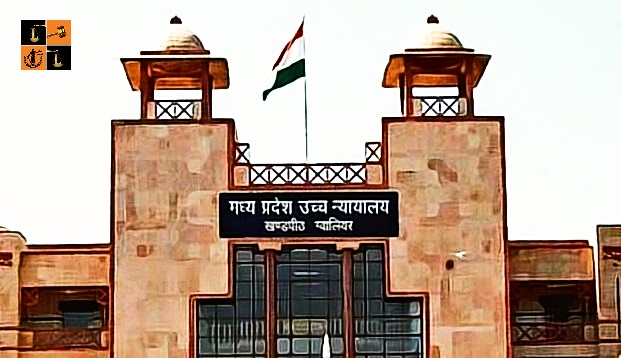
Recently, the Madhya Pradesh High Court delivered a landmark ruling in the matter of several writ petitions challenging the cancellation of candidature under the Madhya Pradesh School Education Service (Teaching Cadre) Recruitment Rules, 2018. The Court held that petitioners who acquired Madhya Pradesh domicile after marriage could not be denied reservation benefits for want of state-issued caste certificates. Observing the core principle of substantive equality, the Court emphasized that administrative technicalities cannot override constitutional protections for reserved categories.
Brief Fact:
The petitioners, originally residents of States other than Madhya Pradesh and belonging to reserved categories (SC/ST/OBC), held valid caste certificates issued by their native States. After marriage to permanent residents of Madhya Pradesh, they acquired domicile certificates in accordance with prevailing government policies. The petitioners applied for teaching positions under the Madhya Pradesh School Education Service (Teaching Cadre) Recruitment Rules, 2018, qualified on merit, and were called for document verification.
However, their candidature was summarily cancelled during verification solely on the ground that they had not submitted Madhya Pradesh-issued caste certificates, without issuance of a show-cause notice or hearing. The petitioners challenged this cancellation as arbitrary, unfair, and violative of natural justice.
Contentions of the Petitioner:
The petitioners contended that after marriage, they became domiciled residents of Madhya Pradesh and were fully entitled to constitutional and statutory benefits associated with their reserved category. The Recruitment Rules, 2018, and the advertisement for the posts did not stipulate that only Madhya Pradesh issued caste certificates would be valid. Cancellation without notice or hearing violated the principles of natural justice. They further emphasized that their caste/community was recognized as reserved both in their native State and Madhya Pradesh, making the denial of reservation arbitrary and illegal.
Contentions of the Respondents:
The State argued that the petitioners failed to produce valid Madhya Pradesh caste certificates and had falsely declared themselves as domiciles in their online applications. Tehsildars had rejected their applications for such certificates, and petitioners had not availed the statutory remedy of appeal. Relying on the recruitment rules, the State contended that the petitioners were rightly held ineligible for failing to meet the formal requirement of state-issued caste certificates.
Observations of the Court:
The High Court examined the statutory and constitutional framework, including Articles 14, 16, and the Madhya Pradesh Recruitment Rules, 2018, while relying on precedents such as Dr. Alka Singh v. State of M.P. (2012) and Bedanga Talukdar v. Saifudaullah Khan (2011). The Court noted that “marriage does not amount to migration, caste status continues if recognized in both States,” emphasizing that administrative authorities cannot introduce conditions beyond statutory rules.
The Court criticized the unilateral cancellation without notice or opportunity of hearing, holding that it violated principles of natural justice and constitutional equality. Highlighting fairness, it observed that the purpose of reservation is substantive and cannot be frustrated by procedural technicalities.
The decision of the Court:
All writ petitions were allowed. The impugned orders cancelling the petitioners’ candidature were quashed. The Court directed respondents to verify whether each petitioner’s caste/community is recognized as a reserved category in both their native State and Madhya Pradesh. Eligible candidates are to be appointed with seniority, notional pay fixation, and all consequential benefits from the date on which similarly situated candidates were appointed, to be completed within 60 days. No order as to costs.
Case Title: Anusuiya Prajapati v. State of Madhya Pradesh & Others
Case No.: Neutral Citation No. 2026:MPHC-IND:920
Coram: Justice Jai Kumar Pillai
Advocate for Petitioner: Adv. L.C. Patne
Advocate for Respondent: Adv. Anirudh Mapani
Read Judgment @Latestlaws.com