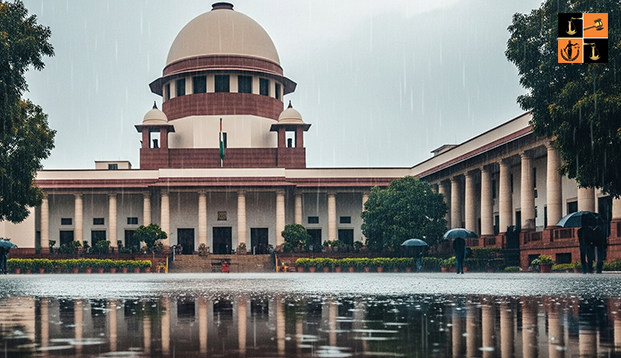
Recently, the Supreme Court held that an employee who resigns from service forfeits their entire past service and is therefore not entitled to pensionary benefits under the Central Civil Services (Pension) Rules, 1972. Closing the door firmly on attempts to blur statutory boundaries, the Court emphasised that “the only inescapable conclusion is that on resignation by the employee, his past service stood forfeited.”
Brief Facts:
The case stemmed from the resignation of Ashok Kumar Dabas, a long-serving conductor with the Delhi Transport Corporation (DTC) who had opted into the Corporation’s pension scheme during his service. After nearly three decades in employment, Dabas resigned on personal grounds, and his resignation was accepted, bringing his service to an end. A later attempt to withdraw the resignation was declined. When he subsequently sought retirement benefits, including pension, gratuity, provident fund, and leave encashment, the Corporation limited his entitlement to provident fund alone, citing resignation from service. His challenge before the Central Administrative Tribunal and the Delhi High Court did not succeed. Following his death, the legal heirs approached the Apex Court, contesting the denial of pension and other retiral dues.
Contentions of the Appellant:
The Appellant contended that the resignation letter ought not to be interpreted with technical rigidity, arguing that the deceased employee was not legally trained and had no intention of surrendering pensionary rights earned through long and continuous service. It was submitted that pension is a deferred benefit and not a bounty, and having completed more than twenty years of qualifying service, Dabas was entitled to pension under Rule 48-A of the CCS (Pension) Rules. Reliance was placed on decisions of the Supreme Court in Reserve Bank of India v. Cecil Dennis Solomon and Shashikala Devi v. Central Bank of India, as well as supportive rulings of the Delhi High Court. The Appellant further asserted that gratuity remains payable even in cases of resignation under Section 4 of the Payment of Gratuity Act, 1972, and that there was no legal justification for denying leave encashment.
Contentions of the Respondent:
The Respondent contended that the statutory framework admits no scope for interpretive elasticity, asserting that Rule 26(1) of the CCS (Pension) Rules clearly mandates forfeiture of past service upon resignation, thereby extinguishing any claim to pension. It was emphasised that resignation and voluntary retirement operate in distinct legal fields and that an accepted resignation cannot later be recharacterised to secure pensionary benefits. Reliance was placed on the Supreme Court’s decision in BSES Yamuna Power Limited v. Ghanshyam Chand Sharma, which reaffirmed this settled distinction. However, while opposing the pension claim, the Respondent fairly acknowledged the employee’s entitlement to leave encashment.
Observation of the Court:
The Court noted that the foundational facts were undisputed, the Appellant had resigned from the services of the Delhi Transport Corporation, his resignation had been accepted by the competent authority, and the subsequent request for withdrawal had been declined, which marked a complete severance of the employer–employee relationship, leaving the core issue confined to his entitlement to pension, gratuity, and leave encashment.
The Bench emphasised that a plain reading of the Rule 26 of the Central Civil Services (Pension) Rules, 1972, leaves no ambiguity, observing that “A perusal of Rule 26 of the 1972 Rules clearly shows resignation from service entails forfeiture of past service. In the case in hand, admittedly the deceased employee resigned from service on 07.08.2014, which was accepted by the competent authority on 19.09.2014. The withdrawal of the resignation after acceptance was declined by the competent authority on 28.04.2015. Meaning thereby, it is clear that the deceased employee had resigned from service and his withdrawal from resignation was not accepted.”
The Court rejected the argument that long years of service could dilute the statutory consequence of resignation. While acknowledging that the employee had rendered more than twenty years of service, the Bench clarified that Rules 48 and 48-A, which provide for voluntary retirement and pension after qualifying service, apply only where an employee retires in accordance with the prescribed procedure, including advance notice. In cases of resignation, the Court held, these provisions have no application.
The Bench made it clear that the length of service, by itself, cannot revive pensionary rights once resignation has taken effect, concluding emphatically that “the only inescapable conclusion is that on resignation by the employee, his past service stood forfeited. Hence, he will not be entitled to any pension.”
On the question of gratuity, however, the Court adopted a different approach. Interpreting Section 4 of the Payment of Gratuity Act, 1972, the Bench noted that gratuity is expressly payable even in cases of resignation, provided the employee has rendered the minimum qualifying service. Since no exemption had been shown to exclude the Corporation from the Act’s applicability, the Court held that gratuity could not be denied merely because the employee had resigned. As regards leave encashment, the Court recorded the respondent’s fair concession that the same was payable to the legal heirs.
The decision of the Court:
In the light of the foregoing discussion, the Court partly allowed the appeal, holding that while the legal heirs of the deceased employee were not entitled to any pension or family pension due to forfeiture of past service upon resignation, they were entitled to gratuity under the Payment of Gratuity Act, 1972, and to leave encashment, with the amount directed to be released within the stipulated time along with applicable interest.
Case Title: Ashok Kumar Dabas (Dead Through Legal Heirs) v. Delhi Transport Corporation
Case No.: SLP (C) No. 4818 of 2023
Coram: Hon’ble Justice Rajesh Bindal and Hon’ble Justice Manmohan
Advocate for the Petitioner: AOR Narender Kumar Verma
Advocate for the Respondent: AOR Aviral Saxena, Advs. Abhinav Sharma, Paritosh Goyal, Vedant Varshney
Read Judgment @Latestlaws.com