The Author, Tanvir Rathi, is a 5th-year, BALLB (H), student at Bennett University, Uttar Pradesh
CHAPTER I – INTRODUCTION
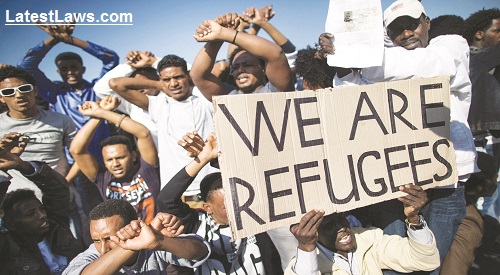
The research paper discusses the post-secular trend in citizenship and the politics revolving around refugees all across the world. It sheds light on how the inclusive and secular principles are under attack, particularly in India. Refugees in India are susceptible to the arbitrary actions of governmental procedures and authorities because there are no established regulations or determination procedures. It also emphasizes how ethnic and patriotic discourses have politicized immigration and citizenship, that is, especially in the context of migrants and refugees coming into the Indian subcontinent. Due to an absence of rights, refugees residing in camps are limited to living on the bare minimum; but, in actuality, fascinating assertions are being made, for instance in the situation involving Sri Lankan Tamils in Tamil Nadu.
India firmly claims to be secular, yet how do we have two different approaches or policies towards refugee communities? The paper goes on to say that India’s generosity towards some refugee populations and ignorance towards Muslim refugees have cast doubt on its approach to dealing with refugees and then the paper further calls into question the state’s very own secularism. Muslim Rohingya refugees are a stark illustration of a stateless group. The Indian government does not provide protection and opportunities to reside legally, and hence refugees continue to experience arrests and detentions.
The paper highlights the issue that the categorization of refugees in India is ambiguous. The level of security that they get from the Indian government, which is frequently affected more by politics than by humanitarian or legal parameters, largely determines how they are treated.
The paper, then, also delves into the question that whether the refugees are provided with inadequate and skewed protection under Indian law and state policy. One of the top nations in the world for taking in refugees is India. Although India doesn’t have a clear refugee statute, we have handled a few refugee populations fairly. The study argues, relying on citizenship rhetoric, that right-based assessment has made an effort to interact with noncitizens, and India is no exception.
It, then, makes an argument that initiatives that blatantly discriminate against a certain set of community, like the CAA and NRC, have exacerbated a number of issues among its very own citizens. With the aim of identifying and harassing Muslim immigrants living in India and prohibiting them specifically from obtaining specific rights and advantages in India, the NRC and CAA have been introduced to be extensively utilized as a tool of politics.
It is further argued that, in order to protect the refugee community in India, accessing institutions has become extremely difficult due to the lack of refugee laws and clarity surrounding refugees. The lack of a national legislation pertaining to the rights and entitlements of refugees in India has prevented them from receiving even the most basic protection, and hence, placing them in further danger. The refugees are now completely dependent on the government and have no legal redressal when the government commits any violation.
CHAPTER II – A CITIZEN’S CITIZENSHIP
A citizen is a person who has equal rights and obligations with all other citizens and is a member of a national or political community.[1] As per Hammar, citizenship has been seen as a byproduct or a ‘fruit’ of the contemporary state, where residents are expected to be dedicated to the state's goals and prepared to make any necessary sacrifices.[2] In the same state, foreigners are perceived as less reliable or even as possible security problems. As the officially recognized status as a citizen of a state, and thus citizenship is not considered to be optional. It is frequently used to imply a state of democratic inclusion or belonging, although this inclusion is typically predicated on an idea of a closed-off and exclusive group.[3]
The discrimination against non-citizens by denying them public benefits not only violates the human rights of immigrants, but also reflects a longstanding devaluation of marginalized families who suffer from higher levels of hunger and food insecurity due to welfare reform[4]. The concept and institution of citizenship has various shortcomings, limitations, conflicts, and is often associated with systems of subordination, which have been criticized by many scholars, particularly in postcolonial societies like India that have been shaped by caste, class, race, religion, and gender hierarchies. The principle of equality, a key aspect of citizenship, remains difficult to achieve and constrained. The formation of a civic community is often regarded as an important objective of citizenship[5].
The second part of the Constitution and the Citizenship Act of 1955 establish the concept of citizenship and establish various norms for acquiring it. Articles 5 to 9 of the Constitution define citizenship from the very commencement. The Citizenship Act of 1955 provides for acquiring citizenship through birth, descent, naturalization, and the incorporation of territories after the Constitution was enacted, specifically in Articles 3 to 7. However, there is ambiguity regarding stateless individuals who are recognized as refugees by the United Nations High Commissioner for Refugees (UNHCR) and their ability to obtain citizenship for their children.[6]
In the modern age of globalization, the concept of citizenship extends beyond one state and is essentially global in scope. This has two aspects: firstly, it stems from the idea of cosmopolitanism and involves a lasting awareness of a global community that surpasses nationalism; and secondly, the global nature of citizenship is rooted in the belief that globalization has created conditions that allow for a cosmopolitan way of life. According to Roy, universal human rights go beyond the rights of citizens and apply to all individuals as moral beings.[7] As a result, citizenship is seen as a complex concept in liberal democracies, encompassing both inclusive and exclusive aspects[8].
According to Jacques Derrida’s concept of “unconditional hospitality,” it is necessary to greet the immigrant before placing any restrictions on them. Allowing refugees to take advantage of the legal system and legal defense to uphold, defend, and enhance their rights as well as gain more autonomy over their life may have significant ramifications. Social policy’s growing emphasis on citizenship feeds into the ongoing devaluation of immigrant families.[9]
CHAPTER III – REFUGEES IN INDIA
According to international law, refugees are people who have been forcibly removed from their place of origin and who, for fear of facing persecution because of inter alia their race, religion, ethnicity, or political opinions, are unable or in some instances unwilling to return back.[10] It is believed by many that refugees pose a threat to the security of a host nation by placing more demands on its available limited resources or by simply existing there. They vary from migrants or foreigners in the sense that they are forced to leave their nation, as opposed to the latter who do so willingly and more importantly legally for a variety of factors. The influx of refugees has become increasingly important as it can potentially trigger international intervention. The notion that certain individuals are a “national security threat” has historically been misused to prevent political dissenters from entering nations and has caused in the formation of categories of such “undesirable” aliens.[11]
India has not provided a clear definition for the term “refugee.” The degree of legal protection that the refugees receive from the Indian government largely determines their position, and this protection is frequently shaped more by political calculations than by humane or legal requirements. The partition of the Indian subcontinent in 1947 and the independence of Bangladesh in 1971 constituted the highest bilateral flow in South Asia. In order to enter and remain in refugee camps established and maintained by the Indian government, it is reported that about seven million Bengali Hindus had migrated into West Bengal, Tripura, and Assam.[12] In contrast to previous population movements, present-day international migratory patterns within South Asia are primarily unacceptably big, unmanageable, and a cause of conflict both within the nation that receives or hosts the refugees and among the other states of the region.
The Indian government, on one hand, has provided adequate protection to some refugee communities, such as the Tamils of Sri Lanka, Tibetan refugees, and the Chakma. However, refugee populations that practice Islam, such as those of Bangladeshi Muslims, Burmese, Afghans, and numerous others, have experienced multiple forms of discrimination from the same state. They haven’t, in general, promised any protection from the government. Though they have blended in with the local population, Chin refugees in Mizoram are not recognized by the UNHCR or the Indian government. As a result, they frequently face abuse and harassment not only from the police but also from their employers and people in general. This prompts the question: How can the Indian government, which takes pride in its secular identity, deal with refugee groups using two different approaches or policies?
Governments, when unable to regulate entry, frequently try to sway their neighbors’ exit strategies. The government has used a number of tactics to cope with an unauthorized and unwelcome entry. A variety of tactics have been used, including violent attacks and abuses by the local ruling class of the receiving country, armed involvement, border conflicts, and the good old application of diplomatic pressure on the sending country.
CHAPTER IV – STATELESSNESS AND THE ROHINGYAS
A stateless person is an individual who is not recognized as a national by any state under the terms of that state’s legal system, according to the 1954 UNHCR convention pertaining to the status of stateless persons.[13] One conspicuous instance of a stateless community is the Rohingya refugee population. Many have been and still are being detained for violating the Foreigners Act, 1946, the Passports (Entry into India) Act, 1929, and other laws because they are perceived as being disadvantaged foreigners, or potential citizens of Bangladesh. After being driven from Myanmar by force, the Rohingya Muslims currently reside in extreme poverty and have mostly relocated to India and Bangladesh.
Many of them were forced to leave Myanmar due to the military attack on them, which was intended to endanger their lives. They are primarily multilingual Bengali and Burmese speakers who are Muslims from Burma. When the Burmese government began a campaign to check on “illegal immigrants” in the beginning of 1978, they also took off. The Burmese Army then intervened multiple times in an attempt to put a halt to local insurgencies in the Arakan region. Rohingyas are primarily the offspring of agricultural laborers who moved to the Arakan area during a time when borders were hazily drawn from Bengal. They were forced to leave because they could not establish that they were Burmese citizens since they did not possess national registration credentials.
They are currently the most oppressed non-citizen minority in the entire world. They are known as the “boat people” because of their constant need to flee from oppression and in quest of a living.[14] They are not able to obtain government employment or schooling. They are regarded as de jure stateless under international law, which means that they are not recognized as nationals by any state in the context of its existing legal system. The aforesaid convention protects stateless people’s right to freedom of movement while they are legally on the territory and mandates that nations issue identity documents and travel credentials to them in order to lessen the severe vulnerability that surrounds them. The plight of the Rohingyas has hardly improved in spite of the presence of such conventions.
Consequently, one could argue that using legal citizenship status as a means of defining who is entitled to life-sustaining entitlements further isolates the refugees as being “outside” the scope of a country’s social, economic, and political policies.
This section aims at establishing four fundamental prospective assertions after presenting certain powerful accounts involving certain Rohingya refugees who have been the victims subjected to unfair treatment, genocide, ethnic cleansing, murder, and acute vulnerability in Myanmar for a period of over forty years, as well as different kinds of vulnerability and unfair treatment in Bangladesh. First and foremost of all, the government continues to play a key role in the perpetuation of vulnerability, as noted by Green and Ward[15], who defined “state crime” as the treatment of those who are marginalised in the country because of their race, religion, or ethnicity. Secondly, individuals are forced to choose amongst “giving up their home nation by crossing borders of the country” and “obtaining probable inevitable death” due to the vulnerability imposed by the government. Refugees decide to travel across borders in order to survive as a vital lifesaving tactic because they are practically alive and well, that does in fact speed up transborder mobility. The government encourages transborder mobility in this way. Furthermore, excessive vulnerability leaves individuals with absolutely nothing to whine about, nowhere to turn, and nowhere to seek redress.
Vulnerability is a specific kind of disadvantaged posture that makes refugees even more vulnerable. Since the country views the Rohingyas as “bare life”[16], “non-life”[17], “rejected people”[18], and “subhuman”[19], the Rohingyas’ existence in Bangladesh amply demonstrate that the vulnerability is self-productive. This section ultimately reveals the tripartite relationship that exists between the state, vulnerability, and transborder mobility as a combination of “reasons” and “consequential” relationships between and among them and the government plays the key role in the same. The status of the Rohingyas, who are regarded as “the most severely tormented and oppressed ethnic minority worldwide,” in both their home country of Myanmar and their host country of Bangladesh, demonstrates their relationship with the rich and personal experiences of the Rohingya refugees.
CHAPTER V – CAA AND NRC
The newly enacted Citizenship (Amendment) Act (CAA), 2019, modernises the 1955 Citizenship Act to grant Indian citizenship to minority populations escaping oppression and terrorism in bordering nations. It aims to grant citizenship to those who practise Buddhism, Sikhism, Jainism, Christianity, Zoroastrianism, and Hinduism from Bangladesh, Afghanistan, and Pakistan. Its explicit purpose, as stated in the election declarations of the party that is currently holding the office, is to provide citizenship to those who practise Hinduism who are escaping oppression and preventing themselves from being persecuted in bordering nations with a large proportion of Muslims. This endeavour, nevertheless, may be considered a significant Hindutva endeavour with far-reaching consequences for Muslims living in India along with those who are immigrants. The measure, which seeks to combine citizenship with religion, has sparked anxiety throughout the nation since it goes against the fundamental ideas and secularism norms of the Constitution. Furthermore, not just did the Muslim community in the nation fiercely condemn the CAA and NRC, but a number of protests occurred in colleges and universities as a result. A number of states also approved measures against it in addition to this matter.
It’s obvious that the decision caused a significant rift amongst its proponents and opponents. The NRC was introduced with the goal of stopping Muslim immigrants in particular from obtaining specific advantages and privileges in India. For those who wanted to register on the NRC, individuals were instructed to provide proof of their Indian citizenship descent by displaying legacy data and their ancestral lineage. A nationwide initiative with the slogan “Kaagaz nahi Dikhayenge” (we are not disclosing our documents) and further demonstrations were triggered by this. One could bring forward an argument that the NRC and CAA were enacted shortly after the Rohingya crisis in South Asia because the Indian government refused to assume responsibility for offering sanctuary to Muslim immigrants. These laws were subsequently employed as political instruments for identifying and persecuting Muslims living in India.
The statement made by the union home minister on the application of the NRC to locate “intruders” across the country serves as an excellent illustration of the right wing’s Hindutva goal in India. In addition to targeting and excluding a sizable portion of the Muslim population, irrespective of their roots and lineage, by taking away their citizenship entitlements, his well-known “chronology” of modifying the CAA initially to grant citizenship to non-Muslim refugees afterwards incorporating the NRC for identifying adversaries also expands the scope of stateless individuals. Since there are no plans in place for their deportation to any of the South Asian countries—India, Bangladesh, Pakistan, or any other—it is uncertain that precisely what is going to take place to these individuals subsequently along with how to resolve the issues they are facing. Furthermore, the persecuting Muslim immigrants who are being targeted, like as the Rohingyas, would worsen as a result of this recognition, making them even more victims of statelessness.
CHAPTER VI – REFUGEES AND THE CONSTITUTION
Every Indian citizen is entitled to a number of rights under the country’s constitution. The Constitution refers to outsiders or individuals who don’t qualify as citizens of India as “aliens,” even if the expression “refugee” is not used specifically in this context. As a result, those who are applying for asylum in India were awarded some essential rights. According to Article 14 of the Constitution, that prohibits the government from denying anybody equality before the law or equal protection under the law throughout the territory of India, these privileges include equality before the law. Another privilege is the safeguarding of life and liberty under Article 21, which stipulates that no one can be deprived of their life or personal liberty other than in accordance with the proper legal procedures. In the decisions of State of Arunachal Pradesh v. Khudiram Chakma (1993) and Louis De Raedt v. Union of India (1991), the Supreme Court of India widened this privilege and encompassed foreigners within the purview of this legislation.[20] This protection, which is equally enforceable for both, Indian citizens and foreign nationals, now includes the right to a fair trial. The central government is empowered to enact legislation pertaining to issues that typically belong under the purview of foreigners, aliens, and immigrants under Articles 245 and 246.[21]
A combination of court declaration of constitutional privileges and administration ad hocism has frequently defined the country’s legal structure for protecting refugees.[22] Several basic rights are guaranteed by the Constitution of India and are frequently further enhanced by the Indian judiciary. The case of National Human Rights Commission v. State of Arunachal Pradesh (1996), whereby the Indian Supreme Court blocked the government’s attempt to forcibly remove Chakma refugees, serves as a stark illustration for this claim. In addition, the court instructed the state government to guarantee the protection of each and every Chakma refugee’s right to life and liberty within the Indian territory. Nevertheless, accessibility to those privileges and organisations has frequently been hampered by the unpredictable and capricious actions of the government, that appear to be determined more by political necessities than by legal requirements.
CHAPTER VII – NEED FOR THE REFUGEE LAW
Among the most well-known nations worldwide for accepting refugees is India. The Indian government has not created a clear refugee statute, although it has handled a small number of refugee settlements rather successfully. Government strategies that are contradictory and arbitrary are applied to refugees and asylum seekers in the lack of explicitly stated legislative requirements. The ad hoc character of Indian refugee law and practise is brought to the forefront by the Foreigners Act of 1946. There is no domestic refugee legislation in India that may define refugee rights or regulate how they are treated. As a result, various refugee populations have experienced differing levels of support. This was apparent in the Citizenship (Amendment) Bill of 2016. India appears to be completely devoted to protecting refugees conventionally, but in practise, India handles various populations differentially. India is neither a signatory to the 1967 Protocol nor the 1951 United Nations Convention Relating to the Status of Refugees. Numerous people have claimed to have believed the convention’s strong Eurocentricity is the primary cause why India refused to ratify it. However, India has upheld its fundamental pledge of providing humanitarian protection for refugees and has acknowledged that they are entitled to nonrefoulement. In actuality, India has ratified a number of treaties relating to human rights, including the International Convention on Civil and Political Rights (1966), the Universal Declaration of Human Rights (1948), and others. These treaties require India to provide refugees with the opportunity to determine their status, which it has done.
CHAPTER VIII – CONCLUSION
In Conclusion, we can infer that refugees are not fully and accurately protected by Indian law and governmental practise. In actuality, policies like the NRC and CAA, that are blatantly discriminatory towards a certain population, have caused a number of issues for their own populace. The absence of unambiguity and legislation pertaining to refugees has made it difficult for people to get hold of organisations that safeguard the Indian refugee population. The manner in which the India has divided specific refugee populations and treated them in different ways has left the refugees fearful of being persecuted and powerless, casting doubt on the religious foundations of the country. Due to the lack of domestic legislation regarding the privileges, safeguards, and entitlements of refugees, essential and fundamental protection has been denied to the refugees, further placing them in a vulnerable position. The refugees are now totally reliant on the government as a result of this, which means they don’t have any way to stop the government from violating them on a regular basis. The issue of being stateless cannot be resolved by the Indian laws. Since the Indian government does not provide safety or a path to permanent residency, stateless individuals like the Rohingyas are subjected to ongoing imprisonment and apprehensions.
References:
[1] Macfoy, M K (2014): “Introduction: Who is a Citizen? Feminism, Multiculturalism and Immigration,” Citizenship, R Bellamy and M K Macfoy (eds), Vol II, New York: Routledge.
[2] Hammar, T (1986): Citizenship: Membership of a Nation and of a State, International Migration, Vol 24, pp 735–48
[3] Bosniak, L (2006): The Citizen and the Alien: Dilemmas of Contemporary Membership, New Jersey: Princeton University Press.
[4] Fujiwara, L (2005): “Mothers without Citizenship: Asian Immigrant and Refugees Negotiating Poverty and Hunger in Post-Welfare Reform,” Race, Gender & Class, Vol 12, No 2, pp 121–41.
[5] Jayal, N G (2013): Citizenship and Its Discontents: An Indian History, US: Harvard University Press.
[6] Chaudhury, S B and R Samaddar (2015): Rohingyas: The Emergence of a Stateless Community, Kolkata: Mahanirban Calcutta Research Group.
[7] Roy, A (2010): Mapping Citizenship in India, New Delhi: Oxford University Press.
[8] Supra note 3
[9] Derrida, J (2005): “The Principle of Hospitality,” Parallax, Vol 11, No 1, pp 6–9.
[10] Bhattacharjee, S (2008): “India Needs a Refugee Law,” Economic & Political Weekly, Vol 43, No 9, pp 71–75.
[11] Benhabib, S (1999): “Citizens, Residents and Aliens in a Changing World: Political Membership in the Global Era,” Social Research, Vol 66, No 3, p 709.
[12] Weiner, M (1993): “Rejected People and Unwanted Migrants in South Asia,” Economic & Political Weekly, Vol 28, No 34, pp 1737–47.
[13] UNHCR (1954): “Convention Relating to the Status of Stateless Persons,” United Nations High Commissioner for Refugees, https://www.unhcr. org/en-lk/stateless-people.html.
[14] Supra note 6
[15] Green, P., & Ward, T. (2004). State crime: Governments, violence and corruption. London: Pluto Press.
[16] Agamben, G. (1998). Homo sacer: Sovereign power and bare life (D. Heller-Roazen, Trans.). Stanford: Stanford University Press.
[17] Povinelli, E. (2016). Geontologies: A requiem to late liberalism. Durham: Duke University Press.
[18] Weiner, M (1993): “Rejected People and Unwanted Migrants in South Asia,” Economic & Political Weekly, Vol 28, No 34, pp 1737–47.
[19] Uddin, N. (2019 [Forthcoming]). The Rohingyas: A case of “Subhuman”. New Delhi: Oxford University Press.
[20] Bhattacharjee, S (2008): “India Needs a Refugee Law,” Economic & Political Weekly, Vol 43, No 9, pp 71–75.
[21] Chaudhury, S B and R Samaddar (2015): Rohingyas: The Emergence of a Stateless Community, Kolkata: Mahanirban Calcutta Research Group.
[22] Supra note 20.