









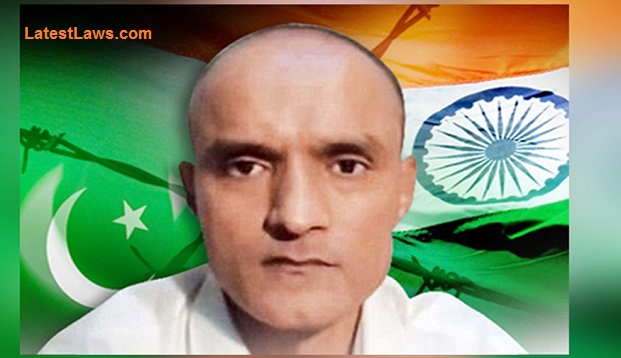
July 06, 2019:
The verdict will determine if Pakistan violated international law by denying consular access to the Indian national.
More than two years after India had filed a suit, the International Court of Justice is expected to deliver its verdict on July 17 on whether Pakistan violated international law in not allowing consular access to Indian national Kulbhushan Jadhav.
The announcement of the date of the order was made by the Hague-based UN judicial body on Thursday. The final verdict in Jadhav case (India v. Pakistan) will be read out by the president of the court, judge Abdulqawi Ahmed Yusuf at around 6:30 pm, Indian time on July 17.
India had approached the ICJ on May 8, 2017 with a request for immediate stay on the death sentence against Jadhav – which was accepted.
In its interim order dated May 18, 2017, the ICJ had ordered Pakistan to “take all measures at its disposal” to ensure that Jadhav is not executed pending a final judgment of the court in the case.
Pakistan had announced that Jadhav was taken into custody from Balochistan in March 2016. He was accused of being a serving Indian naval officer & masterminding terror activities.
India had dismissed Pakistan’s allegations & claimed that Jadhav had been kidnapped from inside Iranian territory. India had also asserted that he had retired from the Indian navy.
Jadhav was sentenced to death by a Field General Court Martial of the Pakistan army in a decision that was made public by the Pakistani military spokesman on April 10, 2017.
India had sought relief on four points:
- Immediate suspension of the death sentence.
- Declaration that the sentence of the military court was in “brazen defiance” of the Vienna Convention on Consular Relations & the International Covenant on Civil & Political Rights.
- Directing Pakistan to annul the decision of the military court “as may be available to it under the law in Pakistan”.
- If Pakistan is unable to annual the decision, then the court should declare the sentence “illegal” & direct the release of Jadhav.
Pakistan claims that the 2008 bilateral agreement on consular access does not cover subjects who have been arrested under terror or espionage charges.
In December 2017, Pakistan allowed Jadhav’s wife & mother to meet him at the foreign office in Islamabad. India claimed that the treatment meted out to the two women “confirmed India’s worst fears about the kind of treatment which is being meted out to him in Pakistani custody”.
Earlier this year, the ICJ held four days of public hearing during which Indian & Pakistani legal counsels presented their case & responses. This was in addition to two rounds of written pleas & responses from the two countries.
Source Link
Picture Source :



















