









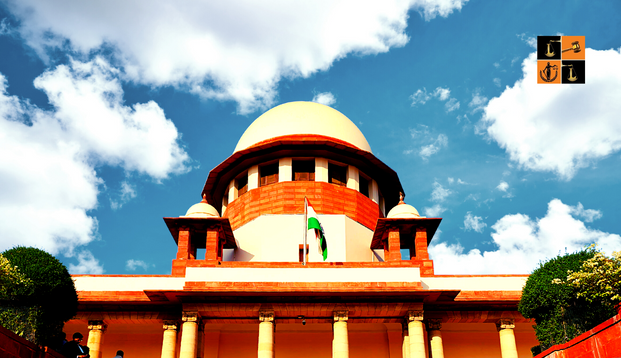
The ongoing legal battle over the abrogation of Article 370 has led to a complex and multifaceted debate within the hallowed halls of the Supreme Court. A five-judge Constitution Bench, headed by Chief Justice of India D Y Chandrachud, has been delving deep into the intricacies surrounding the revocation of special status from Jammu and Kashmir (J&K), sparking discussions about federalism, constitutional powers, and the differentiation of states.
During the hearing, Solicitor General Tushar Mehta, representing the Central government, emphasized that the situation in J&K was unique, given its history of cross-border terrorism, violence, and strategic significance due to its location as a border state. However, the Supreme Court challenged this assertion, observing that similar challenges have been faced by other states like Punjab and northeastern states.
Justice Sanjay Kishan Kaul noted, "We have seen very difficult times in Punjab, North-East. Not a one-off instance." The court further emphasized that the distinction made due to its border state status does not grant J&K an exclusive right to differential treatment.
The bench's questions also extended to the nature of the Presidential orders enabling the abrogation. It scrutinized whether the President can override the recommendation of the Constituent Assembly and questioned whether Article 370 can be used to amend Article 370 itself. These complexities in interpretation underscored the intricate nature of the constitutional framework.
The Central government's stance leaned on the assertion that J&K's integration into the Union of India was a gradual process and that Article 370 was meant to be temporary, not a permanent fixture. The government contended that the power of the President, under Article 370, allowed for the cessation of the Article's operation after the period for which it was intended had passed.
The court's observations and questions highlighted the broader constitutional concerns about the extent of federalism, the power dynamics between states and the Union, and the interpretation of key provisions in the Constitution. The hearing, which spanned multiple days, culminated in the government's commitment to restore statehood to J&K while retaining Ladakh as a Union Territory.
Source: Link
Picture Source :



















