









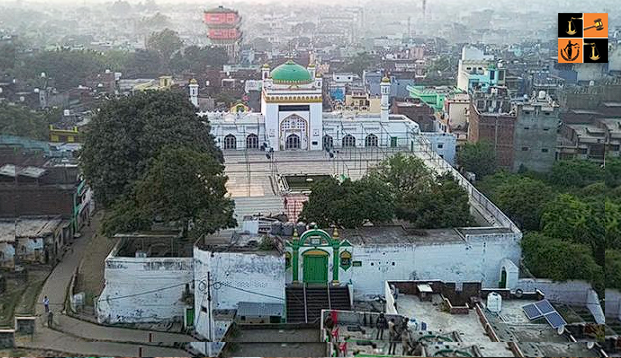
On Friday, the Supreme Court, directed that status quo be maintained in the ongoing dispute concerning the Shahi Jama Masjid at Sambhal, Uttar Pradesh, until Monday. A bench of Justice Pamidighantam Sri Narasimha and Justice Atul S. Chandurkar was hearing the Mosque Committee’s appeal against a May 19, 2025, Allahabad High Court order that upheld the maintainability of a Hindu plaintiffs’ suit, holding it was not barred by the Places of Worship (Special Provisions) Act, 1991.
The trial court suit, filed by eight Hindu plaintiffs including Mahant Rishiraj Giri, alleges that the mosque was built in 1526 after the partial demolition of a Kalki temple. They seek rights of access to the site, which has been recognized as a protected monument under the Ancient Monuments and Archaeological Sites and Remains Act, 1958.
The High Court ruled in favour of the plaintiffs on three issues: the validity of instituting the suit despite pending statutory notice under Section 80 CPC; the propriety of appointing a Commissioner for local inspection, and the applicability of the 1991 Act. It held that statutory notice was properly served, the Commissioner’s appointment was procedurally sound, and the suit was not barred since it sought only enforcement of access rights, not alteration of religious character. The Court also noted that the mosque was declared a protected monument in 1920, with a 1927 agreement acknowledging the ASI’s maintenance role.
Senior Advocate Huzefa Ahmadi, for the Mosque Committee, argued that the High Court erred in applying the 1991 Act. Justice Narasimha asked whether the matter should be tagged with pending challenges to the Act. However, counsel Vishnu Shankar Jain, for the Hindu plaintiffs, countered that the Act did not apply as the Sambhal Mosque is an ASI-protected monument and the plaintiffs only seek access. He relied on another bench’s order reportedly clarifying that ASI-protected monuments are outside the Act’s ambit. The Court directed him to produce that order on Monday, remarking, “We do not want to pass inconsistent orders.”
The High Court had also upheld a trial court order of November 19, 2024, appointing an Advocate Commissioner to inspect the mosque premises, a move that triggered communal tensions. The Supreme Court had stayed those proceedings until the High Court’s decision.
The matter will now be taken up on Monday after the respondents place the order relied upon before the bench, with status quo continuing in the meantime.
Picture Source :



















