









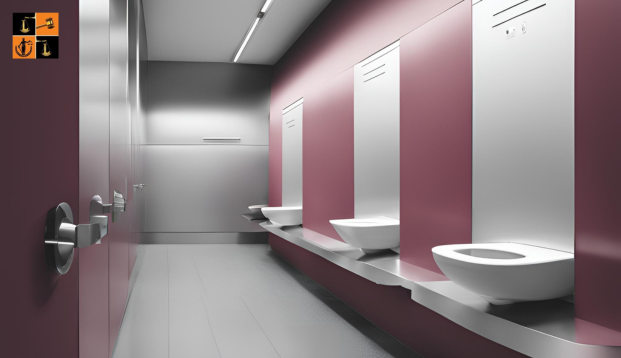
The Supreme Court has instructed all High Courts, state governments, and Union Territories to take immediate steps to ensure the provision of separate public toilet facilities for males, females, persons with disabilities (PwDs), and transgender individuals within all court premises and tribunals across the country.
The directive, issued on Wednesday, comes in response to a public interest litigation (PIL) filed by advocate Rajeeb Kalita, who highlighted the lack of basic sanitation facilities in court complexes. A bench comprising Justice J B Pardiwala and Justice R Mahadevan underlined the importance of public health, privacy, and dignity, emphasizing that the availability of adequate toilet facilities is a fundamental aspect of the right to life and dignity.
In its judgment, the Court stated, "Availability of access to public toilets is an important duty of the States/UTs under the Directive Principles and it is just not enough if such provisions are made but steps are to be taken to ensure that the toilets are maintained throughout the year." The Court further noted that without such provisions, "the States/UTs can no longer claim to be welfare State."
To oversee the implementation of this initiative, the Court mandated the creation of a special committee in each High Court, headed by a judge nominated by the Chief Justice. This committee, which will also include representatives from the state government and other stakeholders, is tasked with developing a comprehensive plan to assess and improve toilet facilities in the judicial system.
The Court stressed that these facilities must be maintained in a hygienic and accessible manner, not just for convenience but as a basic human right. "Access to proper sanitation is recognized as a fundamental right under Article 21 of the Constitution, which guarantees the right to life and personal liberty," the bench remarked.
The judgment also noted the pressing need for such facilities in district courts, particularly in rural areas, where judges and other court personnel often lack access to adequate sanitation. "The failure to provide adequate washroom facilities is not just a logistical issue, but it reflects a deeper flaw in the justice system," the Court stated, emphasizing that the judicial system must uphold fairness, dignity, and justice in all aspects, including basic amenities.
Additionally, the Court expressed concern over the condition of public toilets along national highways, often found near toll plazas, which are poorly maintained and difficult to access. The judgment highlights that the right to healthy and hygienic living spaces, including proper sanitation, is indispensable for a dignified life and a major component of public health.
The top court's ruling calls for a detailed survey of current facilities and deficiencies within the court infrastructure, urging state governments and UTs to allocate sufficient funds for the construction, upkeep, and regular cleaning of these essential services. All High Courts, state governments, and UTs are required to submit a status report within four months, detailing their progress.
Picture Source :




















