









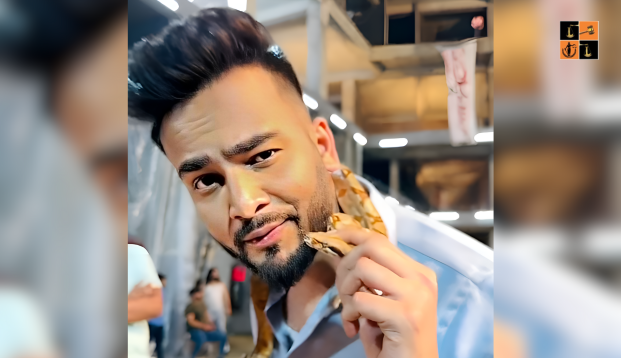
On Tuesday, in a temporary reprieve for YouTuber Elvish Yadav, the Supreme Court stayed the trial court proceedings in a case implicating him under the Wildlife Protection Act, Indian Penal Code (IPC), and Narcotic Drugs and Psychotropic Substances Act (NDPS Act) The case pertains to alleged use of snakes and snake venom for a YouTube video and purported involvement in rave parties where intoxicants were supplied by foreign nationals.
A Division Bench of Justice M.M. Sundresh and Justice Joymalya Bagchi issued notice in the special leave petition filed against the Allahabad High Court’s order, which had declined to interfere with the chargesheet and summoning order. The Bench also directed that the matter be tagged with a connected plea filed by the complainant, listed for hearing on August 29.
The petition before the Apex Court contests the continuation of trial proceedings on the grounds of procedural irregularities and lack of direct incriminating evidence. Appearing on behalf of Elvish Yadav, Senior Advocate Mukta Gupta contended that the offences invoked under the NDPS Act were not legally tenable and that mandatory statutory requirements had not been complied with. She requested the Court to stay the trial proceedings, which were listed for framing of charges before the trial court on Friday, until the matter is finally adjudicated.
The case originates from an FIR registered under which a chargesheet was filed against Elvish Yadav invoking a range of statutory provisions, Sections 9, 39, 48A, 49, 50, and 51 of the Wildlife Protection Act, Sections 284, 289, and 120B of the IPC, and Sections 8, 22, 29, 30, and 32 of the (NDPS Act). The trial court took cognisance of the offences and accordingly issued summons to the accused.
Before the High Court, Senior Advocate Navin Sinha, representing the accused, challenged the very foundation of the prosecution by submitting that the FIR was vitiated, as it had been lodged by an informant lacking locus under the Wildlife Protection Act. He pointed out that the complainant, though formerly an Animal Welfare Officer, held no such official capacity at the time of registration of the FIR. It was further contended that no narcotic substances, snakes, or venom were recovered from the accused person, who was allegedly not even present at the site of the purported rave party. The plea asserted that the proceedings were driven by media pressure arising from Yadav’s public stature.
It was also submitted that the snake-related video shoot occurred in June 2023 at the behest of music producers, and involved non-venomous snakes belonging to them. On this basis, the applicability of wildlife and narcotics laws was questioned. The defence asserted that sections 27 and 27A of the NDPS Act were initially added post-arrest to sensationalise the matter, but were later dropped due to a lack of evidence.
On the other hand, Additional Advocate General Manish Goyal, appearing for the State of Uttar Pradesh, submitted that the investigation had revealed Elvis Yadav’s role in procuring and supplying the snakes recovered during the raid. He argued that the defences raised on his behalf were premature and should be addressed during the trial. The High Court concurred, holding that a prima facie case had been made out and declined to interfere with the proceedings.
In its order, the High Court observed that Elvish Yadav’s popularity could not entitle him to differential treatment, and that the matter required adjudication on facts and evidence. The Court noted that Yadav had not challenged the FIR itself, and found no grounds to quash the chargesheet.
Picture Source :



















