









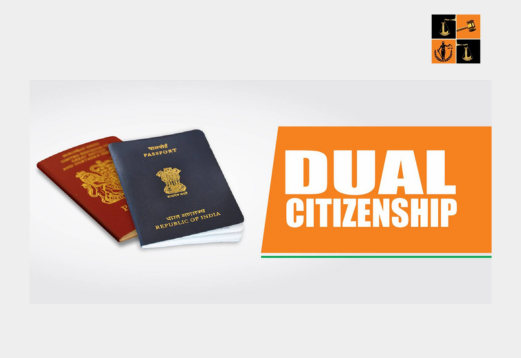
The Supreme Court of India has taken a significant step towards addressing the automatic termination of Indian citizenship upon acquiring another nationality. The Court issued a notice to the Central Government on Monday following a petition filed by Tarunabh Khaitan, a Professor (Chair) of Public Law at the London School of Economics. His petition challenged the constitutionality of certain sections of the Citizenship Act, 1955, particularly Section 9(1), the second proviso to Section 4(1), and Section 4(1A), which results in the involuntary and automatic termination of Indian citizenship upon acquiring another nationality.
Khaitan, represented by senior advocates Chander Uday Singh and Prashanto Chandra Sen, argued before a bench of Justices AS Bopanna and MM Sundresh that the petitioner was not advocating for general recognition of dual citizenship. Instead, the petition seeks to address the disproportionate and involuntary termination of citizenship under the challenged provisions. These provisions force individuals to make a difficult choice between their country of birth (Janmabhoomi) and the protections offered by their country of domicile (Karmabhoomi).
The petition, drafted by legal scholar Dr. Saif Mahmood, asserts that the involuntary termination of citizenship is not only unconstitutional but also runs counter to the values of the Indian constitutional ethos and violates International Law. It likens such termination to a form of exile, marking it as one of the harshest consequences imposed by the law on an individual for a non-criminal act. It also positions India among the nations with the most restrictive policies, where the loss of citizenship is automatic and involuntary.
The petitioner's case highlights a dilemma faced by individuals like him, who have been eligible for British citizenship since 2013 but have hesitated to apply due to the risk of losing their Indian citizenship. This situation also has implications for their prospective offspring, who would find themselves in the predicament of selecting either Indian citizenship through descent or British citizenship by virtue of birth and lineage. The petitioner further contended that the 'Overseas Citizen of India Cardholder' status, which he would qualify for upon the termination of his Indian citizenship, does not provide the same advantages as full citizenship.
This case raises crucial questions about the rights of individuals in similar situations and the constitutional validity of provisions that compel such a stark choice. The Supreme Court's decision to issue a notice to the Central Government marks a significant development in the ongoing debate on dual citizenship in India.
Picture Source :




















