









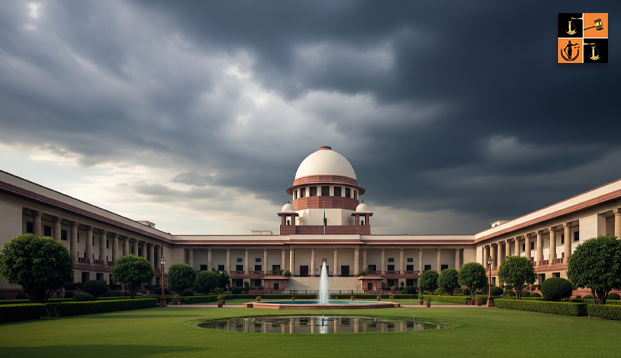
The Supreme Court restored the Trial Court’s full decree in a recovery suit, holding that reduction of the decretal amount by the High Court was erroneous. The Court emphasized that “only because documentary proof was not available…would not lead to the conclusion that such amount was not paid through cash,” underscoring the importance of considering promissory notes in entirety when enforcing financial obligations.
The appellant filed a suit seeking recovery of a sum pursuant to a promissory note, claiming the respondent had received over ₹30 lakh. The Trial Court upheld the suit and decreed the full amount. However, the High Court modified the decree, reducing the recoverable sum to ₹22 lakh, reasoning that only part of the amount could be verified through documented transactions, while rejecting cash payments. The appellant challenged this reduction before the Apex Court.
Counsel for the appellant argued that the promissory note clearly recorded the total amount received by the respondent and had been accepted as valid by both courts. The reduction of the decretal amount was challenged as erroneous, particularly because cash payments, though lacking documentary proof, were explicitly acknowledged in the note and should not have been dismissed merely due to absence of formal evidence. The appellant submitted that the onus lay on the respondent to disprove the cash component of the transaction, which had not been done.
The Apex Court observed, “There being specific stand by the appellant that he has paid ₹30,80,000/- to the respondent pursuant to a promissory note, which incidentally has been upheld and not disbelieved, the onus would be on the respondent to dispel such fact".
The Court further noted, “It is not uncommon that in money transactions, there is a component of cash also involved and just because a person is not able to prove the transfer through official modes…would not lead to the conclusion that such amount was not paid through cash, especially when there was a categorical statement to this effect by the appellant before the Court concerned".
The Bench emphasized that the initial presumption of legally enforceable debt arises from the Negotiable Instruments Act, 1881, and that bifurcation of the amount by the High Court was “clearly erroneous and therefore, unsustainable".
Taking into account the facts and circumstances, the Top Court allowed the appeal, set aside the High Court’s order, and restored the Trial Court’s full decree, holding the respondent liable to pay the entire amount as claimed in the original suit.
Case Title: Georgekutty Chacko vs. M.N Saji
Case No.: SLP (Civil) No.10362 of 2024
Coram: Justice Ahsanuddin Amanullah, Justice Vipul M. Pancholi
Advocate for Petitioner: Adv. Usha Nandini V. (AOR), Biju P Raman, John Thomas Arakal, Ashima Gupta
Advocate for Respondent: None
Picture Source :



















