









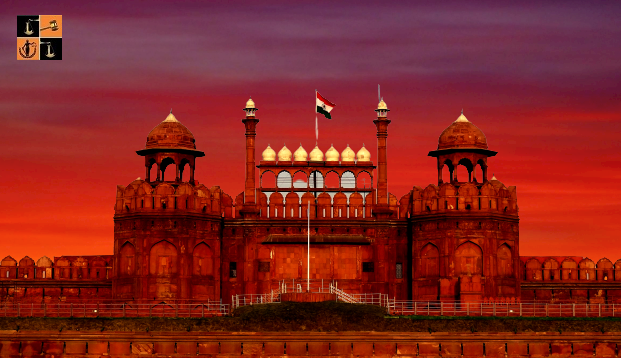
The Supreme Court dismissed a petition seeking possession of the historic Red Fort, filed by a woman claiming to be the widow of the great-grandson of the last Mughal emperor, Bahadur Shah Zafar II. The Court found the plea to be wholly devoid of merit and questioned the legitimacy and delay of the claim. In a brief yet pointed observation, the bench remarked on the implausibility of the demand, stating, “Why only the Red Fort? Why leave out Fatehpur Sikri?”
The petitioner, Sultana Begum, approached the Supreme Court asserting her right to possess the Red Fort, a significant monument under the custody of the Government of India. She claimed to have inherited the property through the lineage of the Mughal emperor Bahadur Shah Zafar II and alleged that its possession had been unlawfully taken by the British East India Company in the year 1857.
Her initial plea was filed before the Delhi High Court in 2021, where a single-judge bench had dismissed the matter on the grounds of excessive delay in seeking legal remedy, over 160 years after the alleged dispossession. The decision was later upheld by a division bench of the High Court in December 2024.
The petitioner contended that she was the rightful heir to the Red Fort property and, as such, entitled to both possession and compensation for its continued occupation by the Government of India since 1857. The plea sought judicial directions for compensation covering the entire period from 1857 to the present date, alleging that the Union had no legal title to the property.
The Apex Court bench, comprising Chief Justice of India Sanjiv Khanna and Justice Sanjay Kumar, firmly rejected the claims, terming the writ petition as "wholly misconceived." During the hearing, CJI Khanna commented sarcastically, “Why only the Red Fort? Why leave out the Fatehpur Sikri?”, highlighting the incredibility of the relief sought. The Court further noted that historical events from the colonial era cannot be reopened in constitutional courts after such an inordinate delay and in the absence of any sustainable legal basis.
The Court reiterated that judicial forums are not designed to entertain speculative claims arising centuries after the alleged cause of action, especially when related to sovereign or historical properties.
In conclusion, the Top Court dismissed the special leave petition, affirming the findings of the Delhi High Court, and held that the petitioner’s claim lacked legal substance, suffered from unreasonable delay, and had no enforceable rights under the law.
Picture Source :




















