









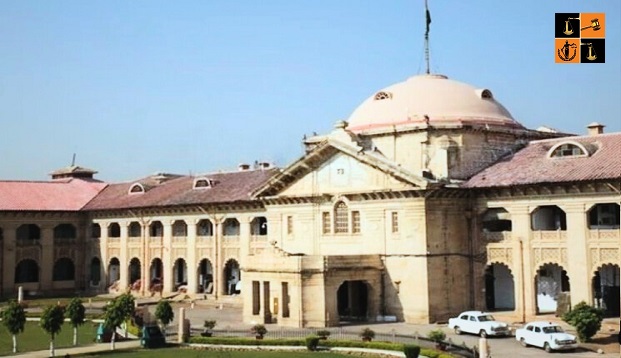
The Allahabad High Court granted bail to an accused while issuing stern directions for inquiry against a doctor and investigating officer for alleged negligence and manipulation of medical evidence in a criminal case. The Court observed that any unfairness or negligence by public servants, particularly in the criminal justice system, “undermines public trust in the State and defeats the objectives of the Constitution.”
Brief Facts:
The case arose from an incident in which the injured, Sunny, sustained serious head injuries allegedly caused by the applicant and another co-accused. During the medical examination, Dr. Ashwani Kumar Pachauri initially reported no bony injury on the skull based on an X-ray dated May 31. However, a prior CT scan dated May 3 revealed a comminuted depressed fracture in the frontal sinus area. Despite this contradiction, the Investigating Officer submitted a chargesheet under Section 308 IPC, treating the injury as less serious, instead of under Section 307 IPC, which pertains to an attempt to murder.
Taking note of the inconsistency between the CT scan and the X-ray, the High Court summoned the Investigating Officer Faisal Khan and Dr. Pachauri, seeking an explanation on the discrepancies. Subsequent reports revealed possible negligence and irregularities in handling medical evidence.
Contentions:
The counsel for the applicant argued that the allegations were general in nature and that no specific role was attributed to the applicant in causing the grievous injury reflected in the CT scan. It was contended that the charge sheet had already been filed, indicating no further requirement for custodial interrogation. The applicant, who had no prior criminal record, had been in custody since June 2, 2025, and assured the Court of full cooperation with the trial if released on bail.
On the other hand, the counsel for the State opposed the bail plea but could not dispute the factual inconsistencies highlighted by the defense.
Observations of the Court:
The Court, after a detailed examination of the record, noted that Dr. Ashwani Kumar Pachauri himself had advised both CT scan and X-ray of the injured on May 2, 2025. The CT scan, conducted the next day, clearly detected a depressed fracture. However, the subsequent X-ray conducted nearly a month later reported no fracture, a conclusion the Court found “absolutely improbable and appearing to be manipulated.”
The Bench remarked, “It is surprising that if the physician himself advised the injured for CT scan and X-ray and the discharge slip mentioned the CT scan results, how the CT scan report was not considered while preparing the final medical report. Prima facie, there is serious negligence on the part of Dr. Pachauri.”
While refraining from passing adverse orders against the retired doctor, the Court imposed a cost of ₹10,000 to be deposited in the District Legal Services Authority, Firozabad.
Regarding the Investigating Officer, the Court observed, “If the doctor refused to prepare the supplementary report based on available medical records, it was the duty of the Investigating Officer to inform higher authorities or the Chief Medical Officer. Instead, he hurriedly filed the charge sheet under Section 308 IPC on the basis of an incorrect X-ray report, contrary to the CT scan findings.”
Though the Court found prima facie negligence on the part of the Sub-Inspector, it refrained from passing immediate punitive action, directing instead the Superintendent of Police, Firozabad, to conduct an inquiry and take appropriate measures. The Court emphasized the larger principle that, “In the administration of criminal justice, police officers and public servants must act fairly. Any negligence or unfairness undermines public confidence and defeats the objectives of the Constitution.”
The Court referred to the Supreme Court’s rulings in Satender Kumar Antil v. Central Bureau of Investigation and Arnesh Kumar v. State of Bihar, reiterating that in cases where the maximum punishment is up to seven years, bail should generally be granted. However, it cautioned that investigating agencies often manipulate injury reports to misclassify serious offenses as lesser ones under Section 308 IPC to avail of lenient bail provisions.
The Bench also noted frequent misinterpretation of Satender Kumar Antil by subordinate courts, emphasizing that the Supreme Court’s directions were meant for cases post-charge sheet, not during the investigation stage.
The decision of the Court:
Considering the nature of the allegations, the medical reports, and the fact that the charge sheet had already been filed, the Allahabad High Court granted bail to the applicant. The Court directed that the applicant be released upon furnishing a personal bond with two sureties and subject to conditions ensuring cooperation with the trial and non-interference with witnesses or evidence. The Bench further directed the Superintendent of Police, Firozabad to conduct a departmental inquiry into the alleged negligence of the Investigating Officer and the Chief Medical Officer to ensure accountability among medical professionals handling medico-legal cases.
The Court also instructed that a copy of the order be sent to the Director, Judicial Training and Research Institute (JTRI) to sensitize judicial officers about the correct interpretation of Satender Kumar Antil guidelines.
Case Title: Krishna Alias Kishna Vs. State of U.P.
Case No.: Criminal Misc. Bail Application No. - 33908 of 2025
Coram: Justice Arun Kumar Singh Deshwal
Advocate for Petitioner: Adv. Mithilesh Kumar Shukla
Advocate for Respondent: G.A.
Read Judgment @Latestlaws.com
Picture Source :




















