









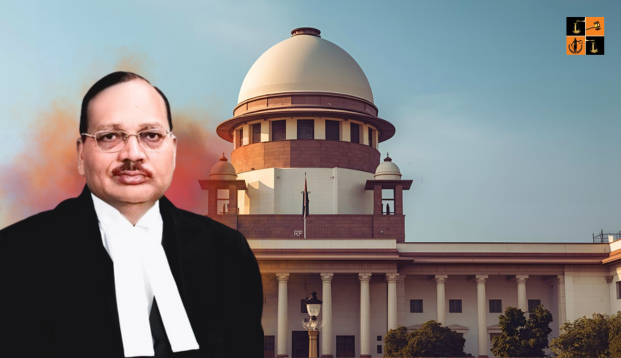
On Tuesday, the Supreme Court raised critical questions regarding the legal status of Rohingya individuals in India, asking whether the Government of India has formally recognized them as refugees. A bench comprising Chief Justice of India Surya Kant and Justice Joymalya Bagchi was hearing a habeas corpus petition alleging custodial disappearance of Rohingyas and seeking that any deportation be carried out strictly according to legal procedure.
The petition stated that several Rohingyas were taken into custody by Delhi police in May, and their whereabouts remain unknown. The petitioner clarified that the aim was not to prevent deportation or seek refugee status but to ensure that any removal process follows the government-mandated legal framework.
During the hearing, CJI Surya Kant questioned, “Where is the order of the Government of India declaring them as refugees? Refugee is a well-defined legal term, and a specific authority must confer that status. If someone enters illegally, do we have an obligation to allow them to stay?”
The Court emphasized that illegal entry cannot automatically confer rights such as food, shelter, or education and highlighted that India has many citizens living in poverty who are entitled to state resources. It further observed that while unlawful entrants must not be mistreated, any deportation must strictly adhere to established procedures to avoid logistical and legal complications.
Solicitor General Tushar Mehta noted that the petition was filed as a public interest litigation and not by affected individuals, while the bench clarified that PILs can be filed without direct locus. The matter will be heard alongside connected petitions to examine whether Rohingyas should be treated as refugees or illegal migrants and to ensure deportation is conducted lawfully.
Picture Source :




















