









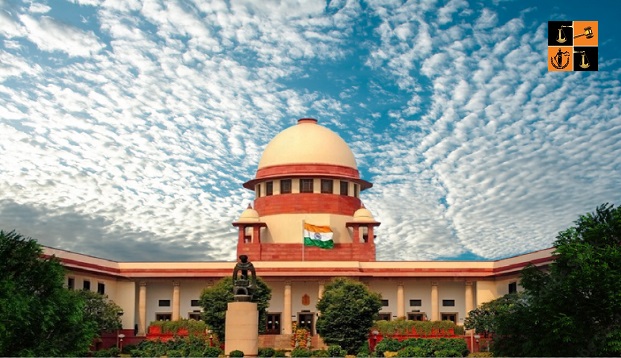
Recently, the Supreme Court clarified that only state governments possess the authority to impose taxes on the sale of lotteries, reaffirming that lotteries fall exclusively under the domain of state legislatures. The Court emphasised that such activities are classified as “betting and gambling” under Entry 62 of the State List in the Constitution, thereby restricting the Centre from levying service tax on lottery distribution.
The case arose from the Centre's attempt to impose service tax on companies involved in distributing and marketing lotteries. The Union Government contended that these activities constituted taxable “services” under the Finance Act, warranting the imposition of service tax. Several lottery distributors, including Future Gaming & Hotel Services and Summit Online Trade Solutions, challenged this imposition before various High Courts, which ruled in their favour. The Centre subsequently appealed before the Supreme Court.
The Union Government argued that lottery distributors provide a service by marketing and selling lottery tickets on behalf of state governments. It contended that these activities should be classified as “Business Auxiliary Services” under the Finance Act, making them liable for service tax. The Centre further pointed out that amendments to the Finance Act in 1994, 2010, and 2015 were introduced to expand the scope of taxable services, including lottery distribution.
On the other hand, the respondents contended that the nature of their transactions with state governments was that of “principal to principal” rather than “principal to agent,” thereby negating the applicability of service tax. They emphasized that lotteries, being a form of “betting and gambling,” fall within the legislative competence of the states as per Entries 34 and 62 of the State List, thus excluding any taxation power of the Centre in this regard.
The Supreme Court, while adjudicating the matter, underscored the constitutional scheme governing taxation powers. It reaffirmed that “the power to impose tax on lotteries is vested solely in the state governments under Entry 62 of the State List, and any attempt by the Centre to levy service tax on such transactions would amount to an encroachment upon state jurisdiction.”
The Court further held that “mere distribution and marketing of lottery tickets does not constitute a 'service' as contemplated under the Finance Act. The relationship between state governments and lottery distributors is one of a contractual nature, governed by the principle of principal-to-principal transactions rather than principal-to-agent, eliminating the scope of service tax.”
Additionally, the Court referred to previous rulings wherein High Courts, including the Sikkim High Court, had invalidated similar attempts by the Centre to impose service tax on lottery distribution. Upholding those decisions, the Supreme Court reiterated that “taxation on lotteries falls within the legislative purview of the states, and any central taxation measure in this regard would be unconstitutional.”
In light of these observations, the Supreme Court dismissed the Centre's appeals and upheld the rulings of the High Courts, effectively striking down the levy of service tax on lottery distributors. The judgment reinforces the principle that the taxation of lotteries remains an exclusive prerogative of state governments, ensuring clarity in the division of taxation powers between the Centre and the states.
Picture Source :




















