









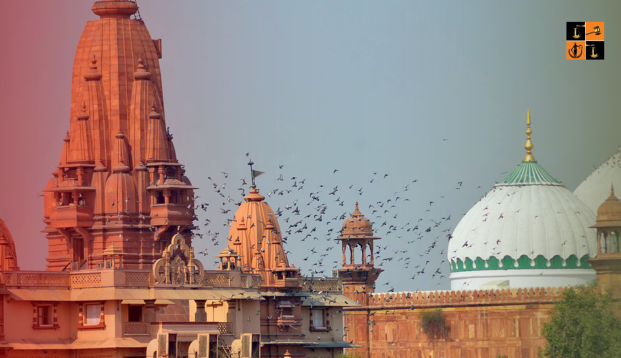
On Monday, in a development that could influence the course of the long-running Krishna Janmabhoomi–Shahi Idgah dispute, the Supreme Court, scheduled for December 1 the hearing of a plea filed by a Hindu party contesting an Allahabad High Court order that recognised another Hindu litigant as the representative of all devotees of Lord Krishna. The Apex Court indicated that the matter involves significant procedural questions requiring a detailed examination.
The case stemmed from multiple civil suits concerning the Shahi Idgah mosque in Mathura, where the Hindu side alleges that a temple marking the birthplace of Lord Krishna was demolished during the Mughal period. Over 20 suits filed in the Mathura court were later transferred to the Allahabad High Court for consolidated adjudication. In July, the High Court permitted a separate Hindu litigant—who had filed an independent suit seeking the removal of the Shahi Idgah mosque, to be treated as the representative of all Krishna devotees, prompting objections from the party that had originally filed the first suit and had been treated as the lead petitioner after the cases were transferred.
During the hearing, Senior Advocate Shyam Divan, appearing for the aggrieved Hindu party, argued that the High Court had erred in granting representative status to another litigant. He submitted that his clients were the first to approach the court and were designated the primary party after transfer of all suits, making the High Court’s decision procedurally improper. Divan further contended that the application filed by the other party did not even contain a specific prayer seeking such representative recognition, yet the High Court nonetheless allowed it, effectively sidelining the original suit.
On the other side, the respondents supported the High Court’s decision, maintaining that the recognition of a representative party would streamline proceedings and ensure that the interests of all devotees are jointly presented before the Court. They argued that the High Court acted within its authority while dealing with suits of overlapping reliefs and that consolidation under a representative litigant could help avoid multiplicity of proceedings and conflicting outcomes.
After considering the submissions, the Apex Court observed that the question of who may legitimately represent a large body of devotees involves both factual and procedural considerations that cannot be resolved summarily. The bench of Justices Sanjay Kumar and Alok Aradhe noted that the dispute sits within a cluster of transferred civil suits and that the High Court’s approach must be examined in context.
Accordingly, the Top Court deferred the matter for a detailed hearing on December 1, stating that the issue requires closer scrutiny. The Court is already dealing with a separate petition filed by the mosque committee challenging the High Court’s order transferring all suits to itself.
Disclaimer: This news/ article includes information received via a syndicated news feed. The original rights remain with the respective publisher.
Picture Source :




















