









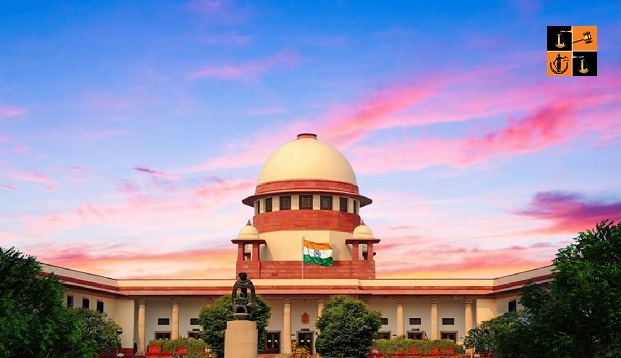
Recently, the Supreme Court is set to hear an appeal challenging the Karnataka High Court's decision, which quashed criminal proceedings against two individuals accused of shouting “Jai Shri Ram” inside a mosque. The High Court had ruled that such actions did not amount to an offence of outraging religious sentiments. The case has garnered attention due to its sensitive nature involving religious sentiments and public order.
The case concerns two residents of Dakshin Kannada district, Keerthan Kumar and Sachin Kumar who allegedly entered a mosque named Badnya Jumma Mashib last year and shouted “Jai Shri Ram”. The duo further allegedly threatened that they would not allow the Beary Muslim community to live in peace. As a result, a complaint was filed and the local police registered a case under various sections of the Indian Penal Code (IPC) including Section 295A (acts intended to outrage religious feelings), 447 (trespass) and 506 (criminal intimidation). The accused men later moved the Karnataka High Court to seek the quashing of the criminal case. On September 13, the High Court granted relief, quashing the charges against them.
The respondent’s counsel, representing the complainant, has now appealed the High Court's decision to the Supreme Court. In their plea, they argue that the High Court's approach was overly pedantic and contrary to established Supreme Court rulings on the quashing of criminal proceedings. They emphasize that the test for quashing a case is not whether the allegations in the FIR meet the requirements for offences but whether, when taken at face value, they disclose the commission of cognizable offences. The counsel has also highlighted that the Supreme Court has repeatedly decried the quashing of criminal proceedings during the investigation stage, particularly when the investigation is ongoing. Further, the counsel expressed disagreement with the High Court's observation that shouting “Jai Shri Ram” inside a mosque could not be seen as an insult to religious sentiments. They contend that the High Court’s findings, especially its statement about the incident not affecting public order, were erroneous and could embolden anti-social elements to justify harmful acts under the guise of religious chants.
The Karnataka High Court in its judgment made significant observations regarding the application of Section 295A of the IPC. Justice M Nagaprassanna noted, “Section 295A deals with deliberate and malicious acts intended to outrage religious feelings of any class by insulting its religion or religious beliefs. It is ununderstandable as to how if someone shouts ‘Jai Sriram,’ it would outrage the religious feeling of any class”. The High Court further stated that based on the complainant’s assertion that Hindus and Muslims were living in harmony in the area, the incident did not lead to any antagonism or disruption of peace.
The Court also observed that the alleged act had no discernible effect on public order, adding, “The Apex Court holds that any and every act will not become an offence under Section 295A of the IPC. The acts that have no effect on bringing out peace or destruction of public order will not lead to an offence under Section 295A of the IPC.”
The Top Court will hear the appeal on December 16, where it will consider whether the Karnataka High Court erred in its application of the law and its findings. The complainant's plea is expected to raise concerns about the broader implications of the High Court’s observations and the need to maintain strict scrutiny over religious-related offences.
Picture Source :




















