









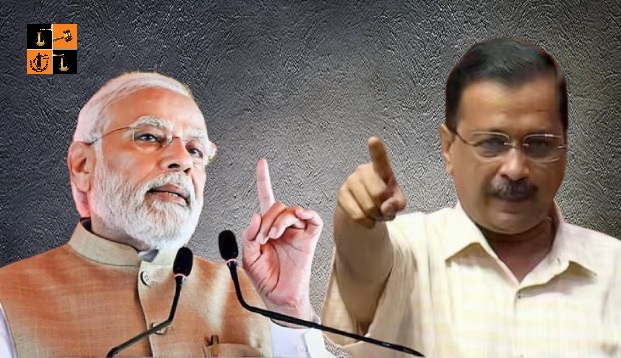
In a significant development, the Supreme Court indicated on July 17 that it may refer the Delhi government's petition against a Central Ordinance to a Constitution Bench for a definitive ruling. The Chief Justice of India, D.Y. Chandrachud, leading a three-judge Bench, expressed inclination towards seeking the expertise of a Constitution Bench to address the matter.
Despite the Solicitor General Tushar Mehta's submission on behalf of the Centre that the Ordinance would be presented in Parliament during the upcoming Monsoon Session starting on July 20, the court was undeterred in its decision to consider a referral to the Constitution Bench. Mehta urged the court to wait and observe the legislative actions of Parliament, stating that potential amendments could be made to certain aspects of the Ordinance. However, the Chief Justice asserted that the case's legal questions warranted the attention of a Constitution Bench.
The legal contest between the Delhi government and the Centre revolves around several key points. The Ordinance, which has amended the Constitution through the ordinance route, effectively takes away the Delhi government's power over State Public Services under Entry 41 in the State List. The creation of the "permanent" National Capital Civil Service Authority has sparked concerns that it diminishes the Chief Minister's influence in the governance of Delhi.
Chief Justice Chandrachud outlined the crucial legal questions that may necessitate the involvement of a Constitution Bench. First, the court would need to determine whether the National Capital Territory of Delhi (Amendment) Ordinance, 2023 constitutes an amendment to the Constitution through the Ordinance route. The Delhi government contends that the Ordinance curtails its control over civil servants without amending Article 239AA, which states that power and control over services should be vested in the elected government.
Additionally, the court raised the issue of whether the effective transfer of power over civil services nullifies Entry 41 of the State List, which deals with the State's authority over State public services and the State Public Service Commission. The Supreme Court questioned whether the Ordinance effectively prevents the State legislature from enacting laws under Entry 41.
It is worth noting that a previous Supreme Court judgment on May 11 limited the role of the Lieutenant Governor, who represents the Centre, to three specific areas: public order, police, and land. The Ordinance was promulgated merely eight days after this verdict, which upheld the authority of the Delhi government to legislate and administer civil services in the national capital.
In response to the Delhi government's challenge, the Ministry of Home Affairs (MHA) submitted a counter-affidavit arguing that Parliament possesses overriding powers to enact laws on subjects within the jurisdiction of the Delhi Legislative Assembly. The MHA accused Chief Minister Arvind Kejriwal and his Ministers of engaging in a "rampage" immediately after the May 11 verdict. The Centre alleged that the officers were subjected to harassment, media trials, and threats during this period. The MHA further emphasized that the promulgation of the Ordinance was necessary to prevent paralysis of the national capital's administration and to preserve the country's reputation globally.
The Supreme Court agreed to hear the case on Thursday, indicating its intent to delve deeper into the constitutional implications of the Ordinance. Moreover, the court will also address the plea challenging the Lieutenant Governor's decision to appoint the Delhi Electricity Regulatory Commission (DERC) chairman without the concurrence of the Delhi Government. This matter will be heard after the Constitution Bench concludes its proceedings on Thursday. The Aam Aadmi Party (AAP) has denounced the LG's decision as an "unconstitutional exercise of executive fiat" aimed at overriding the Supreme Court and the Constitution's basic structure.
On May 19, the Centre promulgated the Government of National Capital Territory of Delhi (Amendment) Ordinance, 2023. The Ordinance establishes the 'National Capital Civil Services Authority,' consisting of the Delhi Chief Minister, Chief Secretary, and Home Secretary, granting them the power to make decisions concerning the transfer and posting of Group 'A' officers and DANICS officers serving in the Delhi Government. The AAP government considers this move a violation of the Supreme Court's verdict on control of services and deems it deceptive. Prior to the May 11 Supreme Court ruling, the LG had executive control over the transfer and postings of all officers in the Delhi government.
Source: Link
Picture Source :




















