









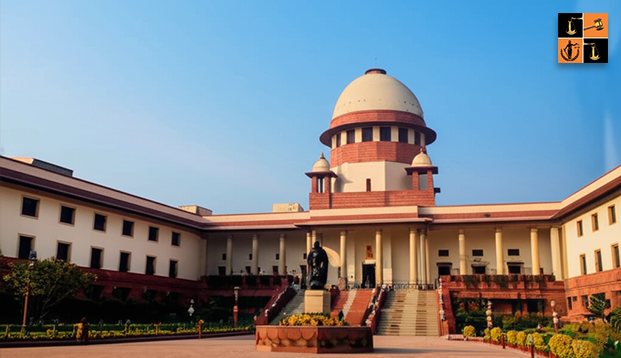
On Tuesday, the Supreme Court faced further complications in the ongoing “ghost litigant” controversy after a third advocate, whose name was recorded in the Court’s order sheet for the case, categorically denied any involvement. Appearing before a Bench of Justice P.S. Narasimha and Justice Atul S. Chandurkar, advocate Ratan Lal stated that he had “nothing to do with the case” and did not know how his name appeared in the records.
The matter stems from a land dispute in which the petitioner allegedly managed to secure a favourable order from the Supreme Court by producing a “ghost” opponent. During the original proceedings, the purported opponent informed the Court that a compromise had been reached, leading to the quashing of adverse orders passed by a Muzaffarpur trial court and the Patna High Court. Five months later, the real opposing party appeared before the Court and asserted that no such compromise had taken place and that he had not authorised any lawyer to represent him before the apex court.
The order sheet from the earlier proceedings contained the names of four lawyers. Three of them, advocates of established standing in litigation, have now clarified that they had no connection to the case. The fourth advocate, whose name also appeared, no longer practices law and is reportedly untraceable.
During Tuesday’s hearing, both the Supreme Court Bar Association (SCBA) and the Supreme Court Advocates-On-Record Association (SCAORA) urged the Bench to order a police investigation and forensic examination of the documents to identify the perpetrator. SCAORA President Vipin Nair submitted that “The blame or charge of any wrongdoing can’t be straightaway ascribed to AOR or lawyers since the pleadings indicate that the possibility of the petitioner engaging in fabrication can’t be ruled out. A thorough enquiry is therefore necessary.”
The associations also argued that the involvement of practising lawyers was unlikely and emphasised that the integrity of the bar should not be questioned without clear evidence. They urged that law enforcement agencies be tasked with investigating the matter to prevent the recurrence of such fabrications.
The Bench observed that the allegations were serious and that it would consider all aspects, including the possibility of directing a police inquiry, before passing appropriate orders.
The Court had originally passed the impugned order in December last year after the alleged “compromise agreement” was placed on record. The discovery that the supposed opponent was fictitious has prompted the Court to revisit its earlier order and examine the role of those involved.
Picture Source :




















