









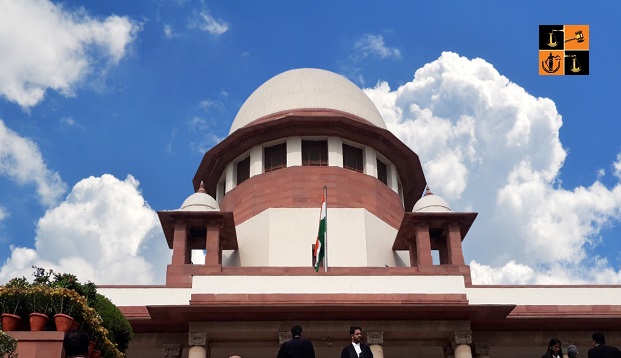
Recently, the Supreme Court underscored the necessity of establishing a robust mechanism under the Drugs and Magic Remedies (Objectionable Advertisements) Act, 1954, to facilitate citizen complaints against misleading medical advertisements. The Court while hearing the Indian Medical Association’s case, emphasised the urgent need for a structured grievance redressal system to prevent deceptive medical claims. It highlighted that a structured grievance redressal system to prevent deceptive medical claims. It highlighted that state governments must take proactive measures rather than waiting for complaints to enforce statutory provisions effectively.
The matter pertained to the enforcement of Rule 170 of the Drugs and Cosmetics Rules, 1945, concerning misleading advertisements related to Ayurvedic medicines. The Court had earlier directed all State and Union Territory (UT) governments to submit affidavits detailing actions taken against such advertisements under the Drugs and Magic Remedies Act, the Drugs and Cosmetics Act, 1940, and the Consumer Protection Act, 2019. However, several states failed to comply with these directives, prompting the Court to take stringent measures, including summoning chief secretaries of defaulting states.
The Amicus Curiae, Senior Advocate Shadan Farasat, informed the Court that no specific directions had been issued to states and UTs regarding the implementation of the Drugs and Magic Remedies Act. The State of Jharkhand contended that no advertisements falling under Rule 170 had been published, while Karnataka maintained that its law enforcement agencies had sufficient means to track violators. Kerala demonstrated significant progress in compliance, whereas Punjab and Madhya Pradesh had recently submitted affidavits for review. Puducherry clarified its compliance status, leading to the withdrawal of a previously issued notice. Andhra Pradesh, however, failed to file its affidavit despite prior directions.
Justice Abhay S. Oka, speaking for the Bench, remarked, “The Act mandates the establishment of an enforcement mechanism. It is imperative that a structured framework, including dedicated complaint mechanisms such as phone lines, be instituted to allow citizens to report violations.” The Court criticised the states for their passive approach, stating that mere reliance on complaints was insufficient. It further reprimanded Karnataka for not proactively identifying violators despite having a well-equipped cyber and law enforcement framework. Regarding Andhra Pradesh, the Court firmly rejected the state's request to retract adverse observations, stating, “Had compliance been reported, the Court could have exercised magnanimity. However, states must exhibit responsibility by filing affidavits promptly.”
The Top Court directed the Amicus Curiae to submit a comprehensive note outlining the implementation framework for the Drugs and Magic Remedies Act. The Court scheduled the next hearing for March 7, during which it intends to issue detailed guidelines to ensure strict enforcement of statutory provisions and prevent misleading medical advertisements.
Picture Source :




















