









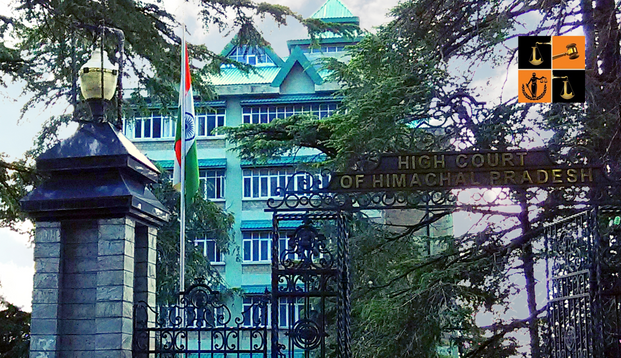
Recently, the Himachal Pradesh High Court held that a claim seeking a declaration as the sole hereditary pujari of a temple cannot be adjudicated in writ jurisdiction and must be pursued before a civil court. The Court further emphasised that writ proceedings cannot be converted into a forum for resolving disputed questions of fact or for re-agitating settled claims, cautioning against abuse of judicial process.
Brief facts:
The case stemmed from a dispute over priestly rights in a temple, where the Appellant challenged the dismissal of a writ petition seeking exclusive recognition as the sole hereditary pujari to the exclusion of other co-pujaris. The claim was based on an alleged custom and a testamentary document. The dispute arose in the backdrop of the temple’s takeover by the State under the Himachal Pradesh Hindu Public Religious Institutions and Charitable Endowments Act, 1984, following which a statutory framework introduced equal sharing of offerings and rotational performance of duties among all stakeholders. Earlier proceedings had already addressed the distribution of priestly functions, yet the Appellant sought to reopen the issue and, at a later stage, introduced an additional claim of managerial rights. The matter thus reached the present court in appeal, questioning the maintainability of such claims under Article 226 of the Constitution.
Contentions of the Appellant:
The Appellant argued that the claim of exclusive hereditary priesthood was grounded in long-standing custom and supported by a testamentary document. The Counsel further contended that the Appellant’s predecessor held managerial authority as “Mohtamin,” and therefore, the Court ought to grant liberty to withdraw the existing writ petition and permit the institution of fresh proceedings to assert this expanded claim. Reliance was also placed on statutory provisions governing temple administration to justify the assertion of exclusive rights.
Contentions of the Respondent:
The Respondents opposed the plea, asserting that the Appellant was attempting to introduce an entirely new case at a belated stage, which had never been raised in earlier proceedings. The Counsel argued that such claims were barred by limitation, particularly in light of Article 107 of the Limitation Act, and further hit by the doctrine of constructive res judicata. The Respondents emphasised that the dispute involved complex and disputed questions of fact, including custom, succession, and entitlement, which could not be adjudicated under Article 226 of the Constitution. They also contended that repeated attempts to reopen settled issues amounted to an abuse of process.
Observation of the Court:
The Division Bench of Justice G.S. Sandhawalia and Justice Bipin Chander Negi observed that “The plea of being a Mohtamin could have only been taken within 12 years of the same having been denied in terms of Article 107 of the Limitation Act. Besides the aforesaid, as correctly noticed by the learned single judge the claim of being the sole hereditary pujari and the exclusion of respondents 5 to 7 as co-pujaris raised in the case at hand can be only tried by a Civil Court (alternate remedy) and disputed questions of fact cannot be raised or decided in a writ petition. Now at this belated stage the attempt made to raise a claim of the writ petitioner being a Mohtamin of the temple in question, for the reasons mentioned hereinabove, cannot be allowed. In the aforesaid backdrop a reference to the nature of office of a mohtamin and the provisions of the Himachal Pradesh Hindu Public Religious Institutions and Charitable Endowments Act, 1984 made by the appellant shall be an academic exercise in futility, of no relevance and a sheer waste of judicial time.”
The Court observed that the foundation of the Appellant’s claim, seeking exclusive recognition as the sole hereditary pujari, rested on disputed questions of fact, including custom, succession, and alleged testamentary rights, which cannot be adjudicated in writ proceedings under Article 226 of the Constitution. It emphasised that writ jurisdiction is not designed to undertake fact-finding exercises requiring evidence, cross-examination, and detailed scrutiny. The Bench made it clear that such claims necessarily require a full-fledged trial before a competent civil court. It further underlined that the availability of an alternate remedy is a decisive factor in declining writ relief in such cases.
The Bench held that the Appellant’s attempt to introduce a fresh claim of being “Mohtamin” (manager) at the appellate stage was impermissible, particularly when no such plea had been raised in earlier proceedings. It noted that litigation cannot be allowed to evolve endlessly with shifting stands, as this would undermine procedural discipline and fairness. The Court stressed that parties are bound by the reliefs originally sought and cannot later expand the scope of their claims to suit convenience. It further observed that such conduct reflects an attempt to reopen settled issues, which is contrary to established legal principles.
The Court emphasised that the claim of being a “Mohtamin” was clearly barred by limitation, noting that any such assertion ought to have been raised within the statutory period prescribed under Article 107 of the Limitation Act. It highlighted that the temple had already been taken over by the State in 2006, and the relevant revenue entries had been altered, thereby extinguishing earlier claims. The Bench clarified that a belated attempt to revive such a claim, after the lapse of the limitation period, cannot be entertained. It reinforced that limitation laws are not mere technicalities but essential to ensuring finality and certainty in legal proceedings.
The Bench further observed that the principles underlying constructive res judicata squarely apply to writ proceedings, preventing parties from re-agitating issues that were or ought to have been raised in earlier litigation. It noted that the appellant had multiple opportunities in prior proceedings to assert all relevant claims but failed to do so. The Court cautioned that permitting such re-litigation would amount to an abuse of the judicial process and would defeat the principle of finality. It reiterated that judicial forums cannot be used as platforms for repeated attempts to secure relief on the same cause of action.
The Court held that writ jurisdiction cannot be converted into a forum for circumventing proper legal remedies or for bypassing the rigours of civil adjudication. It stressed that allowing such petitions would open the floodgates for fact-intensive private disputes to be brought under Article 226 of the Constitution, thereby diluting its constitutional purpose. The Bench also remarked that courts must remain vigilant against litigants attempting to misuse judicial processes through incomplete or shifting pleadings. It emphasised that judicial time must be preserved for genuine disputes requiring constitutional intervention.
The decision of the Court:
In light of the foregoing discussion, the Court dismissed the Letters Patent Appeal, affirming the Single Judge’s refusal to entertain the writ petition.
Case Title: Hari Ram (deceased) through LRs Vs. State of HP and Ors
Case No.: LPA No.488 of 2024
Coram: Hon’ble Mr. Chief Justice G.S. Sandhawalia, Hon’ble Mr. Justice Bipin Chander Negi
Advocate for the Petitioner: Sr. Adv. Ajay Sharma, Adv. Atharv Sharma
Advocate for the Respondent: DAG Priyanka Chauhan, Adv. Mukul Sood, Adv. Het Ram, Sr. Adv. Suneel Mohan Goel, Adv. Paras Dhaulta
Read Judgment @Latestlaws.com
Picture Source :




















