









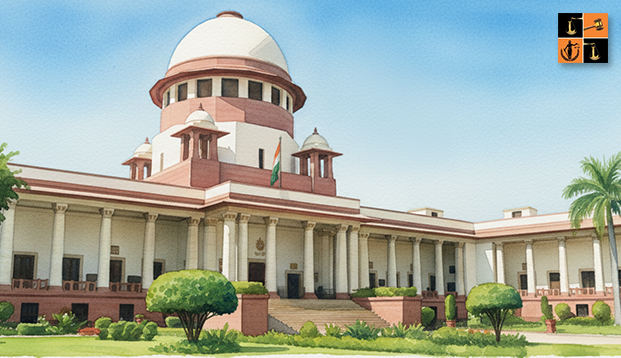
On Tuesday, the Supreme Court agreed to examine a public interest litigation seeking statutory recognition of intersex births and deaths in India’s civil registration and census systems, directing that the matter be placed before a three-judge Bench, a move that could reshape how population data and identity documentation account for intersex persons.
The case arose from a plea filed by intersex activist Gopi Shankar M, which asserts that India’s existing legal and administrative framework, including the Registration of Births and Deaths Act, 1969, does not contemplate the recording of intersex births and deaths, resulting in the complete absence of this community from official data.
The petition highlights that civil registration and related forms are structured around narrowly defined categories, male, female, or transgender, without acknowledging intersex variations, a limitation that, according to the petitioner, translates into exclusion in education, employment, healthcare access, and identity documentation. It further contends that the interchangeable use of the terms “sex” and “gender” in laws and policies has deepened these challenges, often compelling intersex persons, even at a young age, to adopt classifications that do not reflect their biological or social realities.
During the hearing, Solicitor General Tushar Mehta urged that the plea be placed before a larger Bench in view of the nature of the directions sought. Concurring, Chief Justice of India Surya Kant remarked, “It is a very good petition,” and ordered that the case be listed before a three-judge Bench for consideration. The Court’s direction signals judicial willingness to engage with the structural gaps highlighted in the plea, though no final directions were issued at this stage.
Disclaimer: This news/ article includes information received via a syndicated news feed. The original rights remain with the respective publisher.
Picture Source :




















