









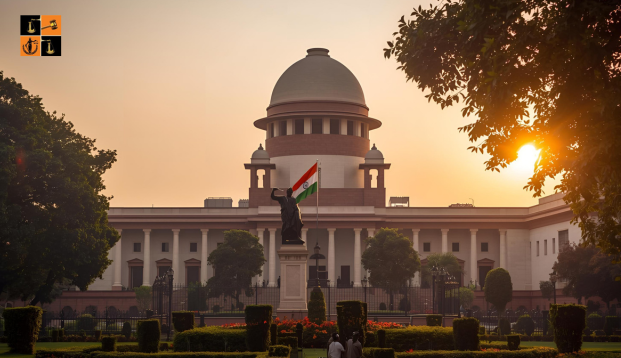
The Supreme Court strongly condemned the recurring incidents of custodial violence, observing that such deaths are a “blot on the system” and cannot be tolerated in a constitutional democracy. The Court, hearing a suo motu matter relating to non-functional CCTV cameras in police stations, highlighted alarming figures from Rajasthan and questioned why compliance with earlier directions had still not been ensured.
The proceedings arose from a suo motu case initiated after reports revealed that several custodial deaths had occurred in Rajasthan within the first eight months of 2025. Despite earlier Apex Court directions mandating installation of CCTVs in police stations and investigating agencies to prevent human rights abuses, many States and Union Territories had not complied. The matter also intersected with a separate 2020 judgment where the Court had extended the CCTV-installation requirement to central agencies such as the CBI, ED, and NIA.
The Solicitor General submitted that custodial deaths are indefensible under any circumstance but clarified that he was not appearing in the suo motu matter specifically. He assured the Court that the Union Government would file its compliance affidavit within three weeks.
Whereas, the Senior Advocate Siddhartha Dave, assisting the Court as amicus, informed that several States and UTs had not filed compliance affidavits despite multiple opportunities. He also noted that while three central agencies had installed CCTV cameras, others had not allocated any budget for compliance.
The Bench of Justice Vikram Nath and Justice Sandeep Mehta expressed deep concern over the continued occurrence of custodial deaths despite repeated judicial intervention. Referring to 11 custodial deaths in Rajasthan alone, the Court delivered a sharp rebuke, “This country will not tolerate this. Custodial deaths are a blot on the system. You cannot have people dying in police custody.”
The Court further criticised the Union Government for failing to file its compliance affidavit, “The Union is taking this Court very lightly. Why has no affidavit been filed?”
The Court noted that only eleven States had filed their compliance affidavits in the suo motu proceedings, whereas the remaining States and Union Territories, including the Union of India, had yet to do so. It also recorded that Madhya Pradesh had furnished a notably positive response, informing the Court that every police station and outpost in the State had been connected to a centralised workstation at the district control room, a step the Bench described as “remarkable”.
The bench reiterated that the Apex Court’s earlier directions from 2018 and 2020, mandating the installation of CCTV cameras at all police stations and at the offices of central investigating agencies, remained binding and admitted of no exception. They also addressed concerns raised about the potential impact of CCTV cameras on police investigations, stating that such objections could not override compliance with the Court’s orders.
Drawing a comparative reference, the Court observed that countries like the United States employ live-streaming systems in law-enforcement spaces, demonstrating how surveillance can strengthen accountability without obstructing investigative functions. The Court also hinted at broader systemic reforms, noting that measures such as open-air prisons could reduce overcrowding, improve transparency, and address recurring complaints of custodial violence.
The Top Court granted a final extension of three weeks to all defaulting States, Union Territories, and central agencies to file their compliance affidavits. It warned that if affidavits were not submitted by the next hearing date, December 16, the Principal Secretary (Home) of each defaulting State/UT must personally appear before the Court with reasons for non-compliance. For central agencies, the Court directed that non-filing of affidavits would require the respective directors to appear in person.
The Court also appointed Senior Advocate Siddhartha Dave as amicus curiae in the suo motu matter going forward.
Disclaimer: This news/ article includes information received via a syndicated news feed. The original rights remain with the respective publisher.
Picture Source :



















