









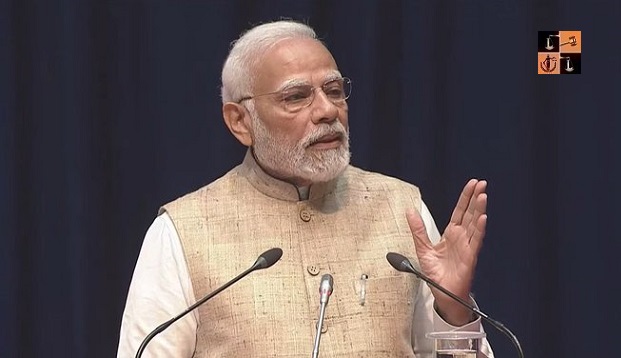
On Monday, the Supreme Court declined to step into a challenge against the long-standing practice of the Prime Minister offering a chadar at the Ajmer Sharif Dargah, drawing a clear line between constitutional adjudication and matters it found unsuitable for judicial review. While dismissing the plea, the Bench led by Chief Justice of India Surya Kant held that “the relief sought is not justiciable,” effectively signalling that courts cannot be called upon to examine or regulate such ceremonial practices attributed to the State.
The petition was filed by Jitender Singh, President of the Vishwa Vedic Sanatan Sangh, and Vishnu Gupta, President of the Hindu Sena. They challenged what they termed the “continued practice of State-sponsored ceremonial honour, official patronage and symbolic recognition” extended by the Union of India and its instrumentalities to Islamic scholar and mystic Khwaja Moinuddin Chishti and the Ajmer Sharif Dargah.
Among the principal reliefs sought was a direction restraining the Prime Minister from offering a chadar at the Dargah. The petitioners contended that the practice began only in 1947 and lacked any constitutional or legal sanction. They also pointed out that a civil suit was pending before a trial court concerning claims that the Dargah was constructed over the ruins of a Shiva temple.
The Counsel appearing for the petitioners argued that the ceremonial act of offering a chadar by the Head of Government was unconstitutional, arbitrary, and contrary to the constitutional ethos and sovereignty of the Republic. It was submitted that the Ajmer Dargah does not qualify as a religious denomination under Article 26 of the Constitution, relying on the Constitution Bench ruling in Dargah Committee, Ajmer v. Syed Hussain Ali.
The petitioners further asserted that the practice of Prime Ministerial participation had no historical or constitutional basis and was against the will of the people. In this context, it was also highlighted that a representation had been made to the Prime Minister requesting him to refrain from continuing the practice.
The Division Bench of Chief Justice Surya Kant and Justice Joymalya Bagchi declined to examine the merits of the challenge. When it was argued that the custom of offering a chadar commenced only after Independence, the Chief Justice made it clear that the Court would not venture into such questions, reiterating that “the relief sought is not justiciable.” On the submission regarding the pending civil suit relating to the site of the Dargah, the Court clarified that the dismissal of the writ petition would have no bearing on those proceedings.
In view of its finding that the issues raised were not amenable to judicial determination, the Apex Court dismissed the writ petition. At the same time, the Bench expressly clarified that its order would not prejudice the adjudication of the civil suit pending before the trial court concerning the disputed claims about the Ajmer Dargah site.
Disclaimer: This news/ article includes information received via a syndicated news feed. The original rights remain with the respective publisher.
Picture Source :



















