









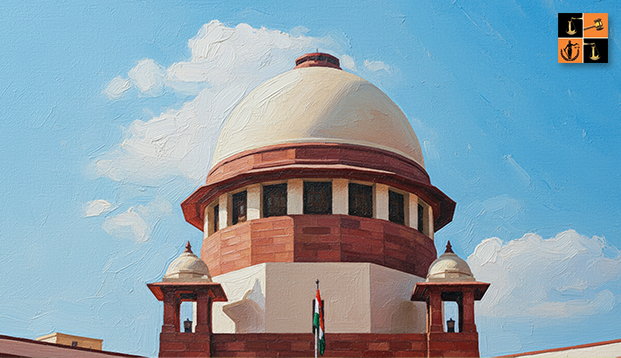
The Supreme Court has reinstated a trial court judge whose services were terminated by the Madhya Pradesh High Court over an allegedly erroneous bail order, holding that disciplinary proceedings cannot be triggered merely because a judicial decision is wrong. The ruling underscores that fear of punishment for honest judicial errors threatens judicial independence and directly impacts the administration of justice, particularly in bail matters.
The case arose after a trial judge granted bail to an accused, following which anonymous and frivolous complaints were raised, leading the High Court to terminate the judge’s services. The controversy centred on whether an incorrect or poorly reasoned judicial order, without evidence of mala fides or misconduct, could justify disciplinary action. The judge challenged the High Court’s decision, arguing that an error of judgment, especially in high-pressure trial court conditions, cannot be equated with lack of integrity or abuse of office.
A bench of Justice J.B. Pardiwala and Justice K.V. Viswanathan firmly rejected the High Court’s approach, holding that the determinative factor is the conduct of the judicial officer, not the correctness of the verdict. Stressing the need to protect judges from motivated complaints, the Court observed, “A fearless judge is the bedrock of an independent judiciary.”
It cautioned that launching inquiries on ill-conceived allegations would paralyse the trial judiciary and discourage judges from exercising discretion, especially in bail cases. Finding no merit in the allegations, the Court quashed the termination order and directed reinstatement of the judicial officer with back wages.
Disclaimer: This news/ article includes information received via a syndicated news feed. The original rights remain with the respective publisher.
Picture Source :




















