









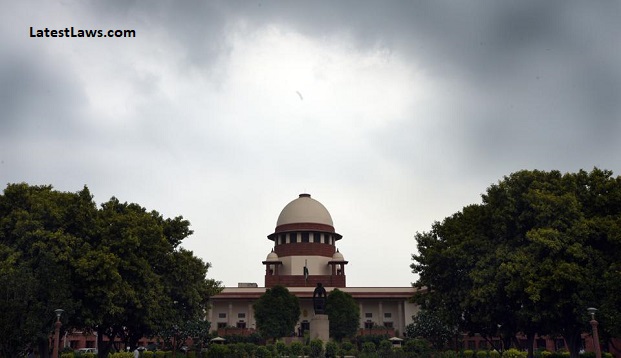
The bench comprising of Chief Justice S.A. Bobde, Justice B.R.Gavai and Justice Surya Kant passed a judgement in case titled as Desh Raj v. Balkishan.
Facts of the case are that the appellant and the respondent are brothers and own one floor each of ancestral property. The ground floor was possessed and owned by the respondent, whereas the first floor was in the name of the appellant. The respondent approached the appellant offering to purchase the first floor of the ancestral property Subsequently, an agreement to sell was entered into between the parties for a total consideration of Rs 7.5 lakhs, the agreement was subsequently not honoured and a legal notice was served upon the appellant, calling upon him to accept consideration and perform his part of the contract but the appellant want to sell the property to the third party.
The appellant’s primary contention was Order VIII Rule 1 of CPC as amended by the Commercial Courts Act, 2015 which in turn was applicable to commercial disputes only. The present matter was highlighted as being noncommercial, and it was urged that the unamended
Order VIII Rule 1 of the CPC would be applicable, wherein no consequences for not complying with the shorter timeline of 90 days has been provided. This provision, it was contended, was merely procedural and concomitantly directory as held by this Court in various decisions including Salem Advocate Bar Association, T.N. v. Union of India.
On behalf of the respondent who asserted that multiple chances had already been granted to the appellant by the Civil Court, including opportunities beyond the maximum statutory period of 90 days as provided for filing of written statement under Order VIII Rule I of CPC. It was argued that continued failure to adhere to the multiple deadlines set by the Civil Court and violation of Court directions, was evidence of gross negligence on the part of the appellant at best, and a deliberate delaying tactic and abuse of the process of law at the worst.
Commercial disputes [as defined under Section 2(c) of the Commercial Courts Act, 2015] are governed by the CPC as amended by Section 16 of the said Act; all other noncommercialdisputes fall within the ambit of the unamended (or original) provisions of CPC.
The Supreme Court is of the view that the dispute does not fall within the parameters specified under Section 2(c) of the Commercial Courts Act, 2015 and in particular subclause (vii), as the immovable property here is not of a nature which is “used exclusively in trade or commerce”. Hence, the appellant is correct in contending that the High Court overlooked the nature of the dispute mistakenly applied the ratio of a case rendered in light of a modified version of the Code of Civil Procedure, which would only be applicable to commercial disputes.
The Supreme Court stated that
“Routine condonations and cavalier attitudes towards the process of law affects the administration of justice. It affects docket management of Courts and causes avoidable delays, cost escalations and chaos. The effect of this is borne not only by the litigants, but also commerce in the country and the public in general who spent decades mired in technical processes.”
The Supreme Court observed that the appellant failed to give any cogent reason for the delay and is unable to satisfy due diligence on his part though he is right in his submission and further subject to payment of costs of Rs. 25,000/- to the respondent.
Read the Judgement:
Share this Document :Picture Source :



















