









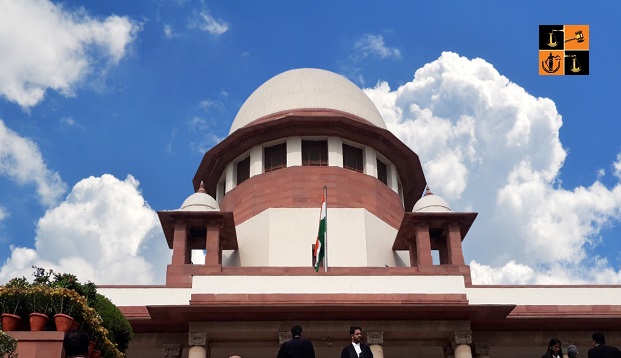
The Supreme Court addressed a dispute concerning inheritance under Mohammedan law, clarifying that an agreement to sell does not divest property from the ownership of the deceased and that such property remains part of the estate to be distributed as matruka. The Court upheld the decisions of the First Appellate Court and the High Court, affirming that the widow is entitled to her lawful share, and criticised the exclusion of property based on incomplete sale transactions.
The case arose following the death of Chand Khan, who left behind his widow, Zoharbee, and his brother, Imam Khan. The dispute concerned two pieces of land allegedly transferred during Chand Khan’s lifetime. The widow claimed that all property left behind constituted matruka and, as per Mohammedan law, she was entitled to three-fourths share, with one-fourth devolving upon the brother. The brother, however, contended that one portion of the land had already been transferred through an agreement to sell, and another portion had been sold due to Chand Khan’s illness, leaving nothing to be partitioned.
The Trial Court accepted the brother’s contentions, holding that the agreement to sell was valid and that the properties no longer formed part of the deceased’s estate. The widow’s suit was partly decreed only against a subsequent purchaser who did not contest the proceedings.
The appellant (widow) contended before the Appellate Courts that an agreement to sell does not transfer ownership and that the estate remained intact at the time of Chand Khan’s death. She argued that under Mohammedan law, she was entitled to her prescribed share in all matruka property. The respondent argued that transfer of possession and receipt of consideration during Chand Khan’s lifetime extinguished any claim over the disputed land.
The Apex Court reiterated the settled position that an agreement to sell does not create any right, title or interest in immovable property. Relying on Suraj Lamp & Industries (P) Ltd. v. State of Haryana, the Court emphasised that only a duly executed and registered sale deed can convey ownership. Therefore, the properties continued to vest in Chand Khan at the time of his death and must be treated as matruka.
The Court further referred to classical definitions of matruka and the principles of Mohammedan inheritance law, observing that inheritance must first satisfy debts and legacies, and thereafter be distributed among sharers. The widow, being a sharer, was entitled to one-fourth in the absence of children. The Court noted that the Trial Court erred in excluding property based on incomplete transactions, observing that “no one can transfer a better title than what they possess.”
The Bench also expressed dissatisfaction with the quality of translation of lower court records, stressing that precision in legal language is essential for appellate scrutiny.
The Top Court dismissed the appeals, affirming that the properties constituted matruka and were subject to lawful distribution. It upheld the findings of the First Appellate Court and High Court, concluding that no interference was warranted. Pending applications were disposed of, and no order as to costs was made.
Disclaimer: This news/ article includes information received via a syndicated news feed. The original rights remain with the respective publisher.
Picture Source :




















