









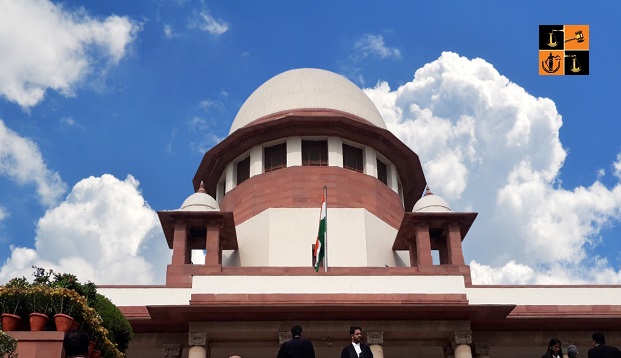
On Tuesday, the Supreme Court directed that issues concerning career stagnation faced by young judicial officers be examined by a Constitution Bench. The matter pertains to officers who, after joining entry-level judicial posts, encounter limited promotional avenues within the judicial service.
The order was passed by a Bench comprising Chief Justice of India B.R. Gavai and Justice K. Vinod Chandran in the context of the All India Judges Association case.
Earlier, the Bench had called for responses from various High Courts and State Governments, raising concerns over the slow career progression in judicial services. Senior Advocate Siddharth Bhatnagar, appearing as Amicus Curiae, highlighted the “anomalous situation” in multiple States, where officers recruited as Judicial Magistrate First Class (JMFC) rarely advance to the level of Principal District Judge, and even fewer reach the High Court Judge cadre. He noted that such stagnation discourages talented young professionals from joining the judiciary.
To address this, the amicus proposed reserving a certain percentage of Principal District Judge posts for officers promoted from the JMFC cadre. Senior Advocate R. Basant opposed this proposal, arguing that it could deprive meritorious candidates waiting for direct recruitment as District Judges of fair opportunities.
The Bench, in its order, acknowledged the need to strike a balance between these competing claims. It further observed that resolving this issue permanently would require revisiting some earlier rulings delivered by three-judge Benches.
“In order to conclusively settle this matter and provide a long-term solution, we are of the considered view that the issue must be addressed by a five-judge Constitution Bench,” the Court noted.
Several High Courts contested the claim of career stagnation for entry-level officers. Addressing this, CJI B.R. Gavai remarked that the core concern was ensuring equitable opportunities. “Otherwise, a young judicial officer entering the service at 25-26 years of age may retire as an Additional District Judge, leading to understandable dissatisfaction,” the CJI observed.
Basant countered that officers directly appointed as District Judges often continue in that position throughout their service, pointing to a different perspective. CJI Gavai emphasized that the ultimate goal was to enhance the efficiency of judicial administration. He cited an example shared by Justice Sundresh of a law clerk who resigned after two years due to limited promotion opportunities.
“Some middle ground must be found to maintain efficiency in the administration of justice,” CJI Gavai said. Basant, however, cautioned against treating unequals as equals, noting that direct recruits join the service later after extensive legal practice, unlike entry-level officers who are aware of the career trajectory at the outset.
Picture Source :




















